Avalanche: the 15 minutes that decide
A slab breaks loose under your skis, you have fifteen minutes before the stats turn against you: what you need to know instinctively, the night before heading out.
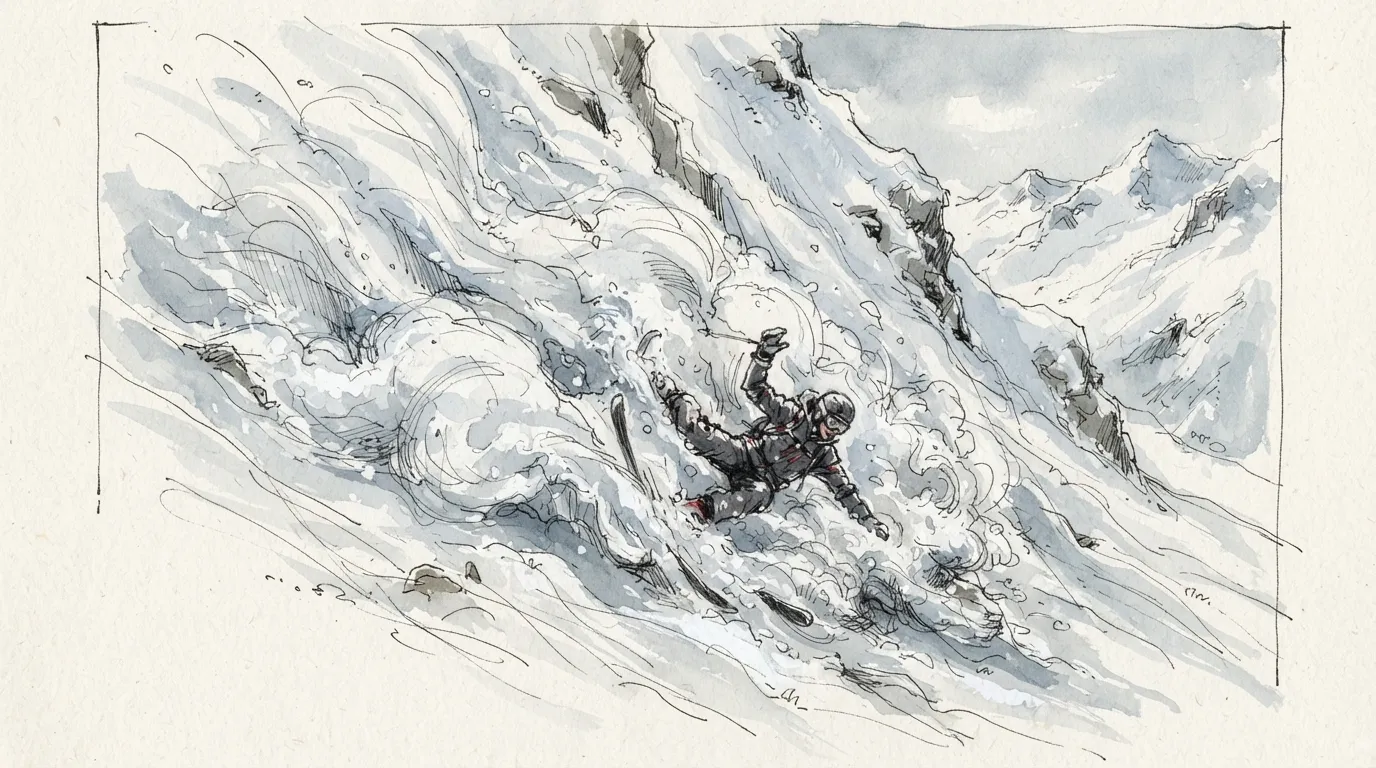
It is 10:20 AM. The snow that fell last night looks light, powdery, almost harmless. You are skinning up, your buddy fifteen meters behind you. Under your skis, a dull sound — a “whoompf”, as if the ground gave way. A second later, the entire slope fractures above you and starts to slide. You don’t have time to second-guess yourself: you have between ten and fifteen minutes for this story to end well, and almost everything is decided before the snow even comes to a stop.
What the numbers say
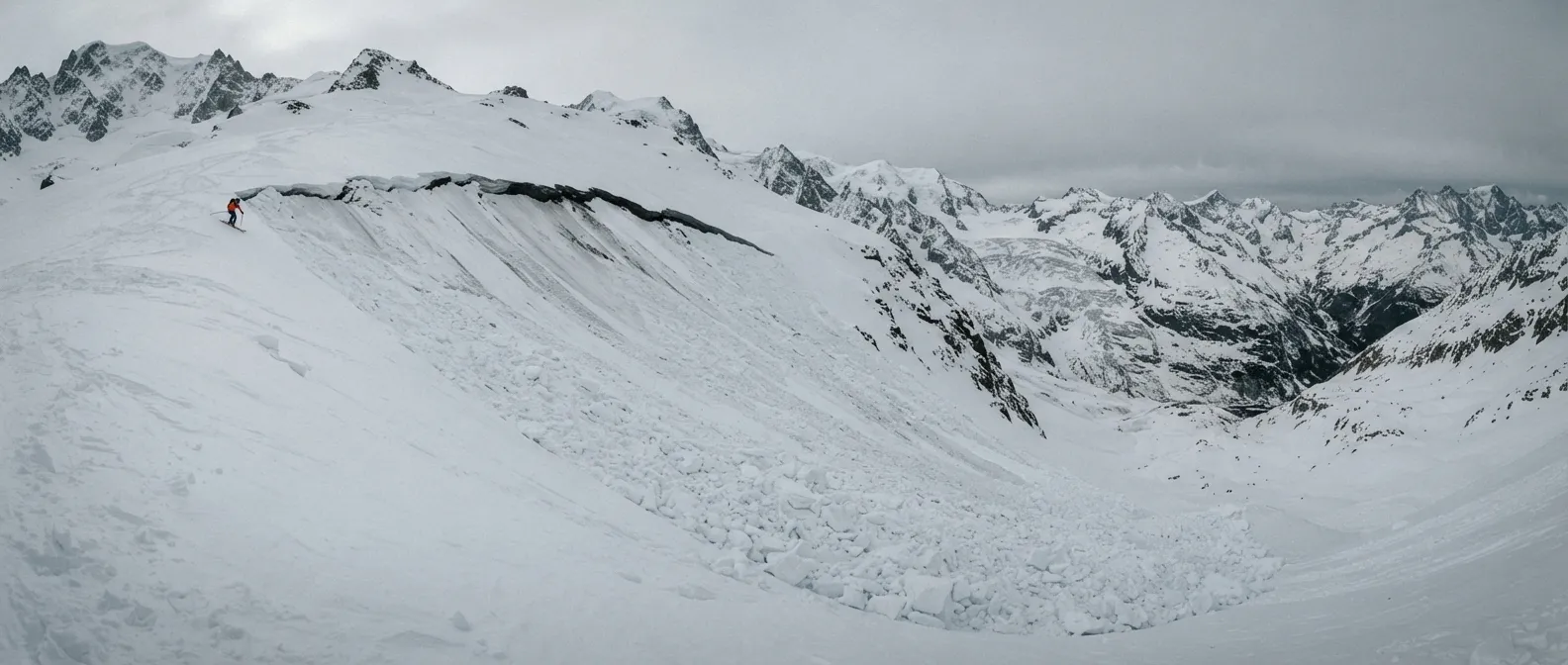
Avalanches are the deadliest natural hazard in the mountains in France: an average of about 30 deaths per year across roughly twenty fatal accidents, according to ANENA archives. On February 10, 1970, in Val-d’Isère, an avalanche originating at 2,900 meters swept across the valley, crossed the Isère river and the Iseran pass road before crashing into the UCPA holiday center: 39 young people were killed by burial, 37 others injured, out of 194 people present. They weren’t backcountry skiers — they were sleeping. The shock was so profound that it led to the creation of ANENA the same year, and to the first hazard zone mapping in the mountains, at Val-d’Isère, in 1975.
The second figure is almost more important than the first: according to Jamieson’s landmark 1996 study, 83% of recreational avalanches are triggered by the victim or a member of their group — a figure that French and Swiss prevention organizations round to “9 out of 10” in their training courses. An avalanche is almost never an accident that just happens to you: most often, it’s an added weight on an already unstable slope — yours.
The third number is the one that gives this page its title. In 1994, Austrian doctor Hermann Brugger constructed the survival curve that still serves as a reference, based on hundreds of Swiss accidents: 92% survival for a burial dug out in under 15 minutes, about 30% at 35 minutes, almost nobody beyond 90 minutes. In between, an almost vertical drop — this is the phase where breathable air runs out. It’s not mountain rescue services saving your life in those initial minutes, even in countries with top-tier rescue operations that take an average of 45 minutes to arrive by helicopter: it’s your group, with whatever gear they have on them.
Reading the risk before putting down a ski
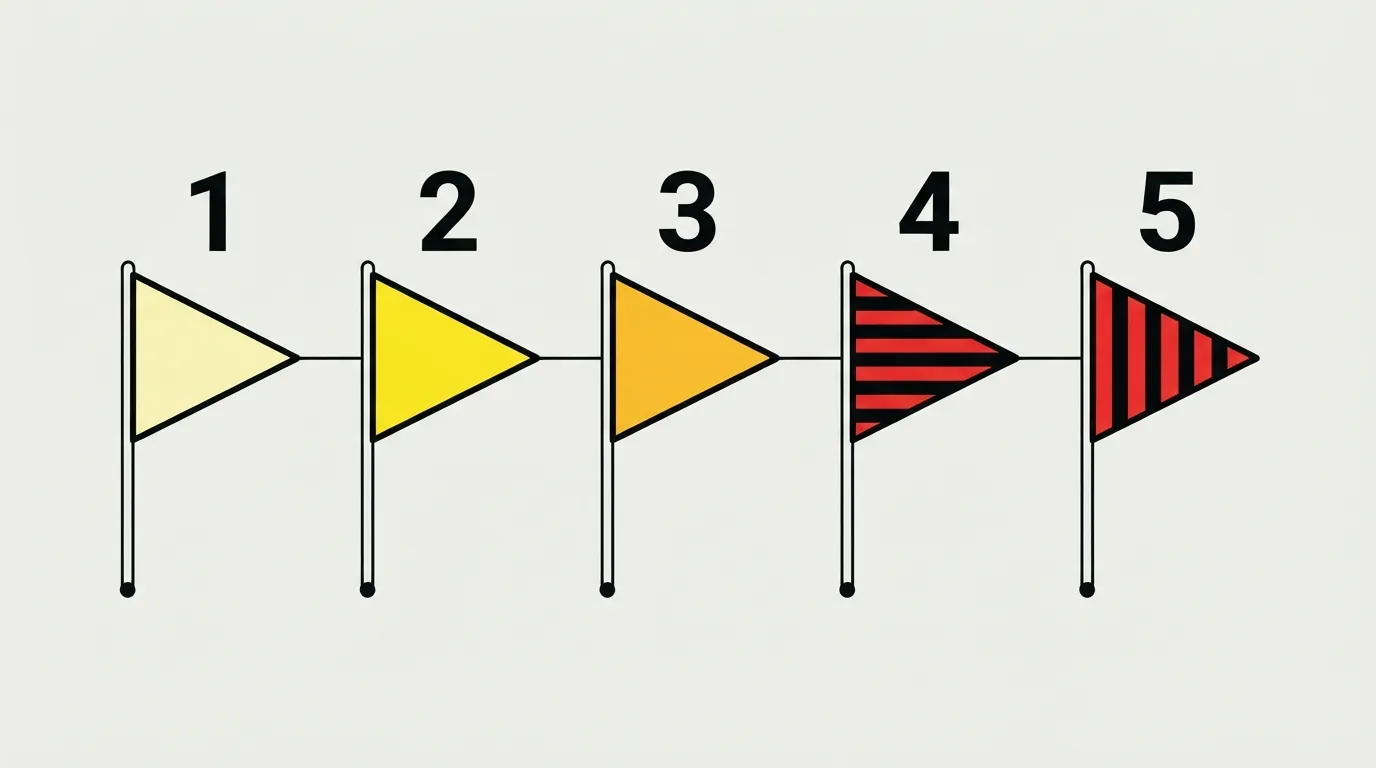
The European Avalanche Warning Services (EAWS) risk scale features five levels. Level 1 (Low) describes a generally stable snowpack, where only isolated natural or triggered slides on very steep slopes are possible. Level 3 (Considerable) — most often responsible for accidents because it looks deceivingly manageable — means that human-triggered avalanches are likely, sometimes even with light loads, on many steep slopes. Level 5 (Very High), extremely rare, forecasts massive natural avalanches even on gentle slopes: on those days, you stay home.
| 1 Low | 2 Moderate | 3 Considerable | 4 High | 5 Very High | |
|---|---|---|---|---|---|
| Snowpack | generally stable | moderately stable on steep slopes | unstable on many slopes | unstable on most slopes | generally very unstable |
| Triggering | isolated, heavy load | possible, heavy load | possible with light load | likely, even with light load | spontaneous, including low angle |
| Practical advice | assess isolated steep slopes | avoid exposed slopes > 35° | avoid exposed slopes > 30° | stick to low-angle terrain | stay on flat ground, out of slide paths |
A bulletin never tells the whole story: it provides a regional trend, not the exact state of the slope beneath your skis. That’s why guides and alpine clubs teach the “3×3” framework developed by Swiss expert Werner Munter — three filters (conditions, terrain, human factor), applied three times (planning at home, arriving on site, before committing to a slope). His “Reduction Method”, along with similar frameworks taught by German and Austrian alpine clubs, remains the foundation of avalanche safety education in Europe.
What makes a slope dangerous
- Slope angle: the vast majority of slab avalanches occur between 30° and 45°, with trigger zones observed between 28° and 55° depending on studies. Below 30°, slab risk drops off sharply — it’s the first thing you check on a map or with an inclinometer.
- Aspect (orientation): windward slopes (facing the wind) lose snow, while leeward slopes accumulate it into hard, unstable wind slabs. In winter, northern aspects keep cold, unstable snow longer; in spring, southern aspects warmed by the sun become the main threat of the day.
- Wind: it transports snow and redeposits it into slabs, often invisible to the naked eye — “wind-drifted” snow can look firm and safe on top while hiding a fragile layer beneath.
- Fresh snow: more than 30 cm in 24 hours significantly increases the risk until the new layer stabilizes (usually a few days, sometimes longer).
- Temperature rise: a rapid rise in temperature, or rain on snow, weakens the bonds between layers and can trigger spontaneous slides, often late in the afternoon.
Warning signs before a slide happens
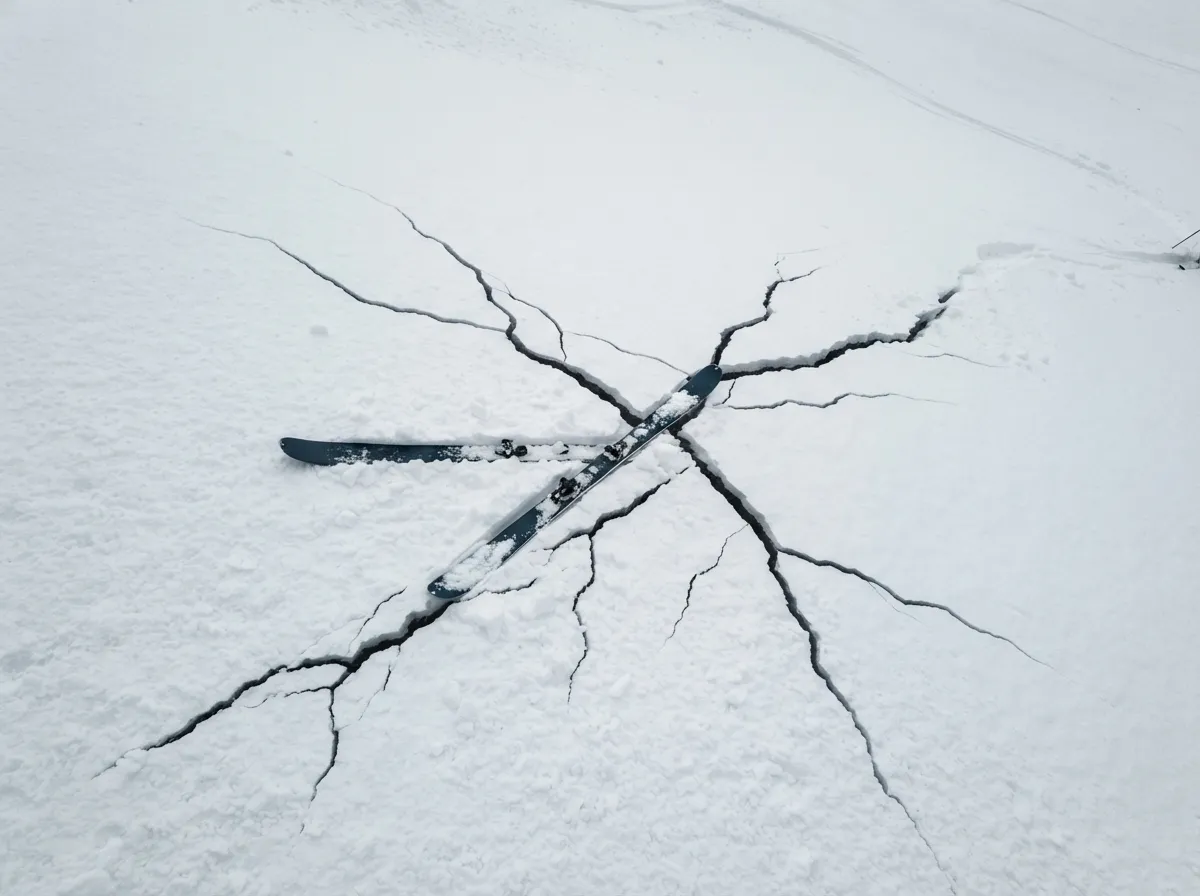
The snowpack gives hints before failing, provided you know how to listen:
- The “whoompf”: a hollow, thumping sound accompanied by a sudden drop beneath your feet, indicating that a weak buried layer has collapsed under a harder layer above. It’s one of the most reliable warning signs in existence — and frequently ignored because you are already committed to the slope.
- Cracks shooting out from your skis or snowshoes, radiating outward or in a line, showing that a slab is fracturing under your weight.
- Recent avalanches or natural slides visible on slopes with similar aspect and elevation: nature just showed you, for free, what your slope is capable of doing.
- A hollow sound when tapping with poles, and snow that comes away in blocks rather than loose grains when shoveling: the signature of a slab.
Gear up: transceiver, shovel, probe — all three or nothing
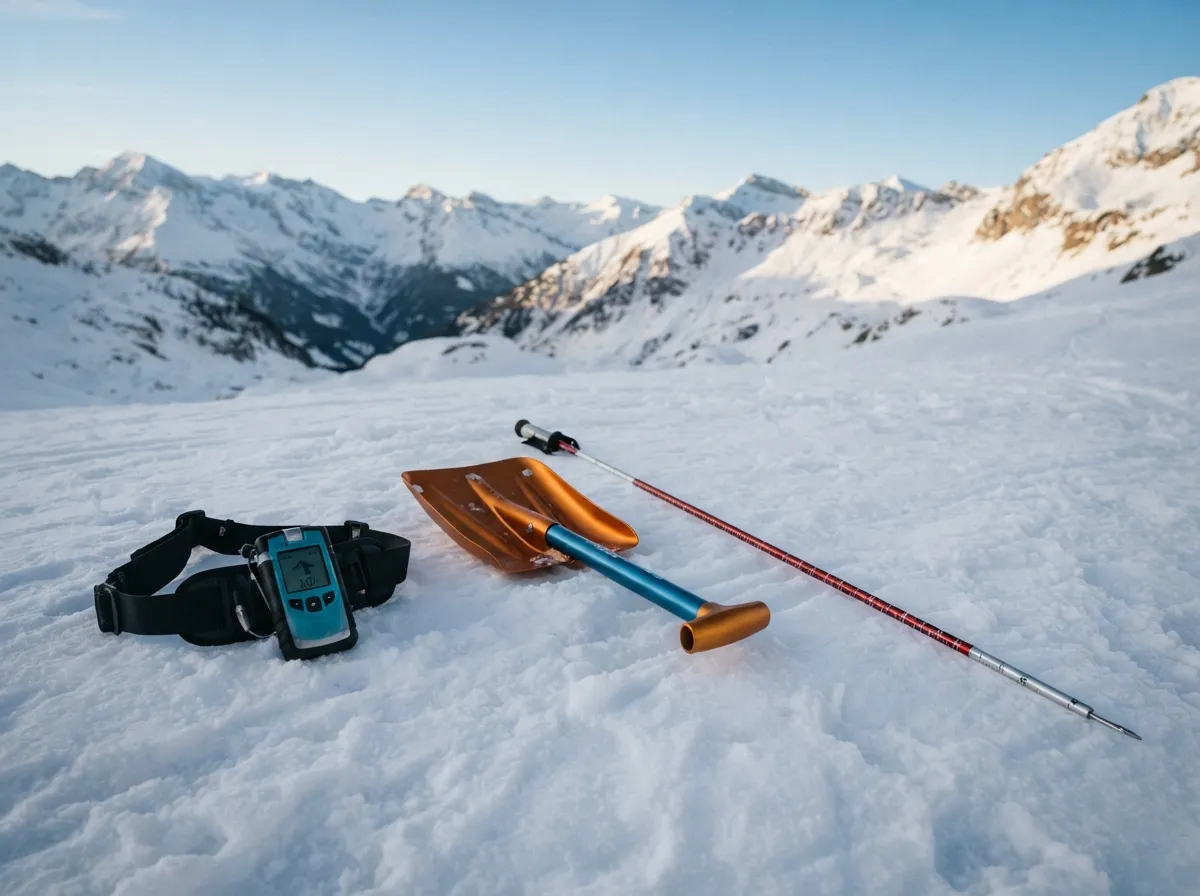
An avalanche transceiver (or beacon) is a radio device that transmits and receives on a single international frequency: 457 kHz, adopted in 1986. The first functional electronic beacon was invented in 1968 by John Lawton and marketed in 1971 as the Skadi; the first digital model, the Tracker, came out in 1997.
These three tools are useless on their own:
- The transceiver helps locate you, but only if you are wearing one that is switched on, transmitting, and worn close to your body (never in your pack).
- The probe confirms the exact position and depth before you start digging blindly.
- The shovel cuts through avalanche debris which, once stationary, sets hard like concrete — a tiny pocket shovel won’t cut it.
- Group transceiver check: every transceiver in the group transmits, while a leader (or the last person in line) verifies that everyone is broadcasting properly on frequency before switching back to transmit mode.
- Check battery levels: wear the beacon on your body under your outer layer, never in a backpack that could be torn off in a slide.
- Keep shovel and probe accessible, never buried deep at the bottom of your pack.
- Review the route and identify hazard zones, escape routes, and safe regrouping points in advance.
- Space out the group on ascent over exposed slopes, and never drop into a risky slope all at once: one skier at a time, with others watching from a safe vantage point.
When it slides: the first ten seconds
The moment the slide starts is when you have the most control — and the least time to act.
- Yell immediately so your group can mark your point of disappearance (the critical “last seen point”), which is vital for the search that follows.
- Drop your poles and try to release your skis if possible (use quick-release bindings, or kick out): they act like anchors pulling you down into the debris.
- Try to ride off to the side, where the slide is narrower or moving slower, rather than fighting the flow straight down.
- Swim: make violent swimming motions (crawl or breaststroke) up toward the surface and toward the flanks. Moving snow behaves like a granular fluid, where larger objects naturally rise to the top.
- Just before coming to a stop, the snow sets rock-hard in a fraction of a second: cover your face with a bent arm to create an air pocket in front of your mouth.
Trapped under the snow
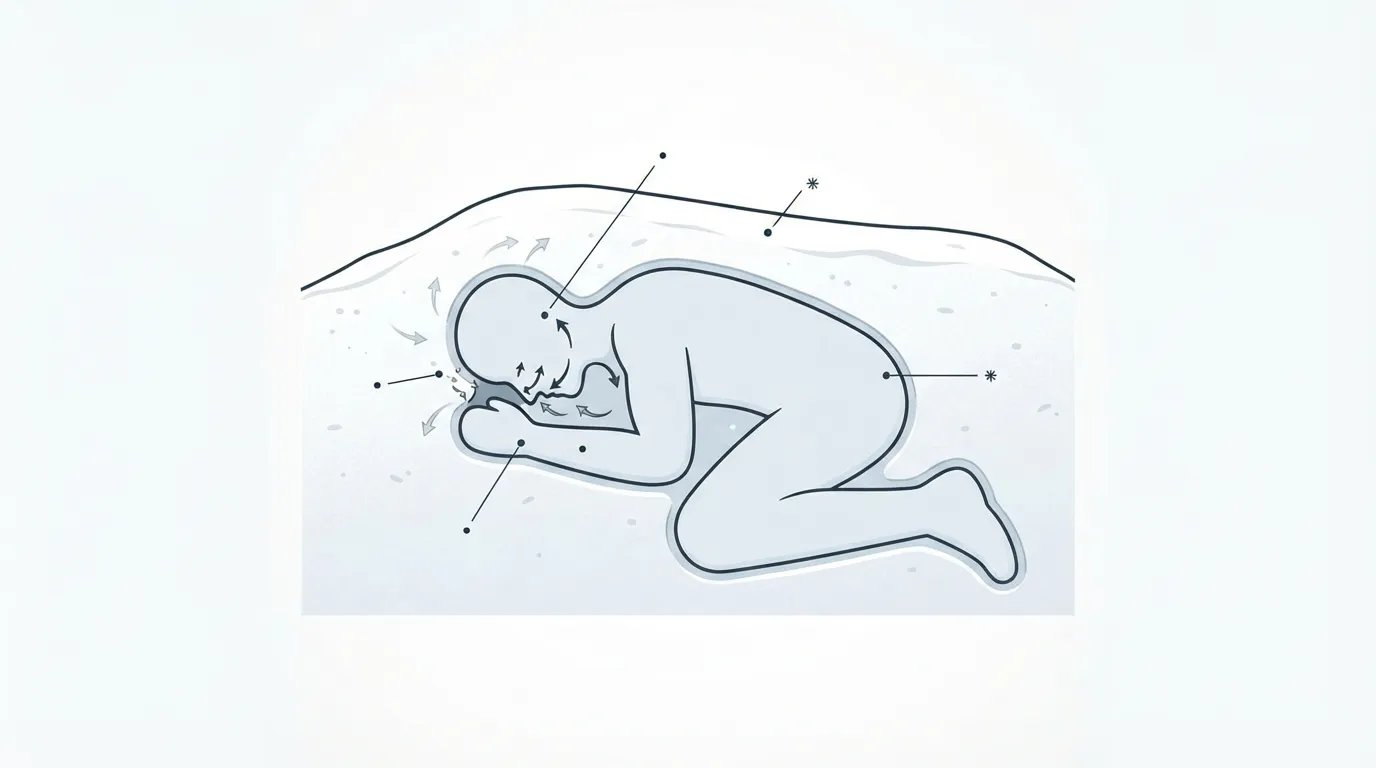
If you are completely buried, survival hinges on a tiny space: the air pocket in front of your mouth. This pocket explains most of the drop between the 92% survival rate at 15 minutes and 30% at 35 minutes on Brugger’s curve. The main problem is rarely a lack of air around you — snow remains porous — but your own breath: warm, moist exhaust freezes the snow directly in front of your face into an airtight ice mask that blocks gas exchange in a matter of minutes. You end up rebreathing your own CO2.
- Do not scream underwater or under snow unless you clearly hear searchers right above you: snow muffles sound tremendously from the inside out, and yelling wastes air and energy you can’t spare.
- Breathe slowly, as calmly as you can: gradual asphyxiation from CO2 buildup kills much faster than oxygen depletion alone.
- Move as little as possible to enlarge your air space right as the slide stops — once the snow sets, it hardens quickly and you won’t have the leverage to move.
- Panic is your main enemy: it spikes your breathing rate, accelerates air consumption, and destroys composure right when your team above needs you to hang on.
Asphyxiation accounts for 75% to 82% of avalanche deaths according to recent studies, trauma causes 24% to 29%, and hypothermia only 1% to 4% — though these proportions vary by activity: trauma rises to 42% among ice climbers, compared to 9% among snowmobilers, where deep burial dominates.
The search: the critical minutes
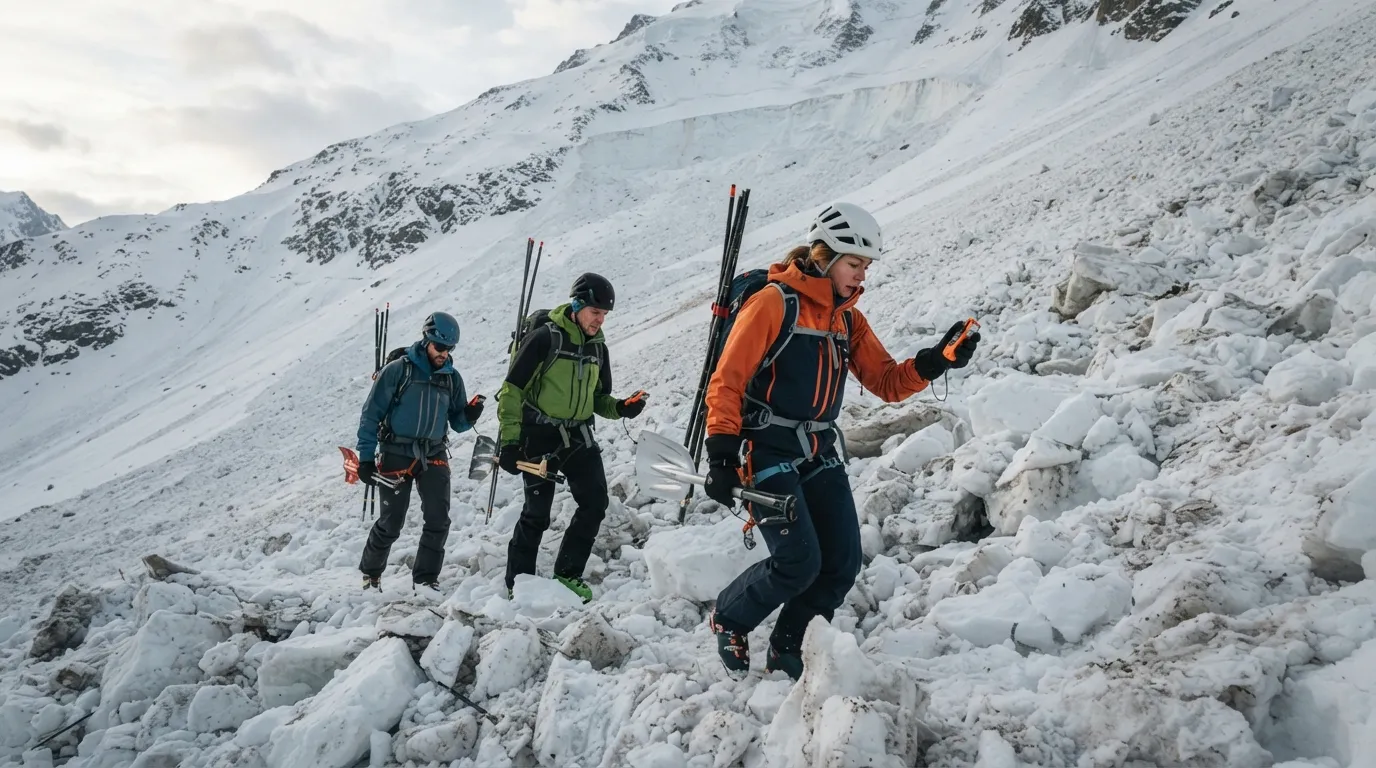
If you are on the surface and a teammate is missing, you are their only chance of rescue for the first 15 to 45 minutes.
- Watch the slide path and note the last seen point — this is where your search begins, not at the top of the slope.
- Switch your beacon to search (receive) mode and move down the fall line below the last seen point, searching in wide zigzags until you pick up a signal (signal search).
- Follow the direction indicators on your device as you get closer (coarse search), then slow down and keep the beacon close to the snow surface during the final meters (fine search).
- Probe at the point of lowest distance reading, working in expanding spirals spaced about 25 cm apart, until you strike a firm yet yielding object that feels distinct from ice or rocks.
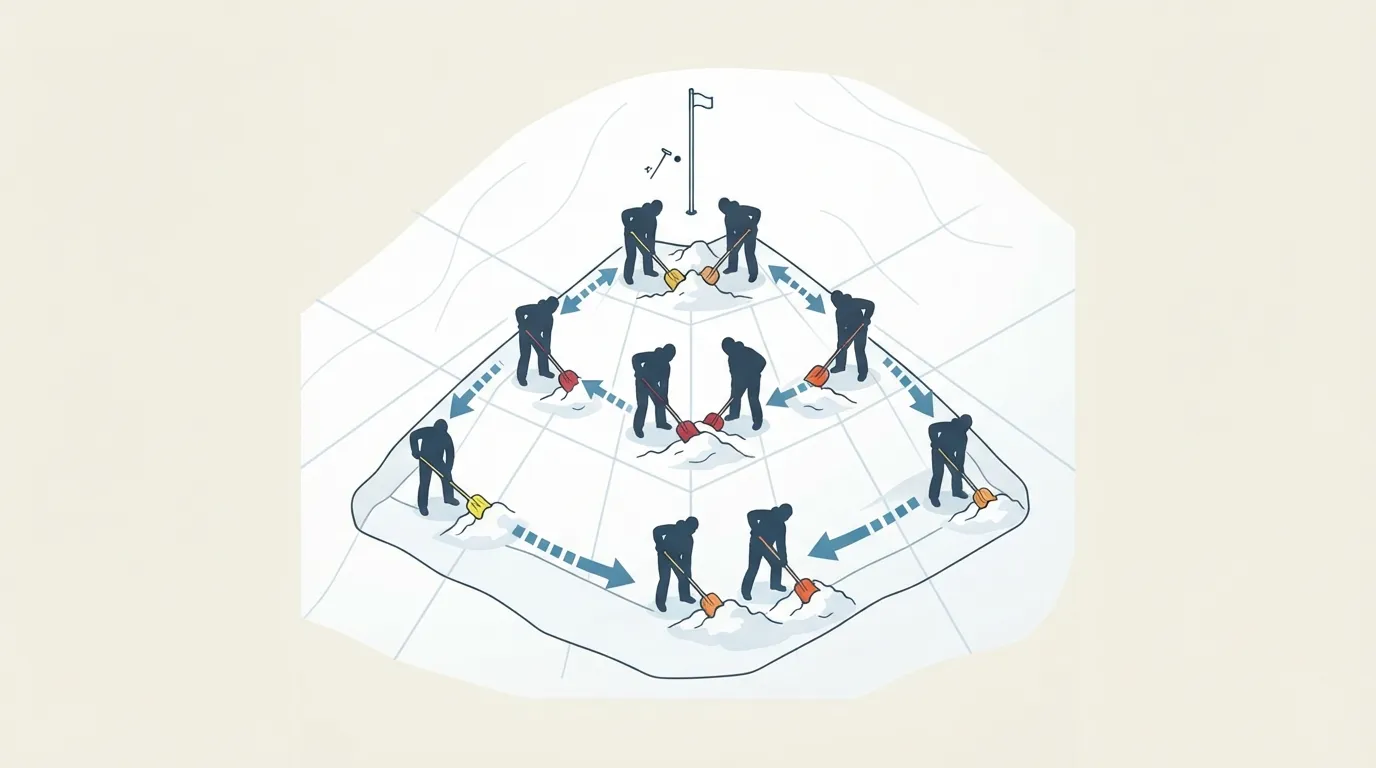
- Shovel as a team, never solo: position shovelers side by side downhill from the probe, clearing a trench moving uphill — known as strategic shoveling or the conveyor belt technique. The lead shoveler breaks up the snow while others clear it backwards in relays. This is exponentially faster than uncoordinated individual digging, especially in dense debris.
- Uncover the head and airways first, before attempting to dig out the rest of the body.
Once the victim is uncovered, rescuers face two major medical hazards. First, hypothermia: a buried person’s core body temperature drops by an average of 3°C per hour, with wide individual variations (0.1 to 9°C/h). Handle the victim with extreme gentleness — rough movements or sudden position changes can trigger “afterdrop” (a rapid drop in core body temperature) or fatal cardiac arrest caused by ventricular fibrillation, known in wilderness medicine as circum-rescue collapse. Second, don’t strip away packed snow stuck against the victim’s back or legs before medical help arrives: it provides basic insulation from the air, and moving them unnecessarily accelerates core cooling during transit.
Airbags: what they actually do, without the hype
The benchmark study on airbags, led by Pascal Haegeli in 2014 analyzing nearly twenty years of real-world accidents (1994–2012, seven countries), offered a realistic look at figures previously overhyped. It found a critical burial risk of 47% without a deployed airbag, compared to 20% with one — and a mortality rate of 44% in cases of critical burial, versus 3% when not critically buried. Overall, an airbag reduces the absolute risk of dying by about 11 percentage points (dropping mortality from 22% to 11% in the studied cases), effectively halving the risk of death. Its biggest limitation isn’t mechanical: in the study, 20% of airbags failed to deploy, and 60% of those failures were due to user error or failure to pull the trigger — not equipment malfunction.
Deadliest myths
What compromises your judgment, not the snow
McCammon analyzed hundreds of North American avalanche accidents to isolate six human factor traps that consistently lead groups astray long before the snowpack fails:
- Familiarity: knowing a slope lowers vigilance, especially among experienced users.
- Acceptation: seeking social approval drives people to take risks to impress others in the group.
- Consistency (commitment): a group focused on a goal (reaching a summit or a specific line) ignores changing warning signs along the way — a trap that worsens in groups of four or more.
- Expert Halo: novices blindly follow the most experienced person instead of contributing to group decisions.
- Scarcity: competing for fresh tracks or a closing weather window pushes people to drop in “before it’s gone.”
- Social Facilitation: seeing another group on the same slope provides false reassurance — “if they’re on it, it must be safe for us too.”
Frequently asked questions
How long can you survive buried under an avalanche?
The benchmark survival curve (Brugger, 1994) shows roughly 92% survival if dug out within 15 minutes, about 30% at 35 minutes, and almost zero beyond 90 minutes. The primary cause of death is asphyxiation, fast-tracked by an ice mask that forms over the mouth from exhaled breath.
What should you do if you get caught in an avalanche?
Yell immediately so your partners can track your point of disappearance, drop your poles and try to release your skis, then swim hard toward the surface and the edge of the slide. Right as the snow stops moving, cover your face with an arm to create an air pocket.
Is an avalanche transceiver enough on its own for backcountry travel?
No: a transceiver is useless without a probe to pinpoint depth and a shovel to cut through avalanche debris that hardens like concrete. The three tools form an inseparable safety system, and everyone in the group must practice using them before setting out.
Does an avalanche airbag guarantee survival?
No, but it significantly improves the odds: Haegeli’s landmark study (2014) showed that a properly deployed airbag roughly halves mortality. Its main vulnerability is human: in that study, 60% of non-deployments were due to user error or failure to pull the trigger, not equipment failure.
Do avalanches only happen to off-piste skiers?
No. The 1970 Val-d’Isère disaster, which killed 39 people in a valley-floor lodge, proves that a poorly placed structure can be swept away by a slide starting high above. Mountain roads, backcountry huts, and closed groomed trails also carry avalanche histories.
Why do experienced people get caught as often as beginners?
Because experience can breed overconfidence in familiar terrain — one of the six decision traps identified by researcher Ian McCammon in his F.A.C.E.T.S. framework. Studies show that victims often have as much or more avalanche training than average users — the issue is rarely a lack of knowledge, but failing to apply it.
Key Takeaways
- Nine out of ten avalanches are triggered by the victim or their group: prevention starts long before putting a ski on the slope.
- The survival curve drops off a cliff between 15 and 35 minutes: your group is your only effective rescue team within that window, long before professional help arrives.
- The transceiver-shovel-probe trio is useless unless worn correctly, tested, and practiced — never leave gear packed deep in your bag.
- If caught: swim toward the surface, protect an air pocket in front of your face as the slide stops, and stay calm to conserve oxygen.
- Level 3 (Considerable) kills more people than Level 5: true danger often looks like a beautiful powder day.
Going further
- ANENA, Archives et données d’accidents d’avalanche en France — official French accident data, season by season.
- data-avalanche.org, collaborative field report database — thousands of user-submitted avalanche observations and photographs.
- Ian McCammon, F.A.C.E.T.S., avalanche.org Avalanche Encyclopedia — the foundational framework on group decision-making traps.
- avalanche.org, Avalanche Encyclopedia — Companion Rescue — detailed guides on companion search and excavation techniques.
Sources for this module (19)
- ANENA — Archives et données d'accidents d'avalanche en France
- Wikipédia — Avalanche de 1970 à Val-d'Isère
- Wikipédia — Association nationale pour l'étude de la neige et des avalanches
- Wikipedia (EN) — Avalanche rescue (courbe de survie de Brugger)
- Wikipedia (EN) — Avalanche (facteurs déclenchants, échelle de risque)
- Wikipédia (FR) — Avalanche (échelle européenne, signes précurseurs)
- Haegeli et al. (2014) — The effectiveness of avalanche airbags, Resuscitation 85(9)
- Boyd, Haegeli et al. (2009) — Patterns of death among avalanche fatalities: a 21-year review, CMAJ 180(5)
- Rong, Ahonen, Pfuhl, Cowley (2025) — Death of backcountry winter-sports practitioners in avalanches, PLOS Global Public Health
- Strapazzon, Brugger et al. (2026) — Emergency care for avalanche buried patients, a narrative review, Scand J Trauma Resusc Emerg Med
- McCammon (2004) — F.A.C.E.T.S., avalanche.org Avalanche Encyclopedia
- avalanche.org — Avalanche Encyclopedia : Companion Rescue, Strategic Shoveling
- data-avalanche.org — Base collaborative de retours d'expérience
- Wikipedia (EN) — Avalanche transceiver
- Wikipedia (EN) — Avalanche airbag
- Wikipedia (EN) — Avalanche cord
- Wikipedia (EN) — RECCO
- Wikipedia (EN) — Werner Munter (méthode 3x3 et méthode de réduction)
- Schindelwig et al. (2017) — Does Avalanche Shovel Shape Affect Excavation Time, Sports 5(2)
Continue in "Critical situations"
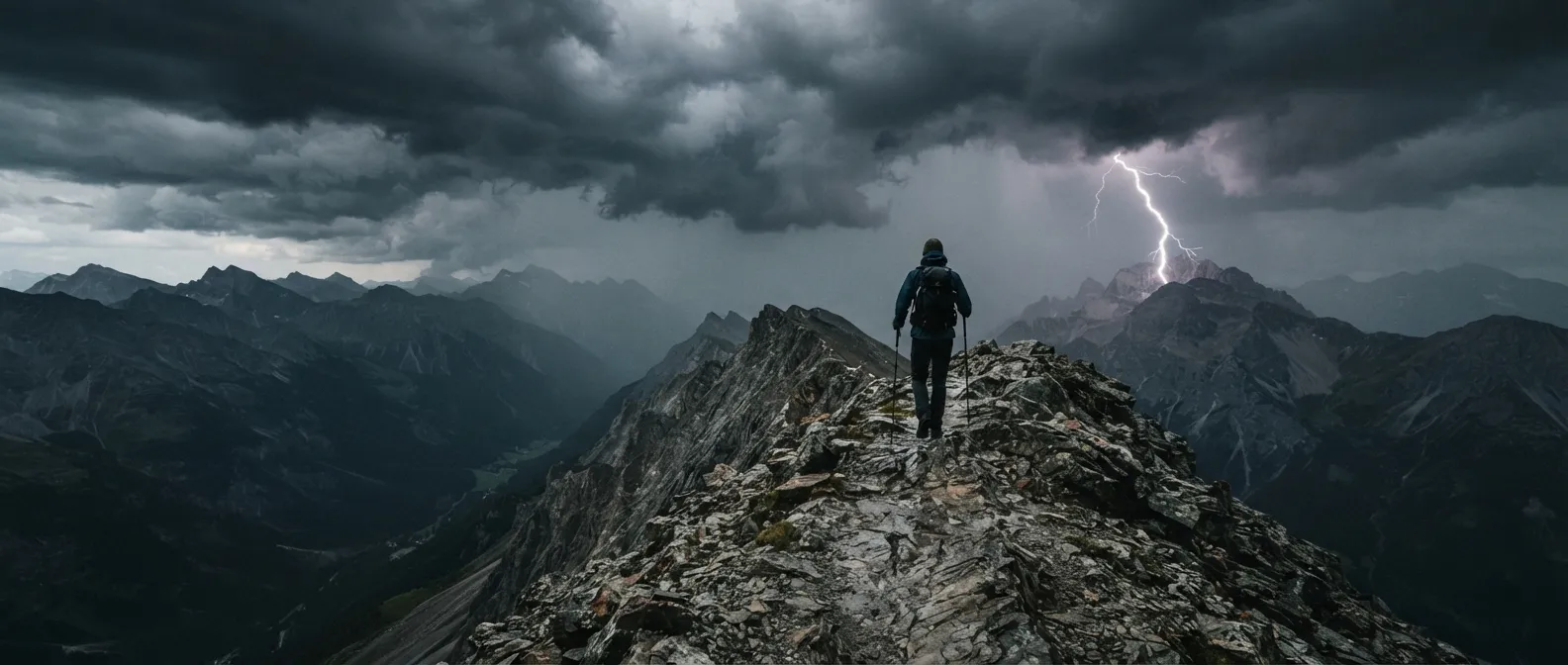
Lightning: When the Sky Targets You
In 3 seconds, a lightning bolt heats the air to 30,000 kelvins and kills 10% of those it strikes: here is what is at stake before you count to thirty.
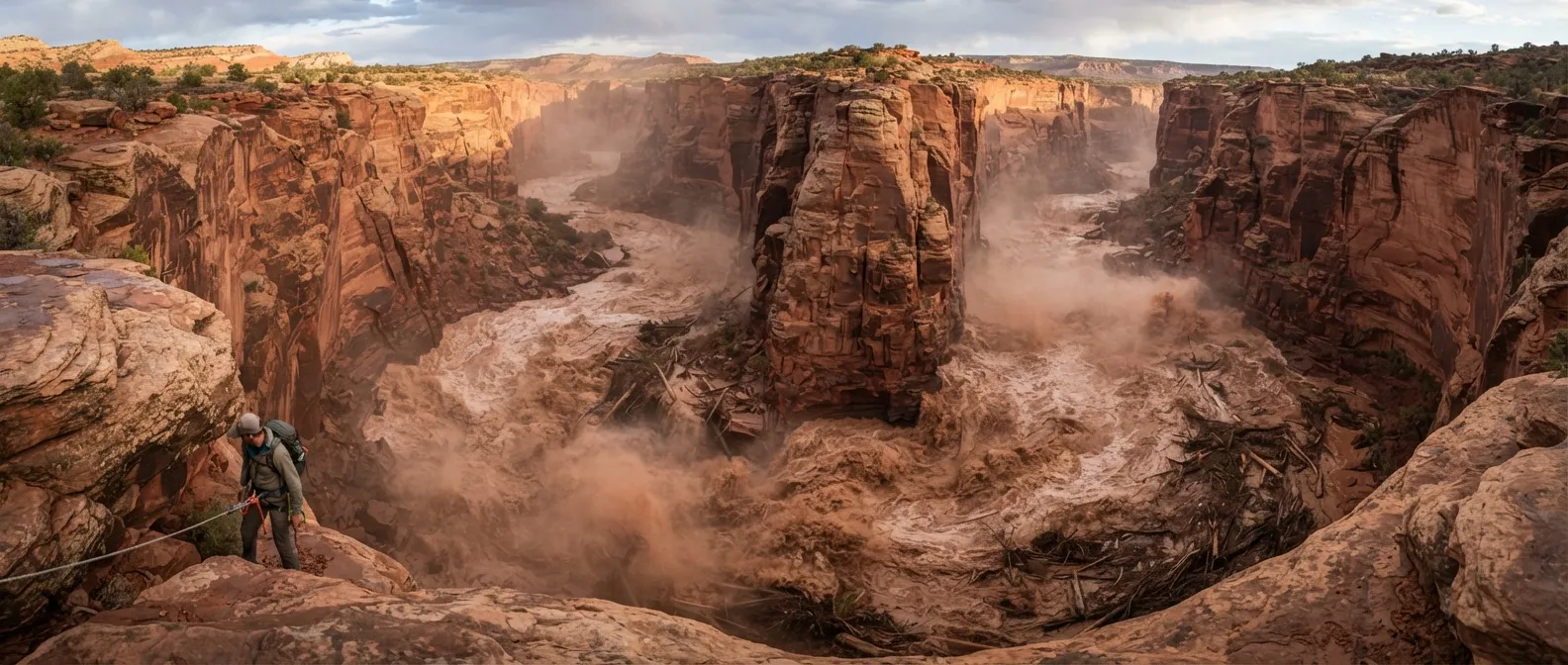
Flash Flood: Water Arriving Faster Than You
It isn't raining where you are, the creek has been dry all morning, yet you have less time than you think before a wall of water rushes down the valley.
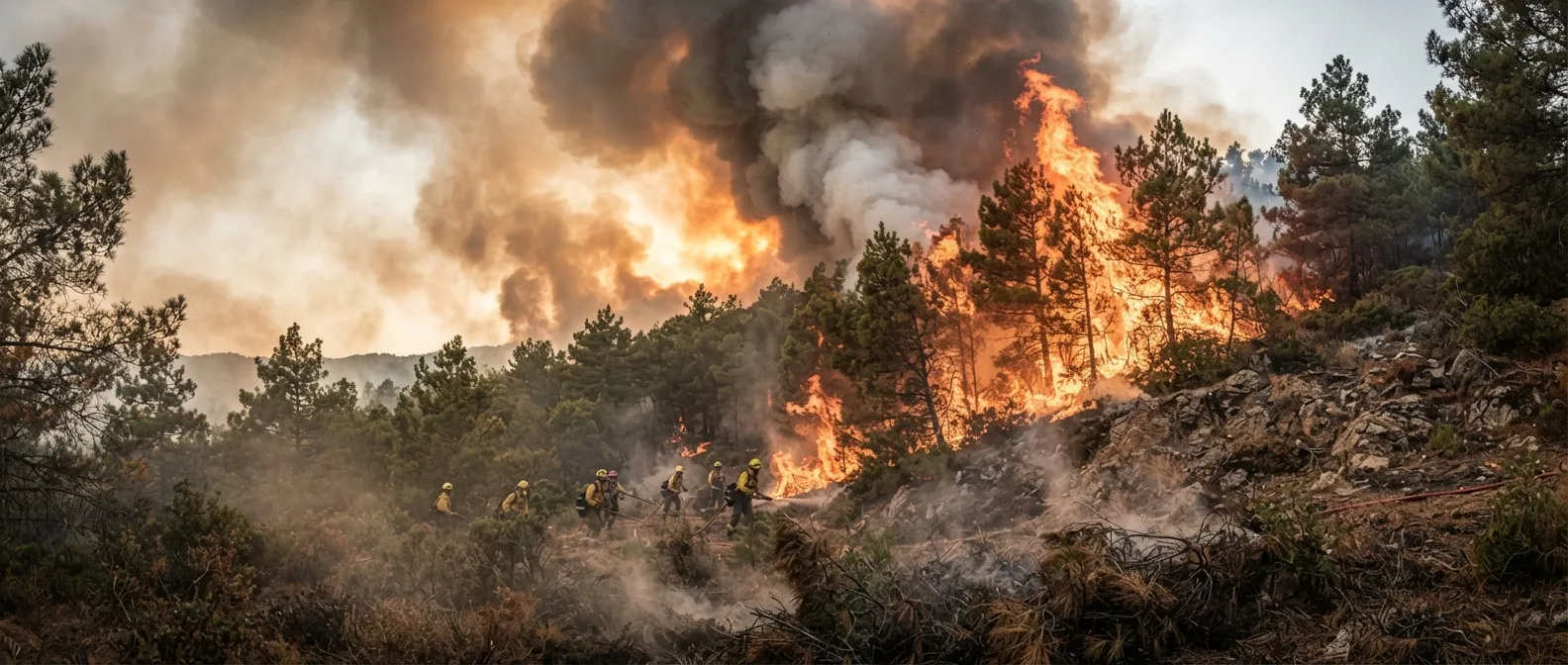
Forest Fire: Evacuating, or Protecting Yourself When You Can No Longer Run
It moves faster than you uphill, jumps roads via embers, and won't wait for you to figure out what's happening.