Injured, Alone, No Service: Self-Rescue
No one is coming for hours. The first step isn't to panic—it's to perform your own assessment. On yourself, with no witnesses, and no second opinion.
You took a spill on a slope, you’re completely alone, and your ankle—or worse, your leg—can no longer bear your weight. Your phone shows zero bars. Nobody knows your exact location, or nobody expects you back until tonight. The question that dictates everything isn’t “how much does it hurt?” It’s: do I move, or do I stay put?
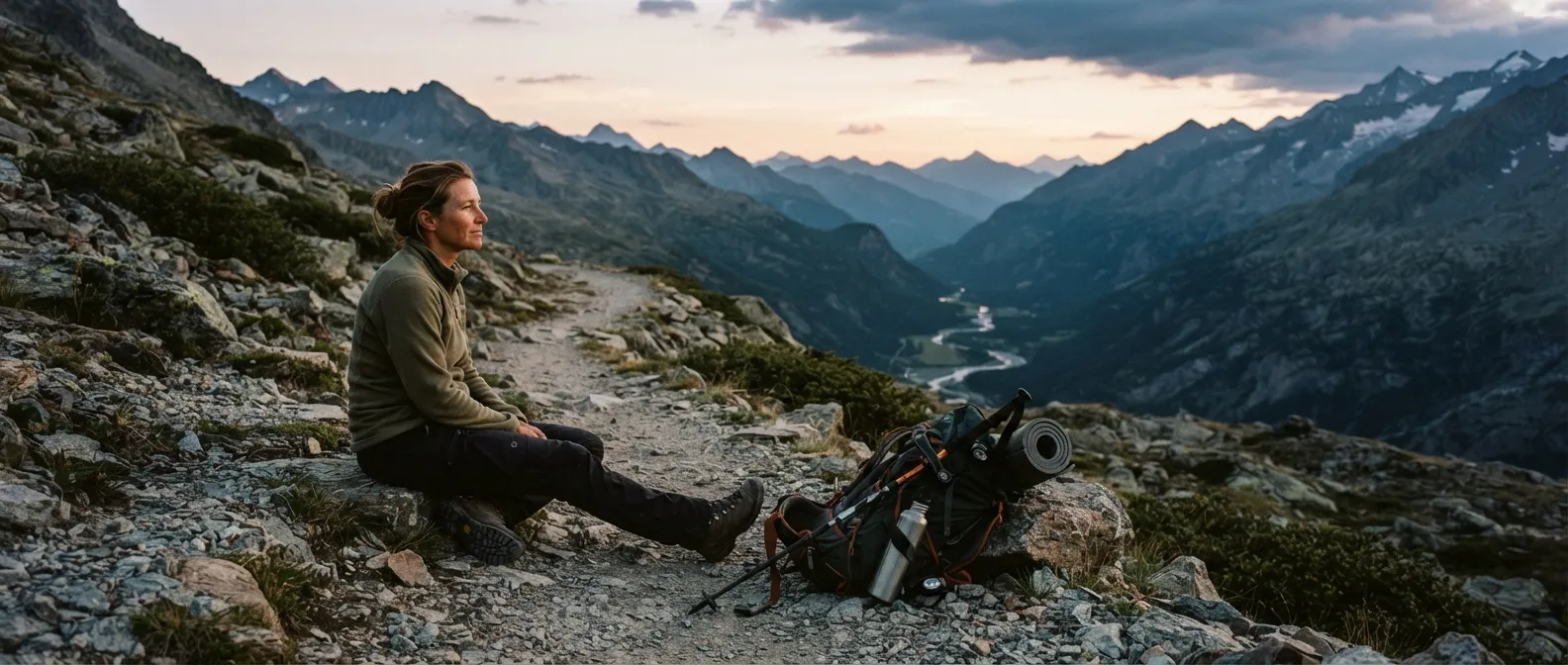
Stay or Move: The Decision That Trumps Everything Else
Before taking any technical action, run through a simple matrix. Stay put if: someone knows your route and expected return time, your injury prevents safe walking (fracture, dislocation, heavy bleeding), or nightfall is less than two hours away. Try to move if: no one knows where you are, you can make progress without worsening the injury, and cell service or a busy trail is within a reasonable distance.
Assessing Yourself, step by step
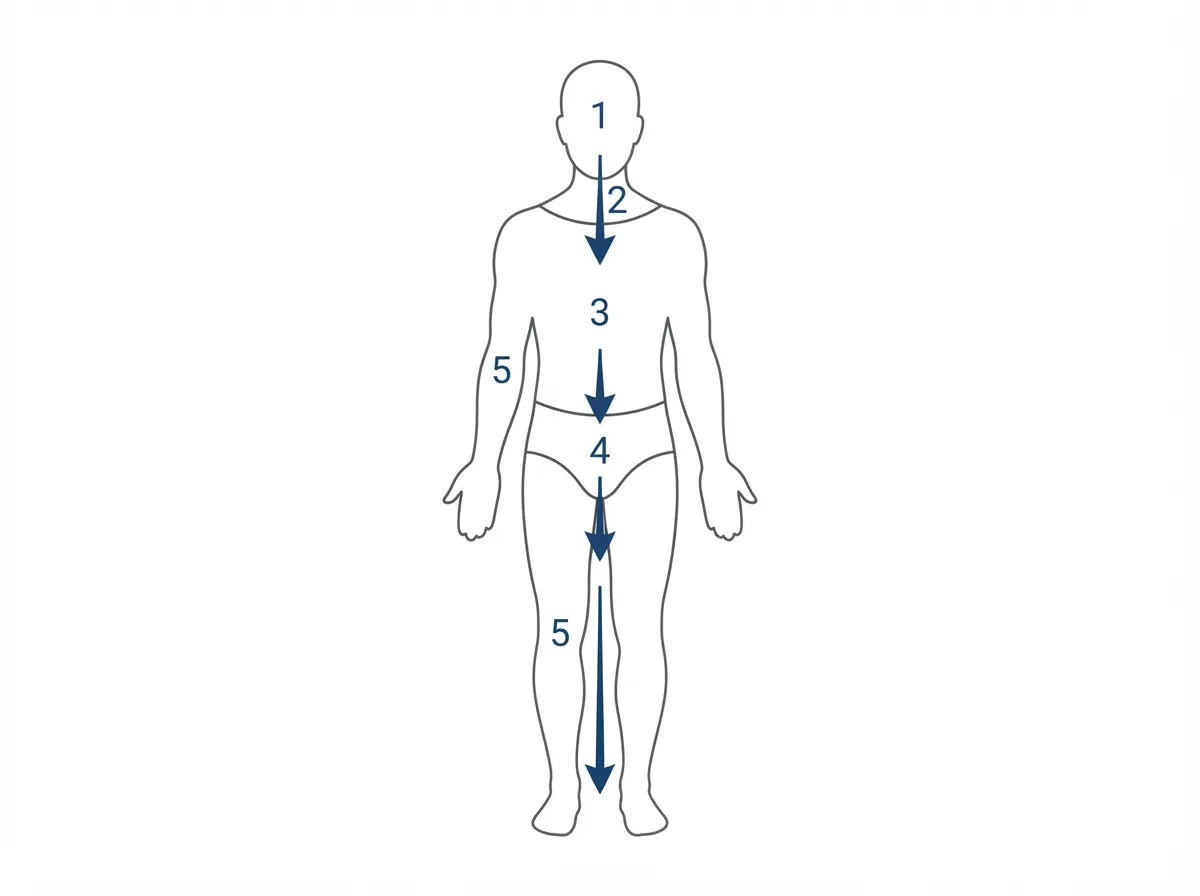
With no one around to check on you, you have to run the assessment yourself—hands-on, methodically, despite the pain screaming at you to focus on a single spot.
- Check for severe bleeding first: run your hands over your whole body, starting with the most vulnerable areas (scalp, limbs). Bleeding that soaks through clothing in minutes takes priority over everything else, including an obvious fracture.
- Palpate your skull, neck, chest, and abdomen before your limbs, even if the pain from an injured leg or arm screams louder. Diffuse abdominal pain or a tender spot on your spine could point to an internal injury far more serious than a visible sprain.
- Test each joint gently: check your range of motion and pain levels without forcing anything. Stop at the very first bad sign—a catching joint or a visible deformity shouldn’t be tested any further.
- Check sensation and color below the injury (toes, fingers): a cold, pale, or numb limb beneath a splint or tourniquet means it’s compressed too tightly and must be loosened immediately.
Stop the Bleeding First: The One-Handed Tourniquet
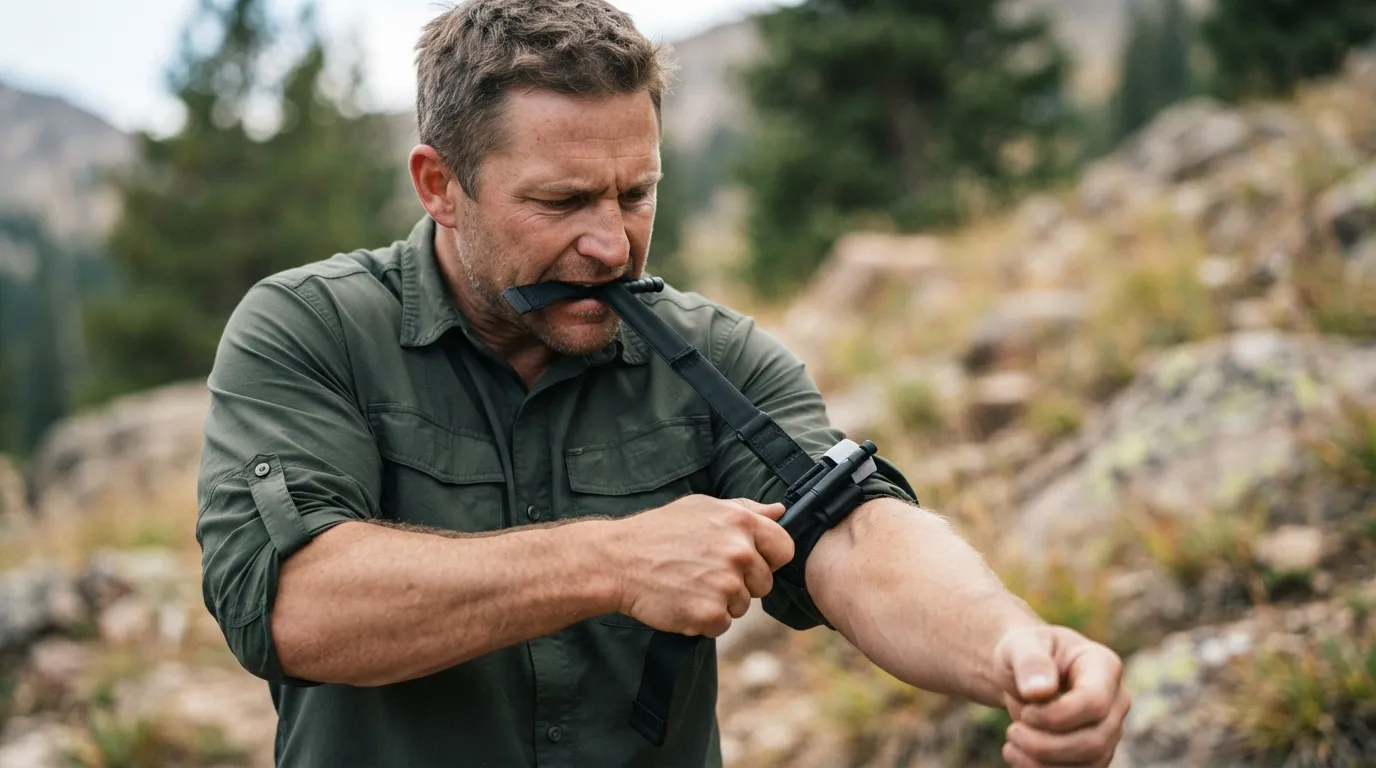
Applying a tourniquet to yourself using only one functional hand requires pinching one end between your teeth or under a knee to generate tension, while your free hand tightens and locks the mechanism down. It’s less precise than using both hands, but a tourniquet pulled too tight and adjusted later is always better than bleeding out while searching for the perfect position.
A Non-Weight-Bearing Leg: Improvised Splinting
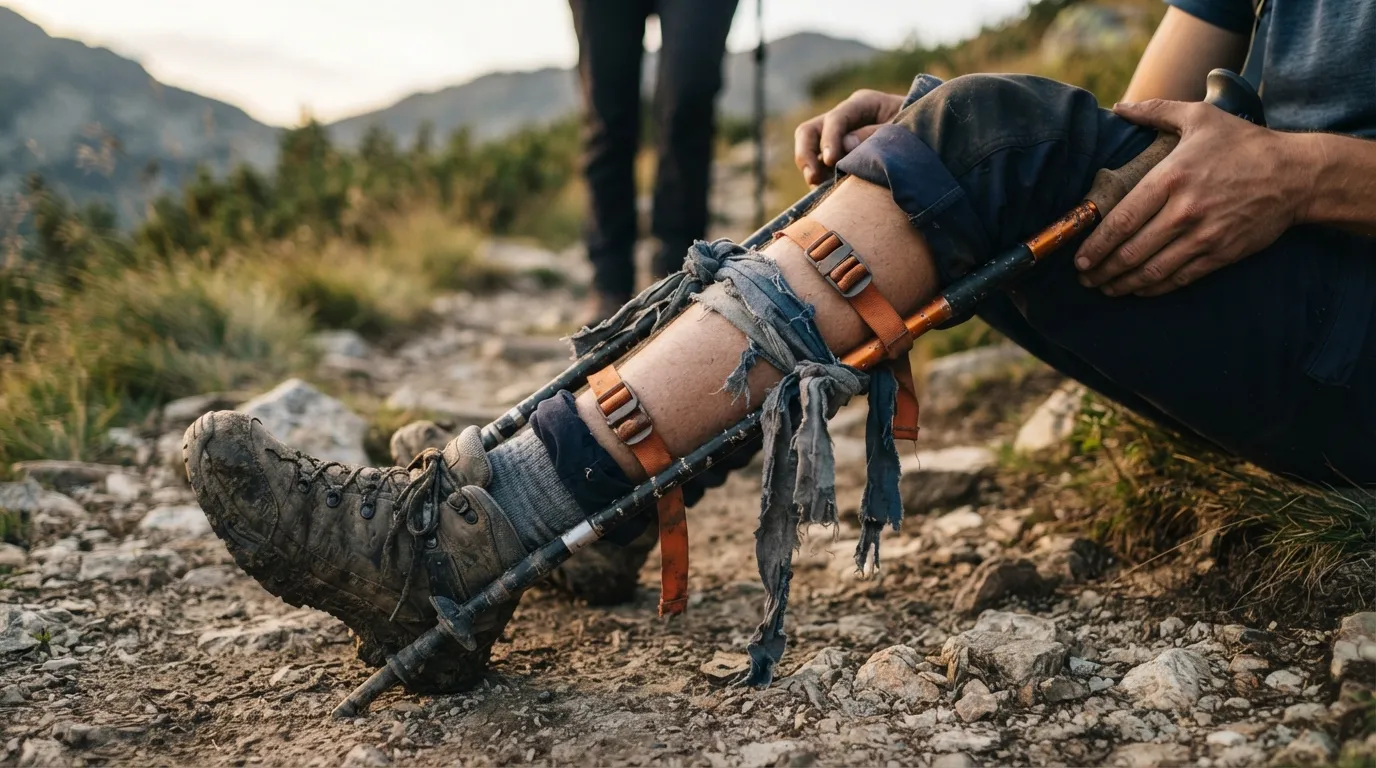
Two trekking poles—one on each side of the leg, extending from the foot to above the knee for a shin fracture, or past the hip for a femur—secured with backpack straps, shoelaces, or torn strips of clothing. Keep it firm: not too loose (or the bone shifts) and not too tight (or you cut off circulation—always double-check toe color after securing each strap).
- Never force a visibly deformed bone back into alignment: immobilize the limb exactly in the position you found it, unless a complete absence of a distal pulse forces an emergency realignment maneuver.
- Pad all contact points (ankles, knees) with folded clothing placed between the pole and your skin to prevent pressure sores during transit.
- Secure bindings above and below the fracture site, never directly over the break itself.
- Recheck toe sensation after tightening each strap: any emerging numbness means you need to back off a notch.
Sprains: The Weight-Bearing Rule
A swollen ankle doesn’t immediately reveal whether you’ve broken a bone or simply stretched a ligament. The field rule used by mountain rescue professionals: if you can put weight on it and take four steps with manageable pain, walk carefully—with or without a flexible support; if bearing any weight triggers breath-taking pain, or if the ankle gives out sideways, treat it as a fracture and keep all weight off it.
Dislocated Shoulder: Self-Reduction Without Traction
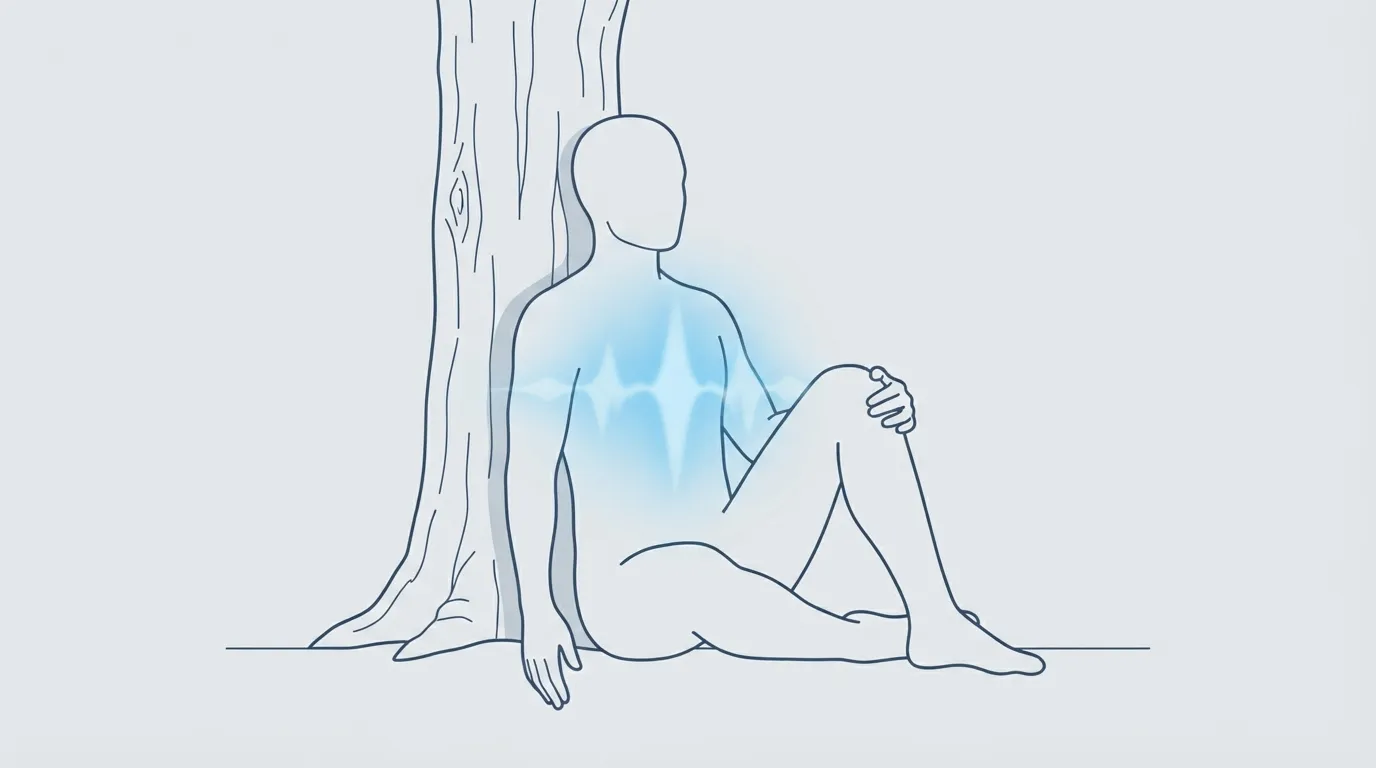
The Cunningham technique, commonly used in emergency departments, requires zero traction or sedation. It relies entirely on conscious muscle relaxation of the trapezius, deltoid, and biceps while seated with shoulders dropped and taking slow, deep breaths. Alone, without someone to massage those muscles for you, you can still apply the core principle: sit down with your back firmly braced against a tree or boulder, let the affected arm hang completely limp, and breathe slowly for several minutes, consciously releasing shoulder tension on every exhale without pulling or forcing anything. In a recent clinical study, the Cunningham technique successfully reduced dislocations in about a third of patients on the first try. Published literature reports success rates ranging from 23% to 100% depending on protocols—a spread that underscores one main point: never force it. If two calm attempts fail, immobilize the arm against your chest and focus on getting out.
Impaled Objects: Never Pull Them Out
A knife, stick, or piece of metal embedded in a wound often acts as a plug against catastrophic bleeding. Pulling it out can trigger massive hemorrhaging, especially if the object sits near a major blood vessel. The rule is simple and counterintuitive: leave the object in place, stabilize it by packing rolled fabric around both sides to keep it from shifting, and leave it alone until you receive professional medical care.
Moving While Injured: Crawling, Leaning, Dragging
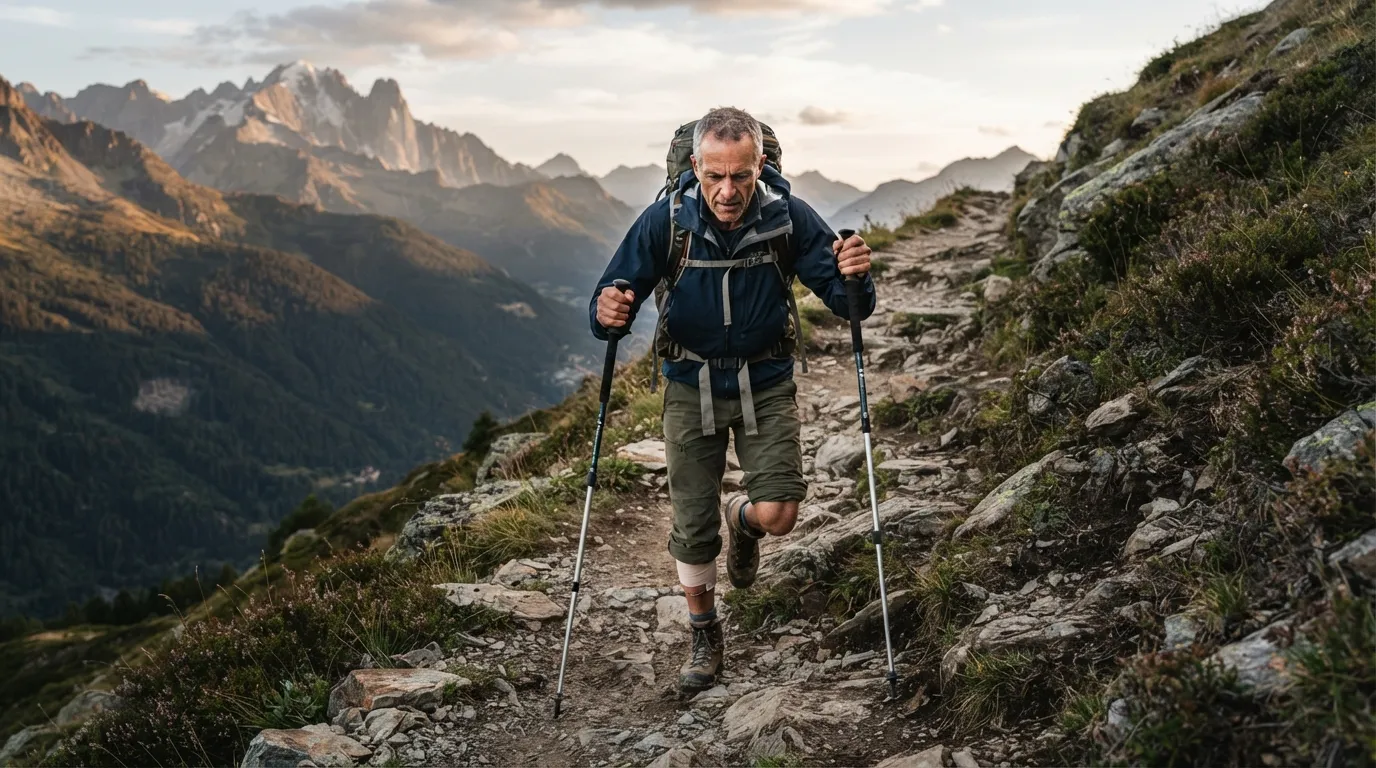
Two trekking poles adjusted to the proper height and padded at the top with folded clothing can serve as functional crutches on moderate terrain. On steep slopes or loose ground where standing is too risky, crawling on all fours or scooting on your butt while pushing with your arms is slower, but far safer than taking a fall. An emptied backpack placed under your rear and pulled by its shoulder straps makes an effective improvised sled over snow or gentle grassy slopes, saving your arms over long distances.
Signaling Your Position Without Cell Service
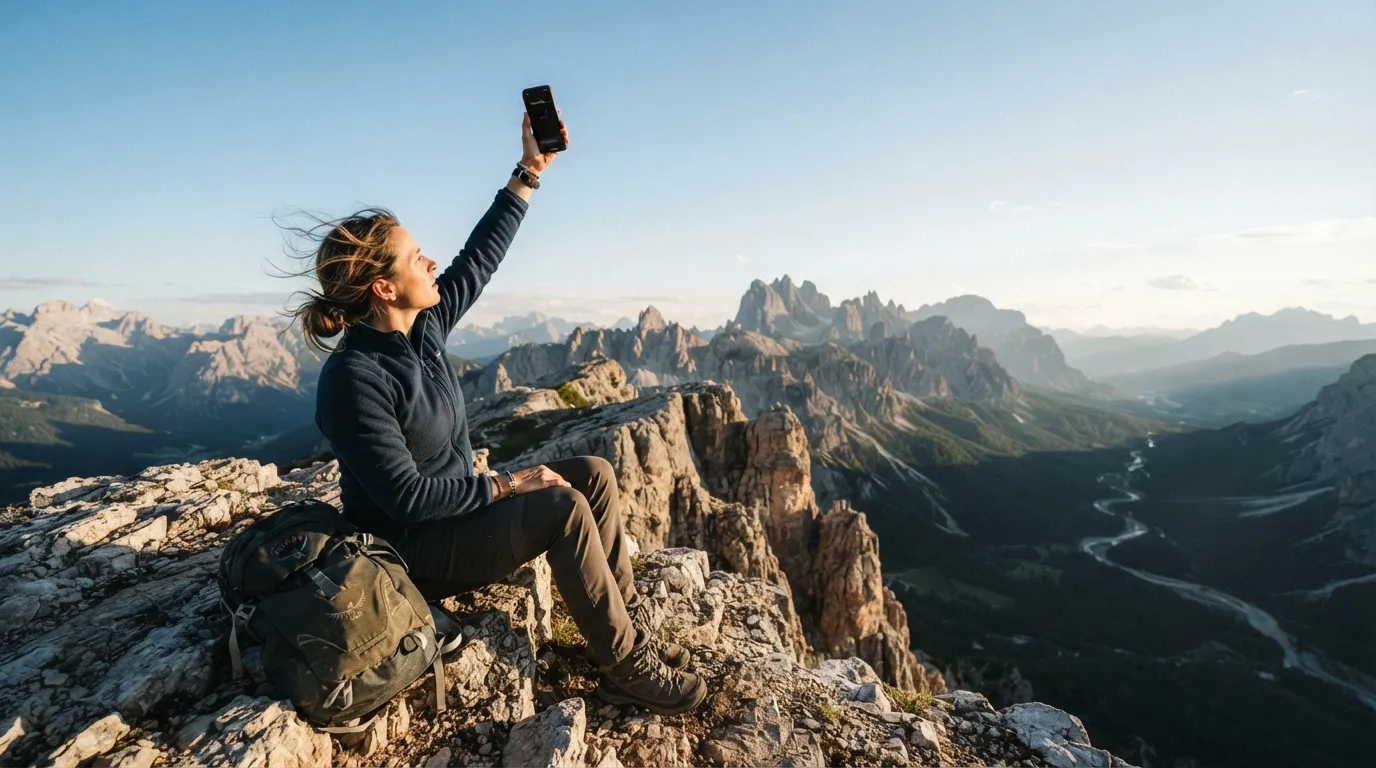
- Gain elevation if you safely can. Cell signals require a direct line of sight to a tower. Gaining just a few dozen meters of elevation—reaching a ridge instead of staying in a canyon bottom—can make all the difference.
- Toggle Airplane Mode on and off to force a fresh network search rather than letting your phone scan continuously at full power. This conserves battery life, which drains rapidly in dead zones.
- Send a text message instead of trying to call if your signal is too weak for voice data. A text packet requires only a fraction of a second of connectivity to transmit.
- Use Emergency SOS via Satellite if your phone supports it (iPhone 14 and newer, or select recent Android devices). With no cell towers in range, a short questionnaire sends your coordinates and status directly to emergency responders when aimed at an unobstructed sky.
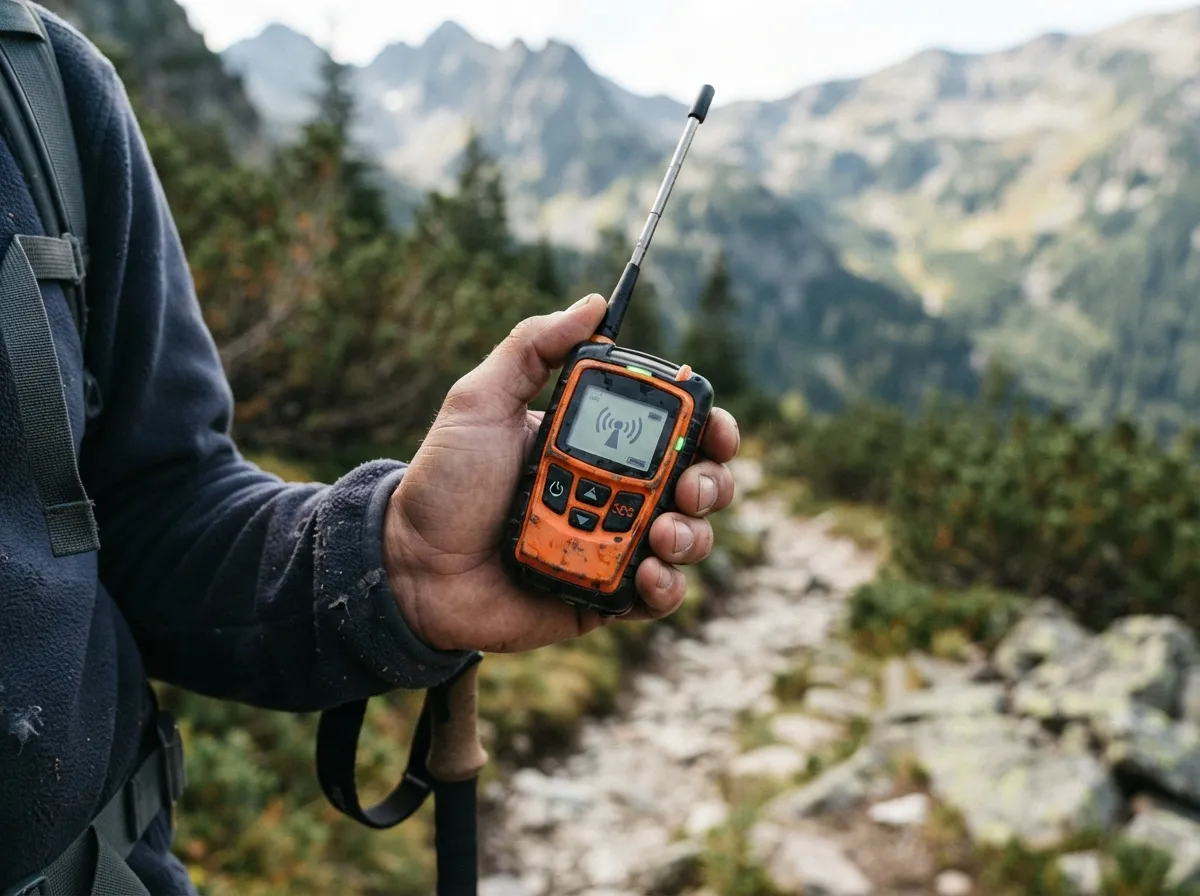
- A dedicated PLB or satellite messenger (Garmin inReach, Zoleo) remains the gold standard in remote areas. Unlike cell phones, these devices are built specifically for off-grid emergencies and operate independently of mobile networks.
- During the day, use a signal mirror or any shiny surface to reflect sunlight; flashes can be spotted miles away by aircraft. At night, flash three short, three long, and three short bursts (international SOS) using your headlamp.
Surviving the Night Injured
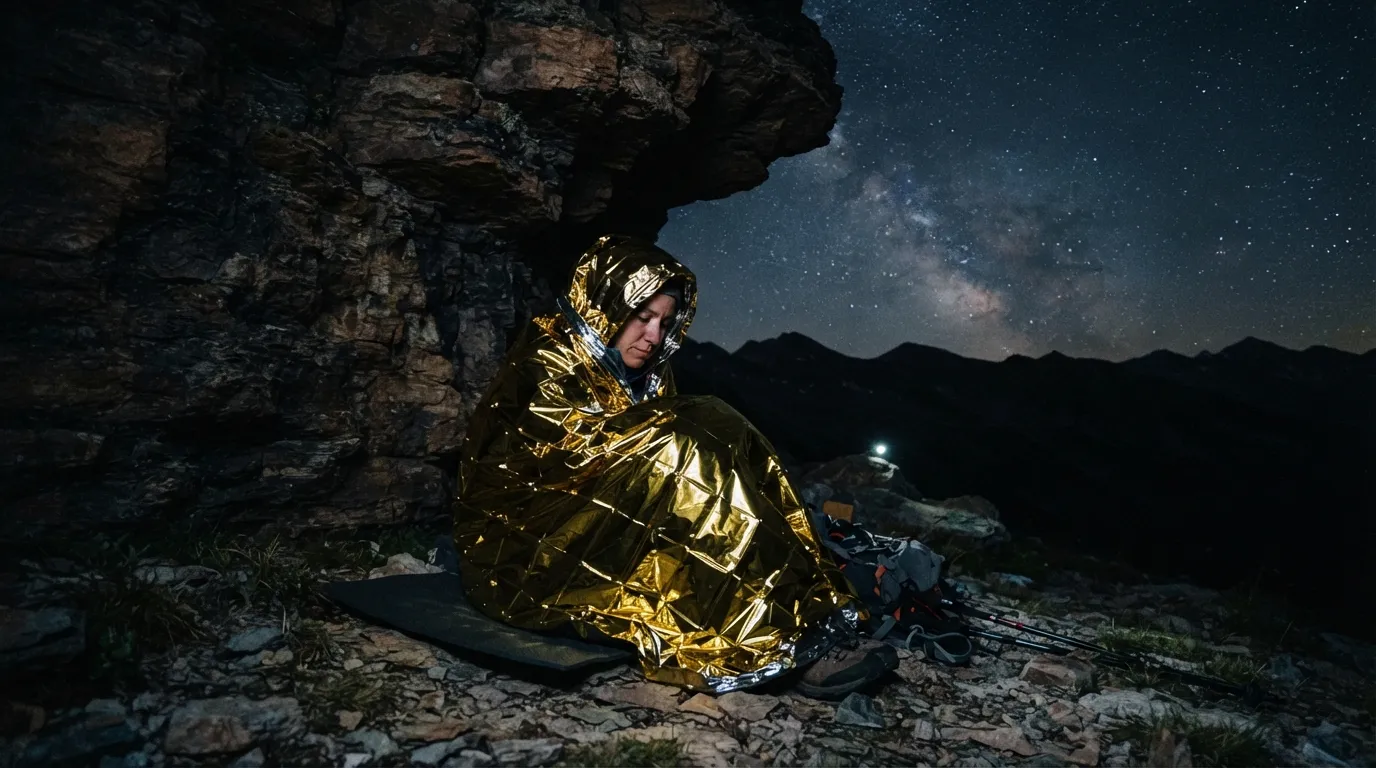
An injury keeps your body still, and an immobile body produces far less heat than an active one. Hypothermia becomes a major risk even on relatively mild nights. Insulate yourself from the ground using anything available—an emptied backpack, dry pine boughs, or extra clothing—before you even worry about covering yourself. Ground conduction drains core body heat much faster than ambient air. Pain itself will disrupt sleep and wear down your morale; focus on slow breathing, counting, and setting small hourly goals (wiggling your toes, taking a sip of water) to get through the night one hour at a time.
For pain management, standard over-the-counter analgesics like acetaminophen or ibuprofen can be taken if you carry them and have no medical contraindications—always follow standard dosing guidelines rather than taking extra “because it hurts.”
What the Mind Actually Changes
Prevention Beats Self-Rescue
Every technique in this guide comes down to a basic reality that no skill can replace: leaving your detailed route and estimated return time with someone back home changes the entire rescue timeline if you fail to show up. A location-sharing app, a text message sent to a friend before losing service, or a note left on your vehicle’s dashboard can shave hours—or even days—off search and rescue response times.
Frequently asked questions
Should I stay put or try to reach cell service if I’m injured and alone?
Stay put if someone knows your route and expected return time, or if moving risks making your injury worse. Only attempt to move if no one knows where you are and you can travel safely toward cell coverage or a high-traffic trail.
How do I apply a tourniquet on myself with only one working hand?
Anchor one end of the strap between your teeth or under a knee to create leverage, then use your free hand to pull the strap tight and secure the windlass. Tighten until all bleeding stops completely; place it high on the limb and never over a joint.
Can you reduce a dislocated shoulder on your own?
It is possible using a non-traction method like the Cunningham technique: sit down, relax your arm completely, and practice deep, slow breathing to achieve total muscle relaxation rather than yanking on the joint. Success rates vary widely, and you should never make more than two gentle attempts before immobilizing the arm instead.
How do I signal my position without mobile coverage?
Head for higher ground to catch a signal, try sending a text message instead of making a call (texts require less signal strength), and use satellite Emergency SOS if your phone supports it. A dedicated PLB or satellite messenger like a Garmin inReach is the most reliable option in remote areas.
Does 114 text service work for any emergency in France?
No: the 114 number in France is specifically designated for individuals who are deaf, hard of hearing, or unable to speak. For general emergencies, calling 112 is the correct protocol. If you have no voice service, texting a friend with your exact coordinates is your best alternative option.
Should I pull out an object embedded in a wound?
No, never. An embedded object acts as a plug against heavy bleeding; removing it can cause rapid, life-threatening blood loss. Secure it in place using rolled fabric on either side and wait for emergency medical care.
Key takeaways
- Your first decision—before performing any treatment—is choosing whether to stay or move. When in doubt, stay put.
- Run your self-assessment in order: control severe bleeding first, then check your neck and torso, and finally your limbs. Always recheck distal circulation after immobilizing an injury.
- Never remove an impaled object; manage a shoulder dislocation through muscle relaxation rather than force.
- If you have no cell service: gain elevation, try texting, use satellite SOS features if available, and remember that leaving an itinerary before you leave home is the single most effective safety measure.
- What kept survivors like Joe Simpson and Aron Ralston alive wasn’t sheer physical power—it was breaking an overwhelming crisis down into tiny goals, minute by minute.
Going further
- Joe Simpson, Touching the Void (Jonathan Cape, 1988) — the classic survival account that redefined solo mountain self-rescue.
- Aron Ralston, Between a Rock and a Hard Place (Atria Books, 2004) — the memoir that inspired the film 127 Hours.
- Wilderness Medical Society, Clinical Practice Guidelines — for evidence-based protocols on wilderness medicine and field trauma care.
Sources for this module (7)
- Wilderness Medical Society, recherches sur la réduction de luxation sans sédation
- Ugur F., Albayrak M. — Effectiveness of the Cunningham technique for shoulder dislocation reduction, Clinics (São Paulo), 2024
- Apple Newsroom — Emergency SOS via satellite, disponible sur iPhone 14
- info.urgence114.fr — à qui s'adresse le 114
- Wikipedia — Joe Simpson (mountaineer), Touching the Void
- Wikipedia — Aron Ralston, 127 Hours
- Wikipedia — Hugh Glass
Continue in "Critical situations"
Avalanche: the 15 minutes that decide
A slab breaks loose under your skis, you have fifteen minutes before the stats turn against you: what you need to know instinctively, the night before heading out.
Lightning: When the Sky Targets You
In 3 seconds, a lightning bolt heats the air to 30,000 kelvins and kills 10% of those it strikes: here is what is at stake before you count to thirty.
Flash Flood: Water Arriving Faster Than You
It isn't raining where you are, the creek has been dry all morning, yet you have less time than you think before a wall of water rushes down the valley.