Water: Finding, collecting, and making it drinkable
Three days without water is the popular myth. The real question is where it's hiding and what's inside it.
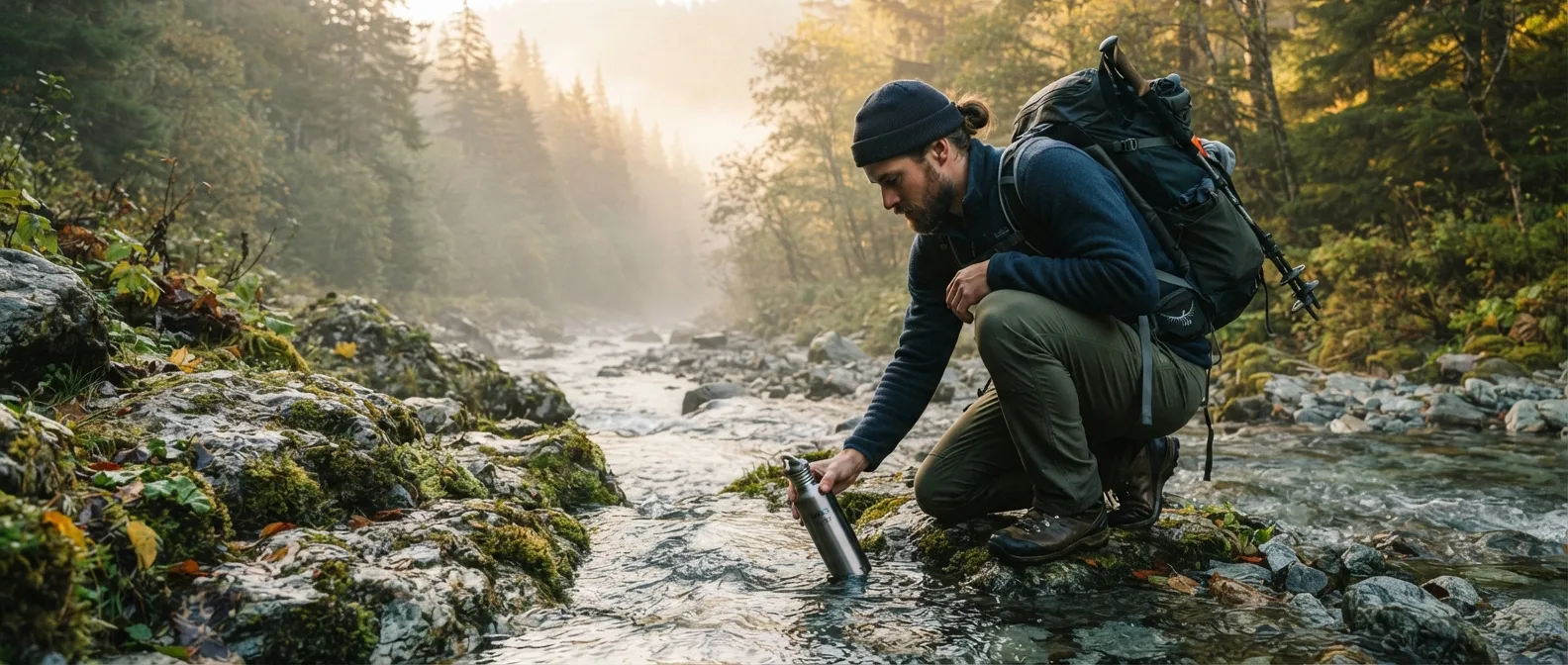
It’s 3:00 PM, 34 °C (93 °F), and your water bottle has been empty since noon. Your head throbs, you’ve stopped sweating, and you just caught yourself second-guessing an obvious trail choice. That’s not fatigue: it’s your brain running on empty, making bad decisions for you. You have a few hours to find water, not three days. Here is how you do it.
How much you actually need
That figure floating around everywhere, “2 liters a day,” is a desk-job average. The US Army Survival Manual (FM 21-76) gives the absolute baseline: at least 2 liters per day, even in freezing cold, just to stay functional. The moment you move or temperatures rise, that number skyrockets. The same manual recommends drinking 0.5 liters per hour at 38 °C (100 °F), and 1 liter per hour above that in desert environments. A man working hard in the sun at 43 °C (110 °F) needs roughly 19 liters a day—yes, nineteen.
Why so much? Because sweat is your body’s only air conditioning. A US military study measured an average output of 1.2 liters per hour of sweat while walking in the desert, and an acclimatized soldier can push that to 2–3 liters per hour. Every liter that evaporates off your skin pulls heat away; if you don’t replenish it, you overheat.
Two counterintuitive but well-established rules follow from this:
- Don’t ration your water; ration your sweat. FM 21-76 is crystal clear: “if you try to ration water, you stand a good chance of becoming a heat casualty.” Drink what you have, and conserve exertion: stay in the shade, rest during peak heat, move during cooler hours.
- Thirst lies. Someone who drinks only “when thirsty” covers only about two-thirds of their actual fluid loss. Drink before you feel thirsty, in small, steady amounts.
And a crucial trap: eating consumes water. Digestion demands fluids, and the manual advises against eating if you have nothing to drink.
Spotting dehydration before it takes over
The earliest sign is visual: dark, strong-smelling urine, produced less and less frequently. FM 21-76 sets a clear target: maintain at least 0.5 liters of urine output every 24 hours. Anything below that means you’re in a deficit. Next come headaches, dizziness upon standing, fatigue, irritability, dry mouth, and a racing resting heart rate.
A practical metric: a loss of 1 kg of body weight equals 1 liter of lost fluid. Medical personnel classify moderate dehydration between 6% and 10% of body weight, and severe beyond that—yet judgment and physical performance degrade after losing just a small percentage (a standard rule of thumb in exercise physiology). That mental decline is what kills: a dehydrated person makes navigation errors, grows stubborn, and forgets to drink. If you catch yourself hesitating over simple choices, blame the lack of water, not yourself.
Where to look for water
Water flows downhill. It sounds obvious, but it’s your first instinct: read the terrain. Look at the base of slopes, cliff feet, ravines, and low points between sand dunes. FM 21-76 breaks this down into a list of signs that Bedouins and Indigenous Australians have relied on for generations.
Reading animal behavior
- Game trails converge as they lead to water. Follow them in the direction where they merge, heading downhill.
- Grain-eating birds (pigeons, doves, sandgrouse, finches) must drink every day. They fly toward water at dawn and dusk, low, fast, and in a straight line; on the return trip, heavy with water, they hop from tree to tree. Birds circling over a specific spot (unless they are vultures) indicate a water source. On the other hand, birds of prey and seabirds tell you nothing: they get their moisture from their prey.
- Bees and ants entering a tree hollow often point to a water-filled cavity: siphon it out using a tube, or stuff a rag inside and wring it out.
- Bedouins read swarms of flies: where they gather in the desert, surface water was present recently, and digging is almost always worth the effort.
- In arid zones, bird droppings clustered around a rock crevice betray water hidden inside or nearby.
Reading plant life
Reeds, rushes, willows, cattails, and poplars all require deep moisture—their roots sit directly in it. An isolated palm tree in a desert has water “a few feet below its base,” according to the classic manual. A patch of vibrant green in a drab, brown landscape marks a subterranean seep.
Dry riverbeds
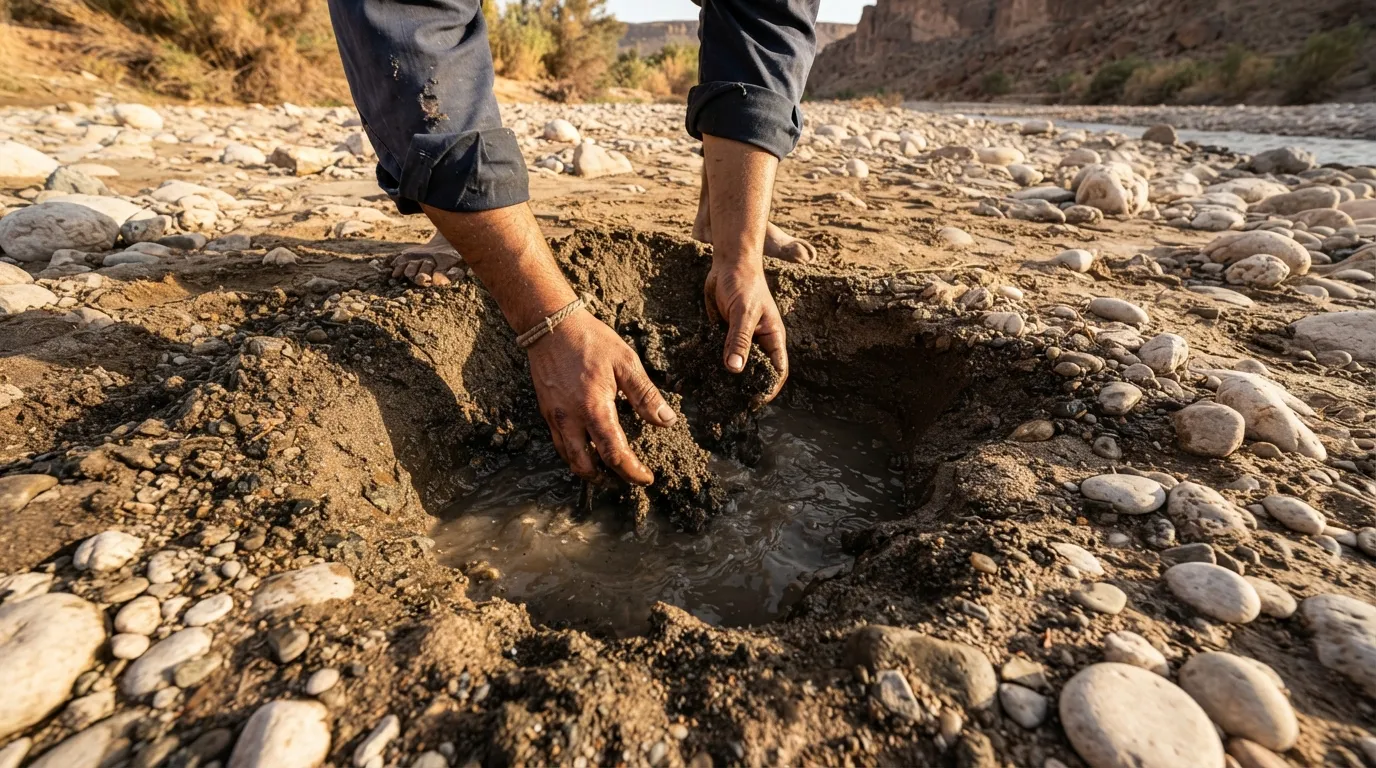
A dry wadi or creek bed frequently holds water beneath the surface. Dig at the lowest point on the outside bend of a curve: that’s where the current cut deepest when it flowed, and where moisture lingers longest. Look for darker sand. In an active riverbed, water usually appears between 30 cm and 1 m down; in deep desert terrain, you may need to go past a meter. Then wait: seepage takes 20 to 30 minutes to fill the hole, sometimes up to an hour in arid conditions. This water has been filtered by the sand, making it cleaner than standing surface water—though it still requires treatment before drinking.
Collecting water without a spring
Dew
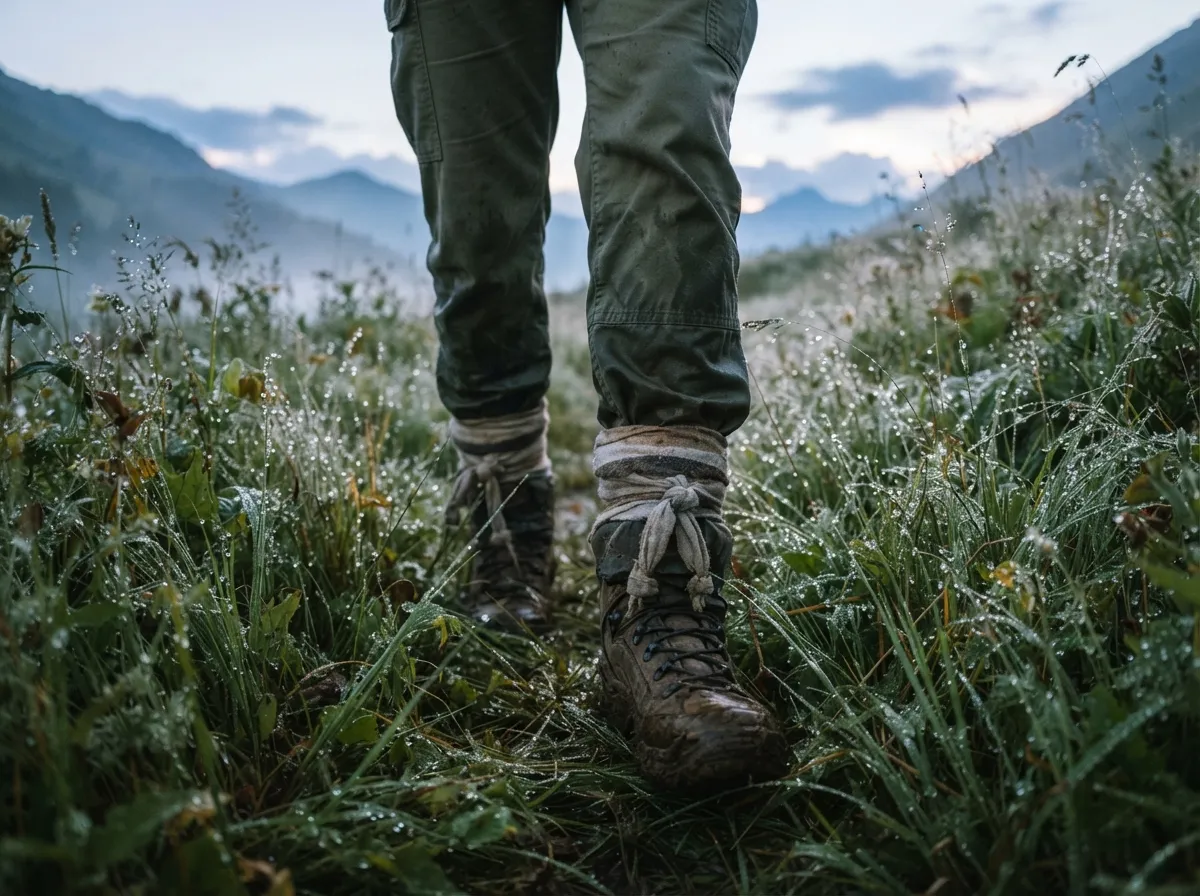
Dew harvesting is one of the most underrated techniques. FM 21-76 recommends tying rags or bunches of fine grass around your ankles and walking through dew-covered grass before sunrise; wring the moisture into a container and repeat. The manual notes that Indigenous Australians could gather “up to a liter per hour” using this method. A t-shirt, towel, or bandana works just as well. Wipe down leaves directly rather than dragging cloth through dirt.
Rainwater
Set up a tarp, poncho, or plastic sheet staked into a funnel shape; use rolled birch bark gutters or broad banana leaves. On a raft or near the ocean, one crucial detail noted in FM 21-76 makes all the difference: if your collection tarp is encrusted with salt, rinse it in seawater before the rain starts (seawater leaves far less salt behind than dried crust) and discard the first few moments of runoff, which washes away residual salt. Steven Callahan, adrift for 76 days in 1982, collected an average of “just over a pint a day” using two solar stills and improvised rain tarps; Poon Lim, who spent 133 days on a raft in 1942–43, stretched a canvas canopy and a life vest to catch passing showers.
Transpiration bags
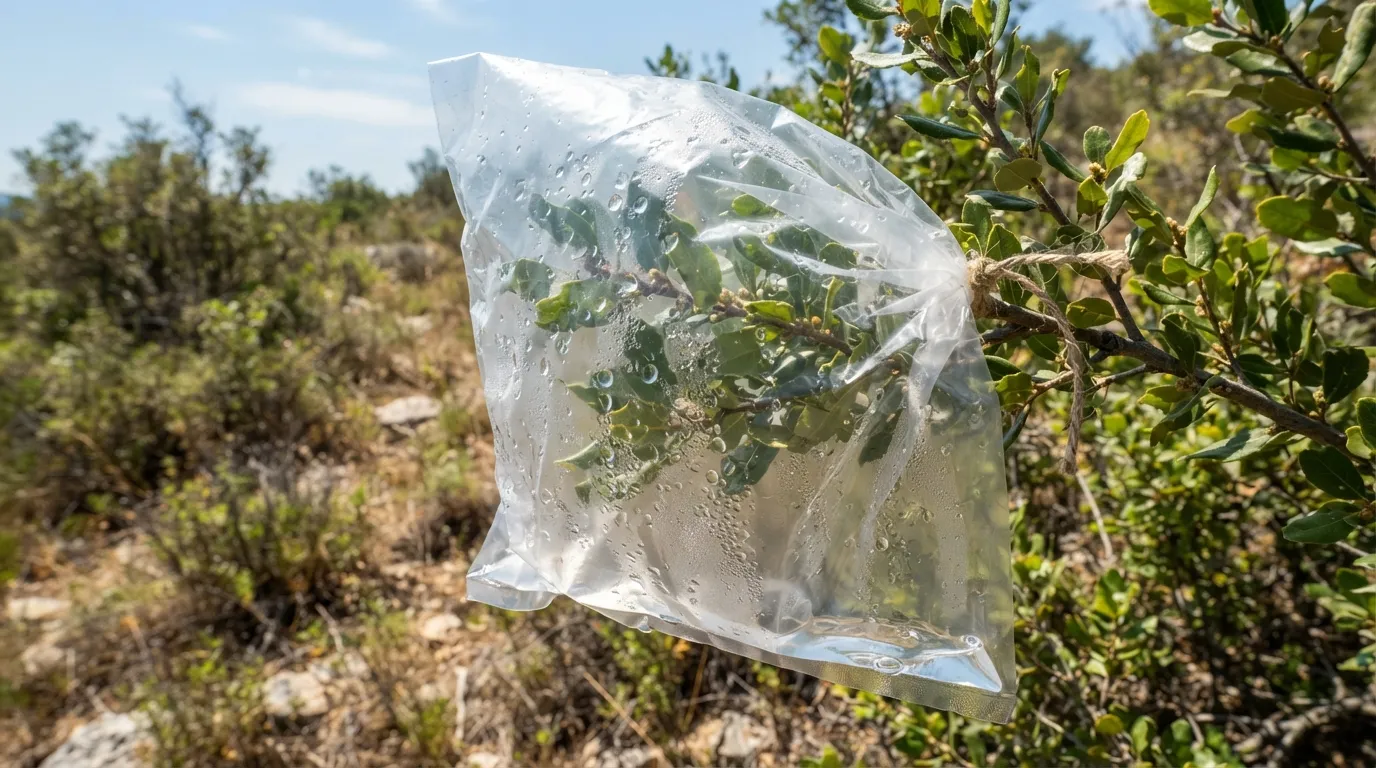
Plants transpire moisture constantly during the day. Wrap a clear plastic bag tightly over a dense, leafy branch in full sunlight, tie the opening closed, and weigh down one corner with a small stone: moisture condenses along the plastic walls and drains to the weighed point. Tested yields range from 100 to 500 ml per bag on a sunny day, with recent literature reviews citing 0.3 to 1 L per day under ideal conditions. It’s a modest yield, but it costs zero physical exertion—a true “set and forget” technique. Set up multiple bags. Move to a new branch after 48 hours, and never use toxic plants: avoid oleander, milkweed, spurges, or anything with milky sap.
Solar stills, and why they disappoint
The classic survival setup—a pit covered with clear plastic, weighted with a central stone, dripping into a cup below. It works, but look at the actual output. A standard pit 40 cm across and 30 cm deep yields 100 to 150 ml per day. In desert conditions, average production sits around 240 ml, while your basic survival requirement exceeds 3.8 L: it would take days of collecting just to replace the sweat lost digging the hole. Even FM 21-76 estimates 0.5 to 1 L per 24 hours under prime conditions, and MythBusters field-tested the method with similar disappointing results. Its true value lies in recycling undrinkable fluids (seawater, urine, or muddy water poured into the pit, or cut vegetation packed around the container) when you have time and no alternatives.
Condensation
In arid zones, dramatic temperature swings between day and night cause moisture to condense on metal surfaces by early morning—car hoods, corrugated sheet metal, or flipped cooking pots. Wipe these surfaces down with a rag and wring it out. Bedouins reportedly uncovered cold underground stones before dawn to let dew settle on them: plausible and clever, though best used as a minor supplemental trick.
Snow and ice
A non-negotiable rule: never eat snow raw. Melting and warming snow inside your mouth drains core body heat. Both FM 21-76 and wilderness medicine literature warn that this accelerates hypothermia and, paradoxically, worsens dehydration. Melt snow over a fire, stove, or inside a sealed, waterproof flask tucked between your layers of clothing. When using a stove, always add a splash of liquid water to the bottom of the pot first: dry snow packed on hot metal creates an insulating pocket of air and steam, which can burn a hole through your pot before the snow on top melts. An MSR field guide estimates that a 230 g gas canister melts roughly 14 liters of snow—making fuel your main limiting factor.
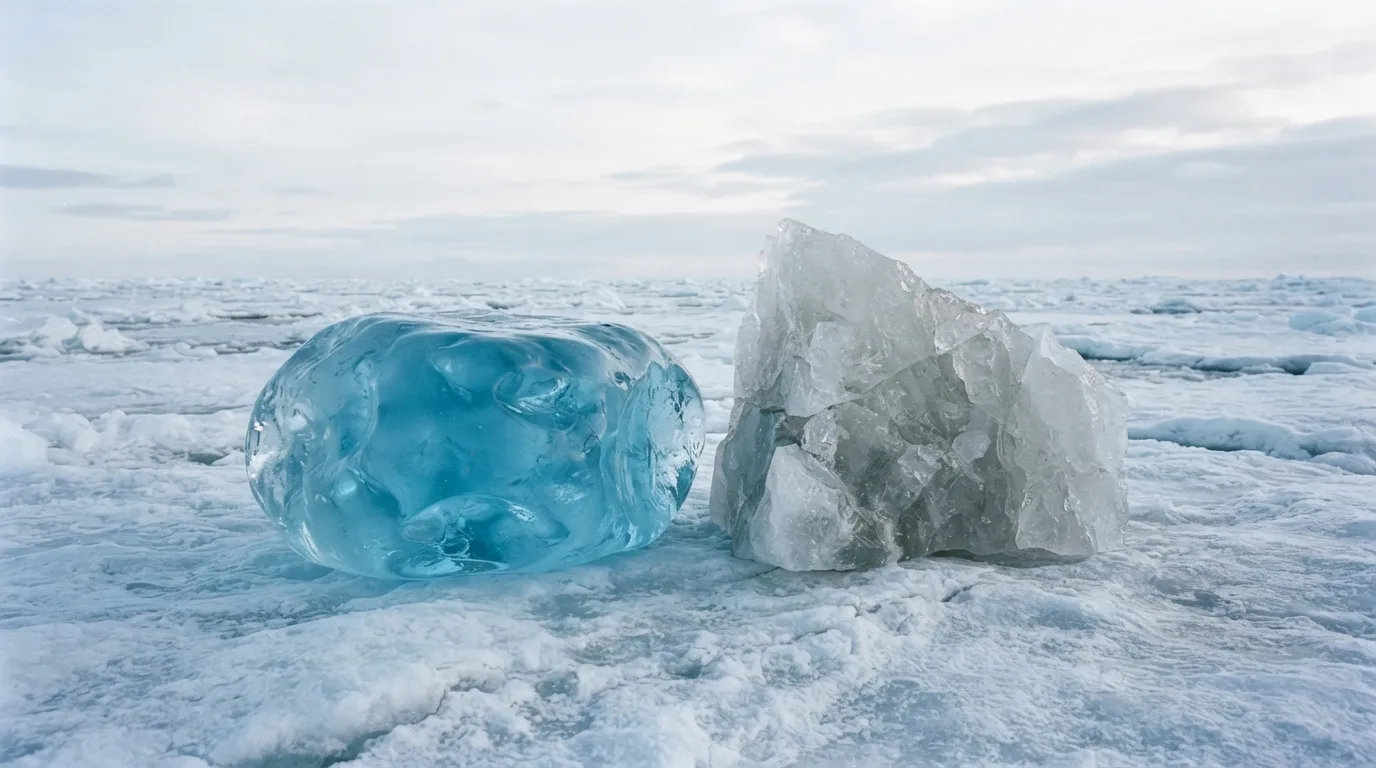
On sea ice, multi-year sea ice yields drinkable water: over time, brine pockets drain downward, reducing the salt content of old ice below 1 g per liter. FM 21-76 describes this ice as bluish, with rounded edges, breaking easily; first-year ice appears grey, milky, hard, and salty.
Water from plants
- Green bamboo: Bend a standing stalk down, tie it off near the ground, and cut off the top—it will drip clear, odorless water all night (FM 21-76). Cracking open old, hollow bamboo segments can also yield trapped water.
- Tropical vines: Notch the upper section first, then cut the lower section, drinking what drains out. If the fluid is milky, sticky, discolored, or bitter, discard it immediately—a universal rule in survival handbooks.
- Green coconuts: Exceptional hydration source; mature coconuts contain heavy oils that act as a laxative if consumed in large amounts.
- Birch or maple sap in early spring (lasting roughly a month): Abundant and slightly sweet. However, raw sap ferments within 24 hours and cannot be stored long-term without processing.
Purification techniques
Finding water is only half the battle. The other half is dealing with microscopic threats you can’t see. Four main categories of purification exist, each with specific limitations.
Boiling: One minute is all it takes
Boiling is the ultimate benchmark: it destroys everything—bacteria, viruses, Giardia, and Cryptosporidium. Microorganisms die within seconds once temperatures exceed 60–70 °C (140–158 °F), long before a rolling boil begins. The Wilderness Medical Society states that “water brought to a rolling boil is adequately disinfected”; the CDC recommends 1 minute at a rolling boil, increased to 3 minutes above 2,000 m (6,500 ft) as a safety margin. The old advice of “boiling for 10 minutes”—still found in older printings of FM 21-76—wastes precious fuel: even on the summit of Mount Everest, water boils at around 70 °C, which is more than enough to pasteurize it. Allow the water to cool naturally in a covered container.
Boiling without a pot
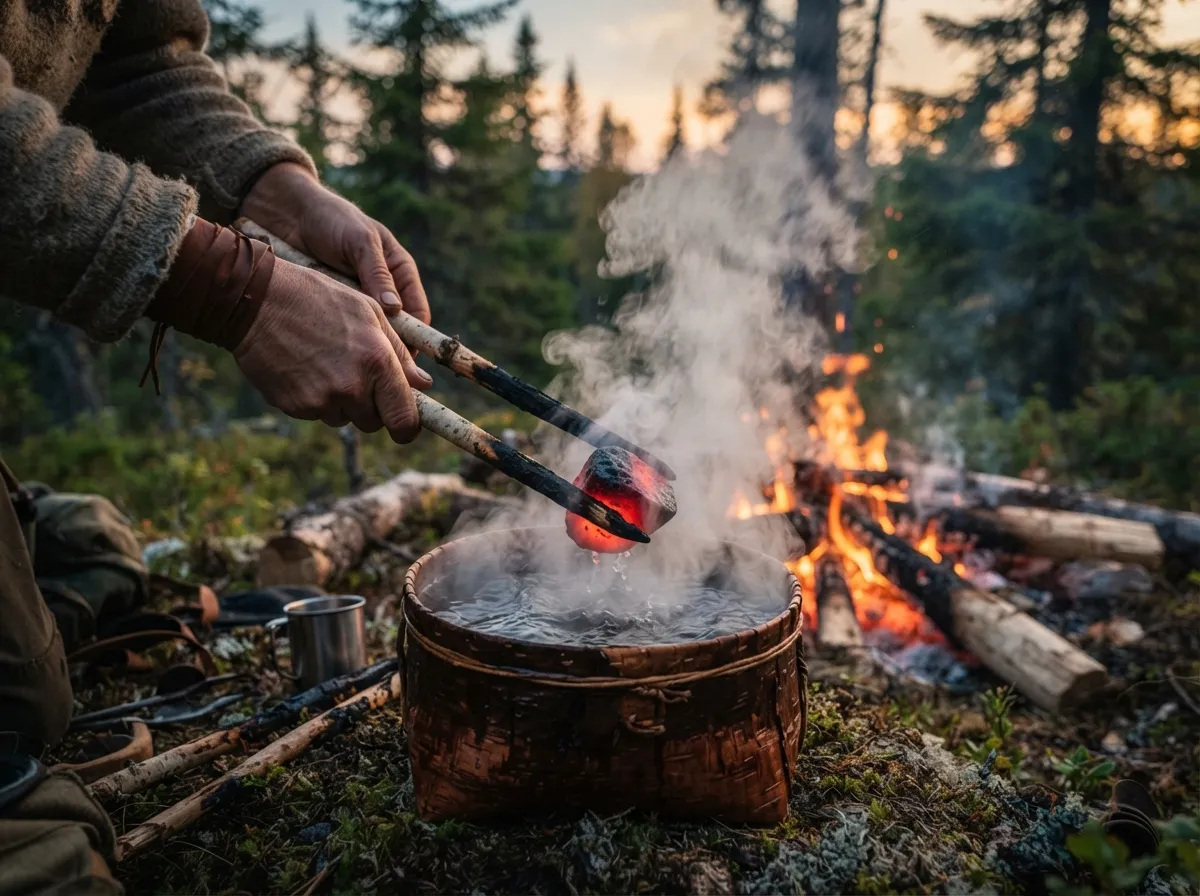
- Hot stones: The oldest known water-heating technique (practiced for at least 4,800 years among Plains tribes). Heat fist-sized stones in a fire, pick them up using green, v-shaped sticks, and drop them into water held in a hollowed log, bark container, hide-lined pit, or tarp basin. Two or three red-hot stones will bring a liter of water to a boil quickly. Never use wet stones or rocks gathered from riverbeds: trapped moisture expands into steam, causing the rock to explode violently. Choose dry, dense, non-porous rocks from dry ground.
- Plastic bottles over embers: As long as liquid covers the inner surface, the plastic remains capped at 100 °C and won’t melt through. It works and looks impressive, though plastic can leach chemicals above 60 °C—use it as a true emergency resort, not a daily routine.
- Paper cups or bags: Operating on the exact same thermal principle, liquid absorbs heat faster than paper reaches its ignition point. Keep direct flames below the water line, and pull it off before the water boils away completely.
Filtration
A mechanical filter acts as a micro-sieve. The Sawyer Squeeze filters down to 0.1 microns absolute, while the LifeStraw operates at 0.2 microns: this easily traps protozoa and bacteria (CDC standards require 1.0 micron or smaller for parasites, 0.3 for bacteria). However, no standard hollow-fiber field filter stops viruses—norovirus, rotavirus, and hepatitis A range from 0.02 to 0.04 microns. In wilderness areas across North America or Europe, viral contamination risks in natural water sources remain low, making a basic microfilter sufficient; in tropical regions or near human settlements, pair filtration with chlorine or boiling. Note that freezing permanently ruins hollow-fiber filters: trapped water expands as it freezes, cracking the internal tubes without leaving visible external damage. If temperatures drop below freezing overnight, keep your filter inside your sleeping bag.
What about improvised sand-gravel-charcoal filters? FM 21-76 makes a firm distinction: “These methods only clarify water, making it more palatable; it must still be purified.” A functional biological sand filter requires about a month to develop a surface biofilm layer to consume pathogens, and even then, it removes 90% to 99% of bacteria—not 100%. An improvised filter constructed in two hours is merely a pre-filter. A helpful step, but still just pre-treatment.
Chemical treatment
- Unscented household bleach (5% to 9% sodium hypochlorite): Add 2 drops per liter of clear water, or double the dose if the water is cold, cloudy, or heavily colored. Stir well and wait 30 minutes. The water should retain a faint chlorine scent; if it doesn’t, add one more drop and wait another 15 minutes (CDC, EPA). If using a 1% bleach solution, use 10 drops per liter. Keep in mind that open bleach loses up to half its potency within six to twelve months.
- 2% Tincture of Iodine: Use 5 drops per liter for clear water, or 10 drops for cold or cloudy water; let sit for 30 minutes (FM 21-76, CDC). Avoid using iodine if pregnant, managing thyroid conditions, or for more than a few consecutive weeks. Hate the taste? Once the required contact time elapses, stir in a pinch of vitamin C (about 50 mg) to neutralize both iodine flavor and color completely (Princeton OA Guide).
- Chlorine tablets (Aquatabs, NaDCC): 1 tablet per liter with a 30-minute wait time (increase to 60 minutes if water is turbid or below 10 °C).
- Chlorine Dioxide (Micropur MP1, Katadyn): 1 tablet per liter; neutralizes bacteria and viruses in 15 minutes, Giardia in 30 minutes, and Cryptosporidium in 4 hours. It stands as the only chemical treatment effective against Cryptosporidium oocysts.
The universal weakness: standard chlorine and iodine doses will not kill Cryptosporidium, and cold or turbid water slows chemical reaction times significantly. Always follow the golden rule: pre-filter first, then apply chemical treatment.
Solar disinfection: SODIS
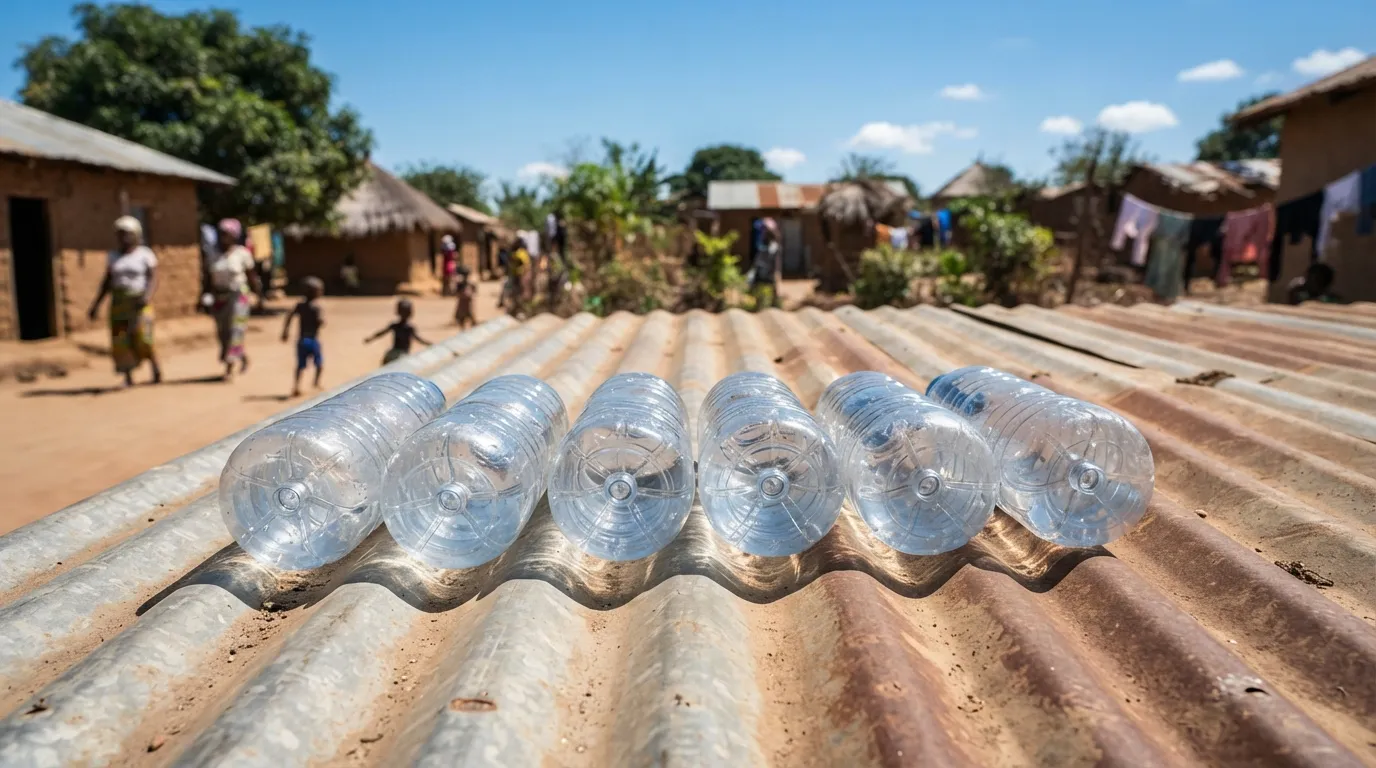
Developed in Beirut during the 1980s by Aftim Acra, validated by the Swiss research institute Eawag, and endorsed by the WHO. Fill a clear PET plastic bottle (2 liters or smaller) with clear water, place it horizontally in direct sun on a reflective surface like corrugated metal or a rooftop, and expose it for 6 hours of full sunshine, or 2 days if overcast. UV-A radiation damages microbial DNA, while water temperatures rising above 50 °C (122 °F) create a synergistic thermal disinfection effect. Field trials record a 30% to 80% reduction in diarrheal disease among regular users. The clarity test is brilliantly simple: place the filled bottle over a newspaper headline—if you can read the bold print through the liquid, the water is clear enough (under 30 NTU). If not, settle and pre-filter first. Limits: SODIS does not remove chemical contaminants, won’t work through thick glass or PVC, and surviving microbes can regenerate if left in the dark—drink the treated water within the same day.
- Select the cleanest available source: moving water over stagnant pools, upstream from campsites or grazing livestock, and far from decaying carcasses.
- Settle turbid water for 12 hours if time permits (FM 21-76), or strain it through a bandana, coffee filter, or Millbank bag.
- Disinfect: Boil for 1 minute (3 minutes at high altitude); use a 0.1–0.2 micron filter combined with chlorine for viral protection; treat with chlorine dioxide for 4 hours; or apply SODIS for 6 hours in direct sunlight.
- Prevent recontamination: Rinse bottle threads and caps with clean, treated water, and keep storage containers sealed.
What doesn’t work
And as for the “three days without water” rule: that average assumes a person resting quietly in the shade under mild weather conditions. Walking through a desert, survival margins shrink down to a matter of hours.
Microscopic threats
Wild surface water harbors three primary categories of organisms:
- Protozoa (1 to 16 microns): Giardia and Cryptosporidium are common in backcountry waters, shed by wildlife and humans alike. Infection causes weeks of severe gastrointestinal distress. Due to their large size, they are easily trapped by physical filters—though Cryptosporidium’s hard outer shell makes it immune to standard chlorine and iodine doses.
- Bacteria (0.2 to 10 microns): E. coli, Salmonella, and Cholera in high-risk areas. Readily captured by filters and easily killed by chemical treatments or heat.
- Viruses (0.02 to 0.085 microns): Norovirus, Rotavirus, and Hepatitis A. Far too small for standard hollow-fiber field filters, but quickly destroyed by heat, UV, or chlorine treatments. Rare in pristine mountain runoff across North America and Europe, but common near inhabited regions lacking sanitation infrastructure.
| Boiling | 0.1-0.2 µm Filter | Chlorine / Iodine | Chlorine Dioxide | SODIS | |
|---|---|---|---|---|---|
| Bacteria | ✅ | ✅ | ✅ | ✅ | ✅ |
| Viruses | ✅ | ❌ | ✅ | ✅ | ✅ |
| Giardia | ✅ | ✅ | ⚠️ Slow | ✅ 30 min | ✅ |
| Cryptosporidium | ✅ | ✅ | ❌ | ✅ 4 hrs | ⚠️ Variable |
| Turbid Water | ✅ | ⚠️ Clogs filter | ❌ Double the dose | ❌ Pre-filter first | ❌ Requires <30 NTU |
| Chemicals | ❌ | ⚠️ Carbon only | ❌ | ❌ | ❌ |
| Time Required | 1-3 min | Immediate | 30-60 min | 15 min to 4 hrs | 6 hrs to 2 days |
| Cost / Weight | Fuel cost | 60-90 g | A few grams | A few grams | Single bottle |
Saltwater, muddy water, and storage
Desalination
Boiling seawater achieves nothing on its own: dissolved salts remain in the pot. You must capture the evaporated steam. FM 21-76 details a simple beach distillation setup: dig a pit, heat seawater using fire-heated rocks or a pot, and suspend a cloth overhead to absorb rising steam; wring out the condensed freshwater and repeat. The method yields little liquid and burns massive amounts of fuel—it remains a strict last resort. Modern liferafts carry manual reverse-osmosis hand pumps or solar stills. If stranded near a coastal beach, dig a fresh well behind the primary dune line: lighter rainwater floats on top of dense saltwater underground, filling your hole with brackish but survivable drinking water.
Clarifying cloudy water
Muddy water clogs microfilters rapidly and shields pathogens from UV rays and chemical disinfectants. Use three practical steps: let it settle (12 hours per FM 21-76, though a few hours often suffices), then scoop clear water off the top; strain through tight fabric (repeatedly if needed); or, if in tropical areas, crush Moringa oleifera seeds: adding one tablespoon of seed powder per liter binds suspended particles together, reducing turbidity by 80% to 99.5% within two hours while dragging 90% to 99.99% of bacteria to the bottom—a traditional water clarification method long used along the Nile. Remember: clarification only clears the water; you must still disinfect it afterward.
Storing and carrying water
Purified water quickly becomes contaminated again if stored in dirty containers. Wash storage vessels with a light bleach solution, cap them tightly, and keep them out of direct sunlight. Boiling water doesn’t magically keep it fresh longer: boiling kills existing organisms, but offers no lasting chemical shield. For long-term storage, WMS guidelines recommend chlorine (which leaves a protective chemical residual) over iodine (which degrades within weeks). At home, rotate stored emergency water every six months. On historical desert routes, Bedouins carried water in unglazed leather or goatskin bags, relying on slight outer evaporation to keep internal contents cool; San hunters, as noted, buried wax-sealed ostrich eggs along seasonal travel paths.
Frequently asked questions
How long can a person survive without water?
On average about three days while resting in the shade under temperate conditions. However, that timeline collapses in hot deserts where heatstroke can prove fatal within hours, long before full systemic dehydration occurs. When walking through a desert in 38 °C (100 °F) heat, your body requires up to 1 liter per hour—meaning your survival window is measured in hours, not days.
Is rainwater safe to drink?
Yes, rainwater is generally one of the cleanest natural sources available. Collect it using tarps, ponchos, or rolled bark troughs. If you are on a boat or near ocean spray, rinse your collection sheet with seawater first to remove dry salt crust, then let the initial runoff wash away any remaining surface residue before collecting.
Can you drink your own urine to survive?
No. Urine is a concentrated, salty liquid waste product. Your kidneys must expend more water to process and flush out excreted urea than the urine itself provides, accelerating dehydration while causing nausea and mental confusion. The US Army Survival Manual categorizes urine alongside seawater and alcohol as hazardous water substitutes.
Can you drink seawater when castaway at sea?
No. Seawater contains roughly 3% to 3.5% salt, whereas human kidneys can only excrete urine with a maximum salt concentration of about 2%. For every liter of seawater consumed, your body must produce 1.5 liters of urine to flush out the excess salt, resulting in a net fluid loss. Documented ocean castaways like Steven Callahan survived on caught rainwater and fluids harvested from sea life—never raw seawater.
How long should you boil water to make it safe?
Bringing water to a rolling boil for 1 minute is sufficient to kill all bacteria, viruses, Giardia, and Cryptosporidium. Increase the boiling time to 3 minutes at elevations above 2,000 m (6,500 ft) as an extra precaution. The traditional advice to boil for 10 minutes wastes fuel unnecessarily, as pathogens die at temperatures between 60 °C and 70 °C (140–158 °F).
How do you find water in the wild when there is no visible spring?
Analyze the terrain: look for low points, ravines, and dry riverbeds where you can dig on the outside curve of a bend. Watch for converging game trails, fly swarms, and seed-eating birds flying low and straight toward water sources at dawn or dusk. Collecting morning dew by walking through damp grass with rags tied around your ankles can yield up to a liter per hour—far outperforming a solar still.
Summary checklist
- Your actual water needs far exceed 2 liters whenever you exert yourself or encounter hot weather—reaching up to 1 liter per hour in desert environments. Do not ration your drinking water; ration your physical exertion and sweat.
- Dark urine serves as your primary warning sign; declining mental judgment is the second—and it strikes before you realize it.
- The landscape reveals water signs: converging animal trails, seed-eating birds at dusk, fly clusters, reeds, and damp sand along the outside bends of dry creek beds. Dig and allow time for water to seep in.
- Collecting dew with ankle rags beats a solar still: gathering up to a liter per hour compared to a few cupfuls a day, without wasting energy digging.
- One minute of rolling boil destroys all pathogens. Microfilters stop parasites and bacteria but miss viruses; chlorine and iodine neutralize viruses but fail against Cryptosporidium; only chlorine dioxide (4 hours), high heat, or fine microfiltration provide complete protection.
Recommended reading
- FM 21-76 / TC 3-21.76 US Army Survival Manual, Chapter 6 “Water Procurement”—available free on archive.org, the foundational reference for modern survival doctrine.
- Backer, Derlet & Hill, Wilderness Medical Society Clinical Practice Guidelines for Water Disinfection, Wilderness & Environmental Medicine, 2019 (updated 2024)—the open-access medical gold standard.
- Alain Bombard, The Voyage of the Herétique (1953) and Steven Callahan, Adrift: 76 Days Lost at Sea (1986)—two classic accounts best read alongside Hannes Lindemann’s counter-analysis (Alone at Sea).
- Eawag/Sandec, SODIS Manual—the definitive open-access guide to solar water disinfection.
Sources for this module (20)
- FM 21-76 US Army Survival Manual, ch. 6 Water Procurement
- CDC — How to Make Water Safe in an Emergency
- EPA — Emergency Disinfection of Drinking Water
- Wilderness Medical Society — Clinical Practice Guidelines for Water Disinfection (Backer, Derlet, Hill, 2019)
- Eawag/Sandec — Solar Water Disinfection (SODIS)
- Wikipedia — Solar water disinfection
- Wikipedia — Solar still (rendement des alambics de survie)
- Wikipedia — Portable water purification
- Princeton OA Guide to Water Purification
- The Conversation — Can you really survive by drinking your own pee? (Barton & Todorovic)
- Britannica — Can you drink water from a cactus?
- Noble & Kimber — On the ethno-ecology of mallee root-water (ANU Press)
- Wikipedia — Water-holding frog
- Bradt Guides — Traditional life for the San
- Kenyon College — How to Find Water (indices bédouins, oiseaux, insectes)
- Wikipedia — Alain Bombard
- Wikipedia — Steven Callahan
- Paul Kirtley — How to use a Millbank bag
- Madsen et al. — Effect of water coagulation by seeds of Moringa oleifera on bacterial concentrations (PubMed)
- RECOIL Offgrid — Survival Science: minimum water boiling time
Continue in "The fundamentals"
Mindset: the key to everything
Before fire, before water, before shelter: what happens in your head during the first ten minutes.
Fire: light it anywhere, keep it always
In the rain, on the snow, without a lighter: the physics of fire, techniques that work, and those that only work in the movies.
Shelter: sleeping warm when everything is against you
Three hours. That's all the time you have left in cold rain if you don't get out of the wind and off the ground.