Lightning: When the Sky Targets You
In 3 seconds, a lightning bolt heats the air to 30,000 kelvins and kills 10% of those it strikes: here is what is at stake before you count to thirty.
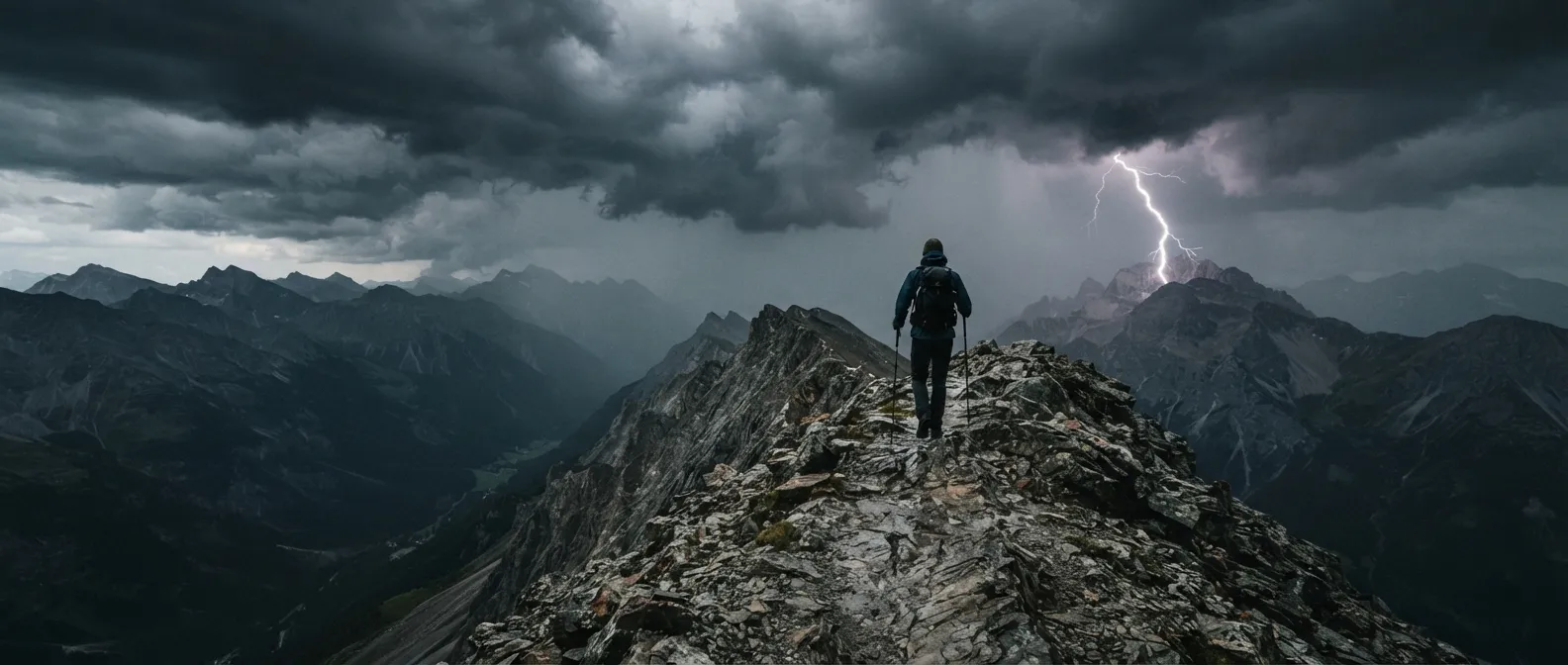
It’s 2:20 PM, you’re on a ridge at 2,400 m, the summit is still forty minutes away, and the sky that was blue an hour ago has just covered up with a grey-black wall. You hear a distant rumble. Then, on the back of your neck, your hair stands on end and a metallic buzzing comes out of your trekking pole. You have between zero and thirty seconds to figure out what that means.
The numbers that should make you look up
Every year, lightning strikes about 100 people in France and kills nearly 15. On a global scale, estimates hover around 240,000 injured and 24,000 killed per year. The mortality rate of a strike is about 10%: nine out of ten victims survive on the spot — but about 75% of survivors suffer long-term effects (memory and mood disorders, hearing loss, delayed cataracts). Lightning doesn’t kill often, but it almost always leaves a mark.
Two major field studies put a face on these numbers. In Austria, a ten-year retrospective analysis (2005-2015) recorded 64 struck individuals: 86% were hiking, 95.3% between noon and 10 PM, 47% on a weekend — the exact signature of a mountain thunderstorm forming in the afternoon, just when most people are outside. Out of the 64, 4 died on site: a survival rate of 93.8%. In Switzerland, a study covering the same decade showed that lightning victims at high altitude were mostly on exposed terrain — the Hörnli ridge on the Matterhorn, the Mittellegi ridge on the Eiger — and that, twice, lightning ran along the climbing rope and injured both members of a rope team at the same time.
How lightning strikes you: four paths, one to avoid first
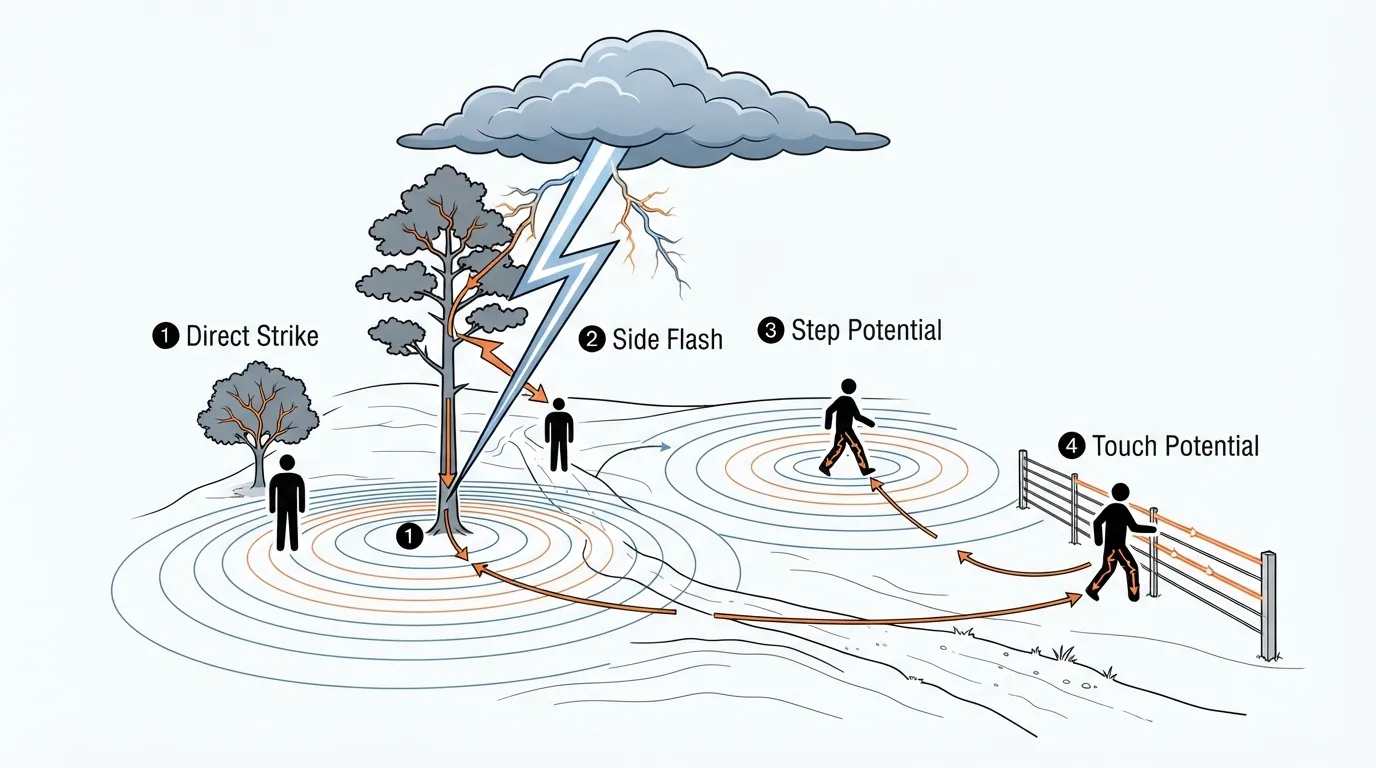
We picture lightning as a direct strike from the cloud. That is actually the rarest mechanism — 3 to 5% of cases — yet the most severe, because you become the discharge channel yourself. The three other mechanisms are more common and just as deadly:
- Side flash: lightning strikes an object taller than you — a tree, a rock, a pylon — and part of the current “jumps” from that object to you. This is the classic mechanism of death under a tree: the tree didn’t protect you, it acted as a living lightning rod.
- Ground current (step voltage): the current spreads through the ground in concentric circles from the impact point. If your two feet — or all four legs of a cow — touch the ground at points with different electrical potentials, the current flows through your body between the two contact points. This mechanism, not a direct hit, causes the greatest number of deaths and injuries because it affects a much wider area than a single point of impact. It’s also the exact reason a whole herd often dies at once: the distance between a cow’s front and hind legs is much greater than the distance between your two feet, so the potential difference — and the current passing through it — is mechanically stronger.
- Contact: you touch an object already carrying the current — a metal fence, a tent with a metal frame, a landline phone, or plumbing inside a cabin.
Estimating distance: the 3-second rule
Light from the flash reaches you almost instantly; the sound of thunder travels at roughly 340 m/s. Counting the seconds between the flash and the thunder and dividing by 3 gives you the distance in kilometers — the method remains approximate (wind, terrain, temperature), but it provides a reliable order of magnitude to make a call.
- Count the seconds between seeing the flash and hearing the thunder.
- Divide by 3 : you get the distance in kilometers (divide by 5 for miles).
- Under 30 seconds (roughly 10 km / 6 miles): the storm is close enough to strike you. Find a safe shelter now, don’t finish the climb, don’t stop for a photo.
- After the last rumble of thunder, wait 30 minutes before coming back out or resuming your activity — most “out of the blue” lightning strikes happen before or after the main body of the storm, under a sky that already looks clear.
Signs that tell you you’ve got seconds left
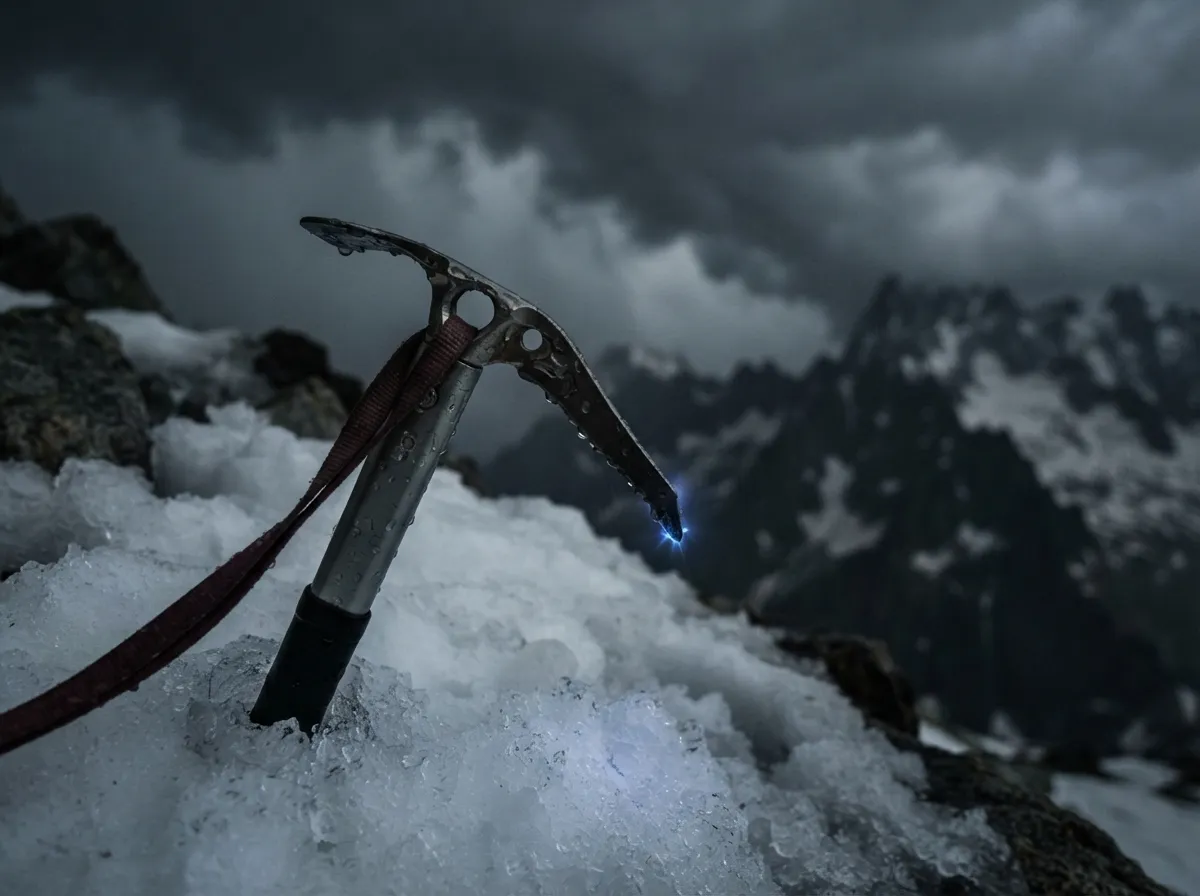
Before an imminent strike, the electric field rises to the point of triggering a corona discharge: ionization of the air around sharp objects (rocks, ice axes, hair). Reported signs include: an audible crackling or buzzing sound (climbers speak of “singing bees”), a sensation of static electricity on hair or skin (hair standing on end), a sharp smell of ozone, and sometimes a bluish glow — St. Elmo’s fire — on pointed items (ice axe, antenna, mast). The phenomenon requires a field of at least 100 kV/m to appear: it isn’t a vague bad omen, it’s a physical measurement of immediate danger.
Where to go, where never to go
| Car (hard top, windows closed) | Tent | Under an isolated tree | Shallow cave entrance | |
|---|---|---|---|---|
| Faraday cage effect | ✅ (metal body) | ❌ | ❌ | ❌ |
| Real protection | Yes, if windows are rolled up | None — fabric and poles block nothing | No — 2nd leading cause of lightning death (side flash) | No — ground current flows through the entrance from the rock wall |
| Best option | Car or hard-shelled building | Seek real shelter | Move away, stay in open terrain if possible | Go deep inside the cave, far from the walls |
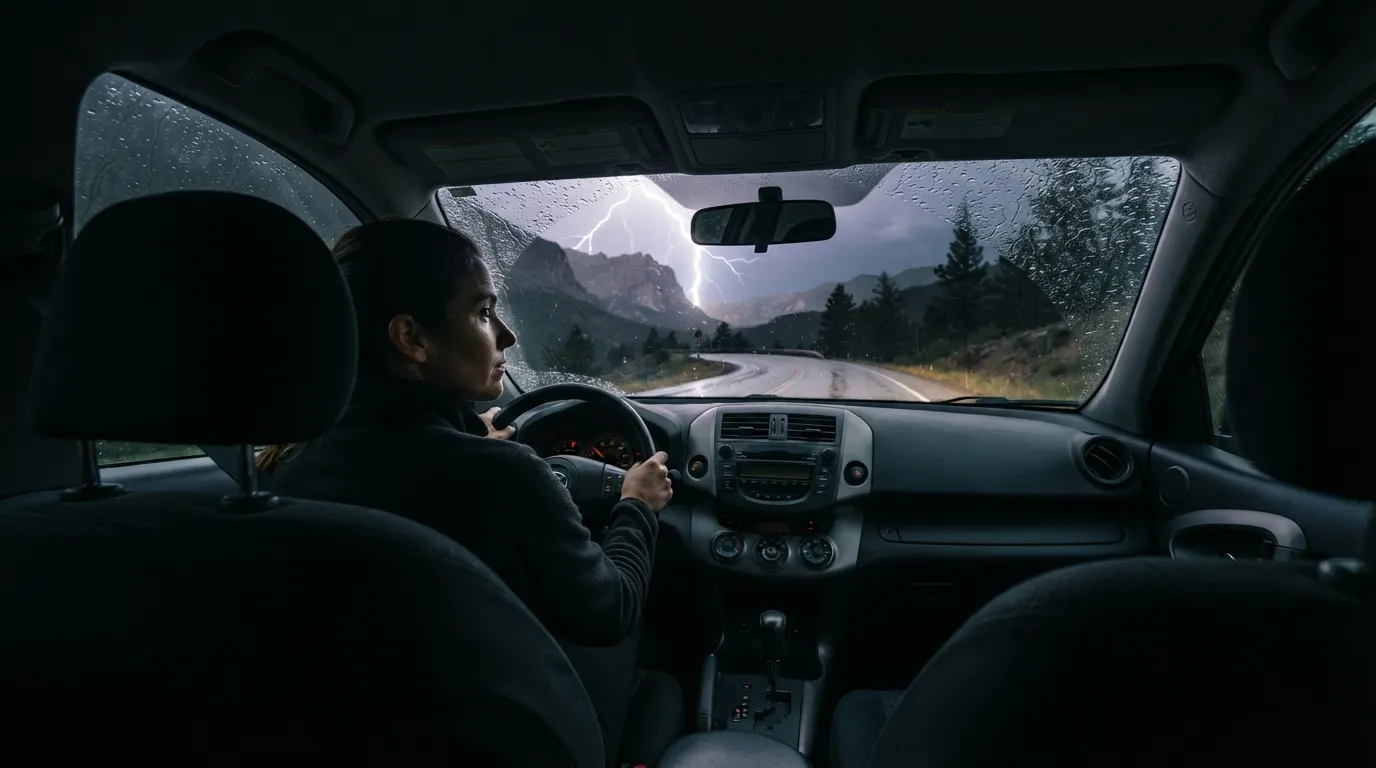
The common denominator of all bad shelters: they place a conductive or pointed object above you (tree, nearby rock face) without insulating you from the ground. A car doesn’t protect you because of its rubber tires — a persistent myth — but because its metal shell acts as a Faraday cage: the current flows around the outside of the vehicle and into the ground, leaving the interior untouched.
Inside a cave, the risk isn’t the lack of a roof: it’s proximity to the walls. Current striking the rock face can follow moisture in the rock and cross the entrance. You are much better off moving deep inside, far from the walls and opening, rather than standing right under the overhang.
In the water, you are the highest conductive point on a flat plane: get out immediately, including from a pool.
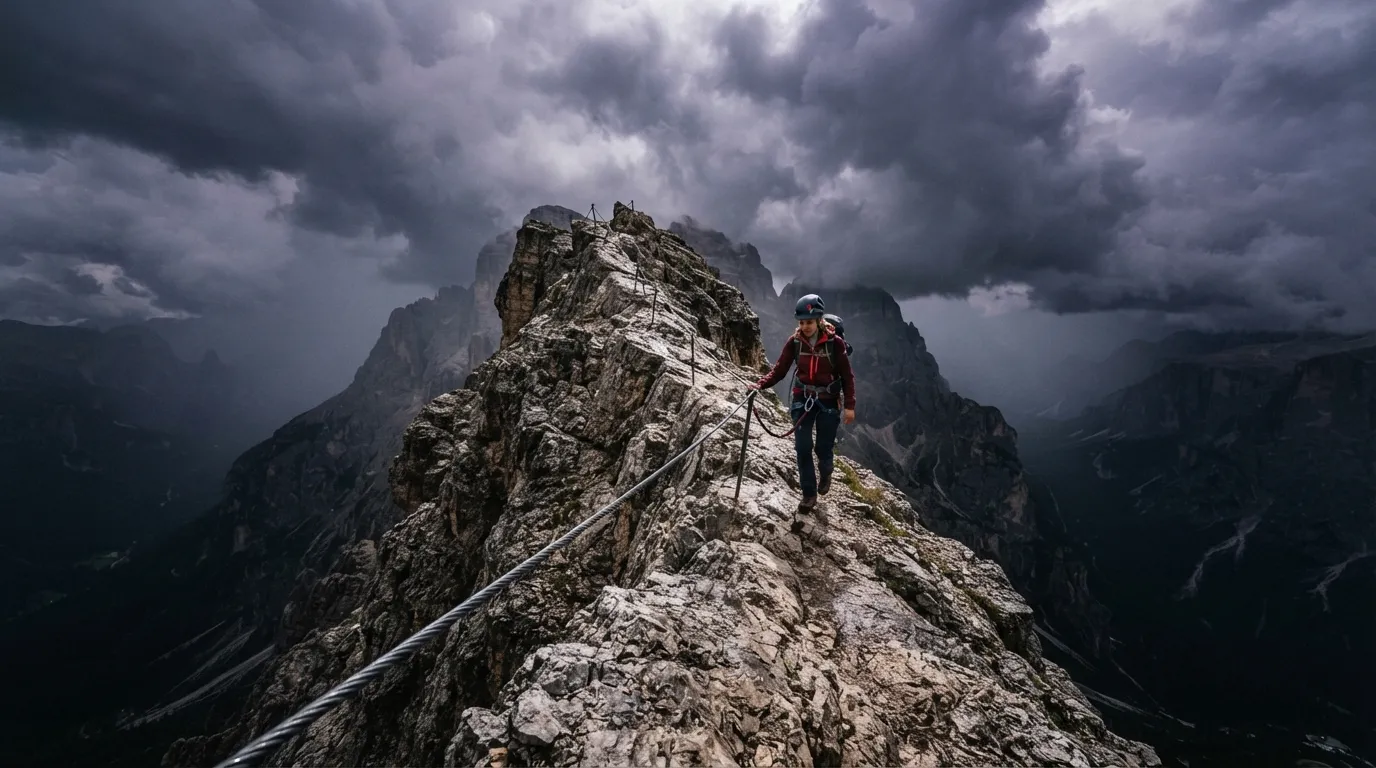
Near metal (fences, via ferrata cables, equipped ridgelines), the risk is two-fold: long-distance conduction and localized lightning-rod effect. Most via ferrata routes are located in mountain zones prone to violent storms; their metal elements are excellent conductors — checking the forecast before committing isn’t optional, it’s a prerequisite.
The lightning position, and why the NOAA is wary of it
If no actual shelter can be reached, the “lightning position” (crouching) is still taught: crouch down, feet together, on the balls of your feet if possible, to minimize ground contact points and reduce exposure to ground current — never lie flat, which maximizes contact surface instead. But the US NWS is explicit about its limits: crouching does not make you safe in open ground, and the true instinct must be to run toward a hard shelter. The crouch is not a solution; it’s a last-ditch holdover for a few minutes when there is literally nothing else you can do.
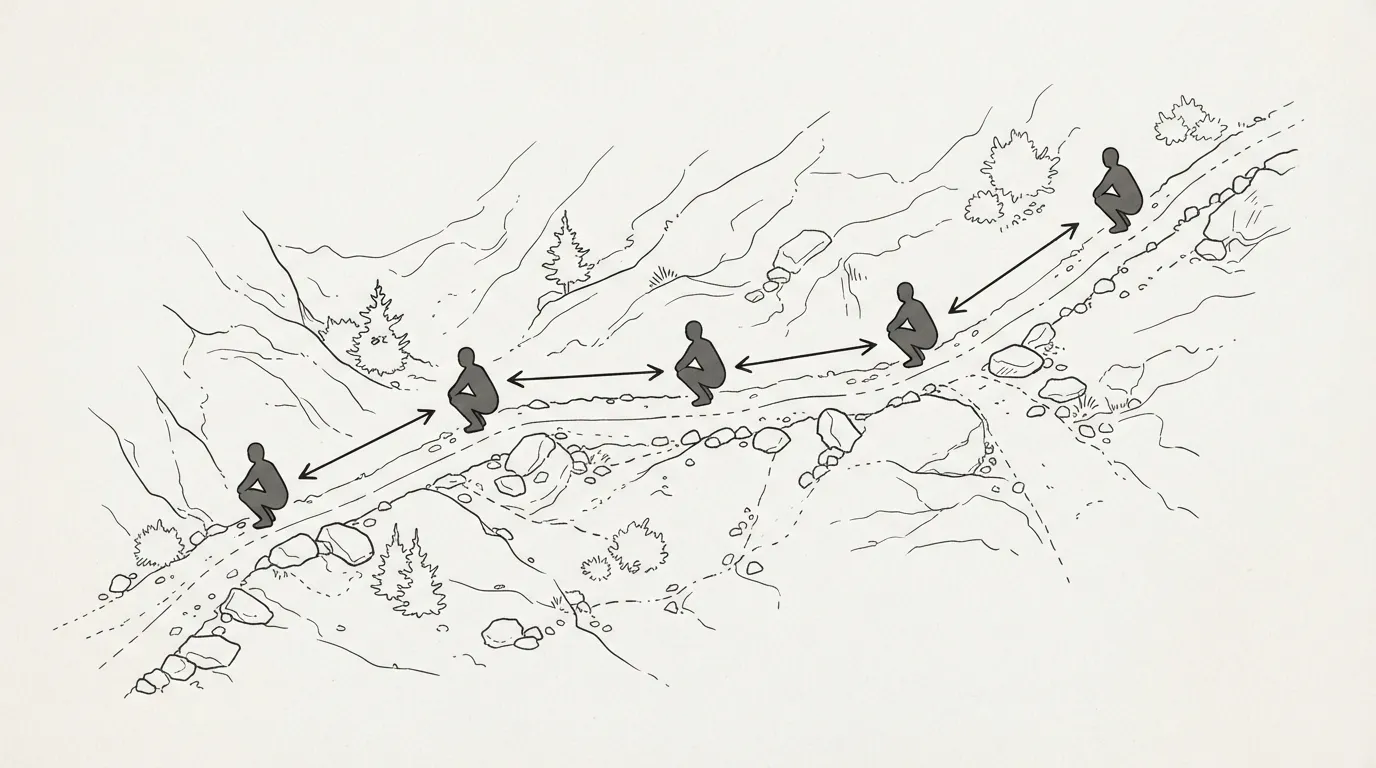
In a group, the National Park Service rule is simple and needs no arbitrary numbers: spread out so that, at worst, only one person gets hit at a time. A tight group multiplies the risk of shared ground current injuries and conduction between members holding hands or roped together.
In the mountains: rules to come out alive
Mountain storms are mostly convective: they stem from heated air rising along slopes in the morning, exploding into storm cells by the afternoon. This is precisely what the Austrian study cited above shows: 95.3% of strikes happen between noon and 10 PM. The practical takeaway, drummed in by mountain guides and rescue services: start early, aim to summit before noon, and plan to be down from exposed zones before afternoon heat triggers convection.
The most dangerous areas combine exposure with a lack of quick escape routes: ridges, summits, passes, and any equipped route (via ferrata, cables) where continuous metal runs for dozens of meters. In the Swiss study mentioned earlier, severe cases were heavily concentrated on this exact type of terrain — the Hörnli ridge on the Matterhorn, the Mittellegi ridge on the Eiger.
Mountain storms don’t just bring lightning: mudslides, rockfalls, and wet avalanche releases can follow a heavy thunderstorm episode, proving just as deadly as the electrical discharge itself.
At sea and in a kayak
A small open boat without a cabin or a grounded mast is one of the worst places to be during a storm: you are the tallest point on a massive, flat, conductive surface. On a large boat equipped with a protection system (mast electrically bonded to the submerged hull), inside the cabin offers relative safety, similar to a car. In a kayak or small open craft, the only real option is anticipation: watch the sky, hit the shore at the first signs, and never stay out on the water when clouds build up in the late morning.
Rescuing a lightning victim: what you must know first
This myth — that a rescuer will get shocked — is one of the most common and dangerous: it delays life-saving care. As soon as the scene is safe (the storm hasn’t vanished, a second strike at the exact same spot is still possible), you can and must act.
Two clinical signs often mislead bystanders:
- Keraunoparalysis: a temporary paralysis of the limbs, often with no palpable pulse, pale or blue skin. It looks like clinical death but usually resolves within a few hours — a strike victim with “no pulse in the legs” isn’t necessarily gone.
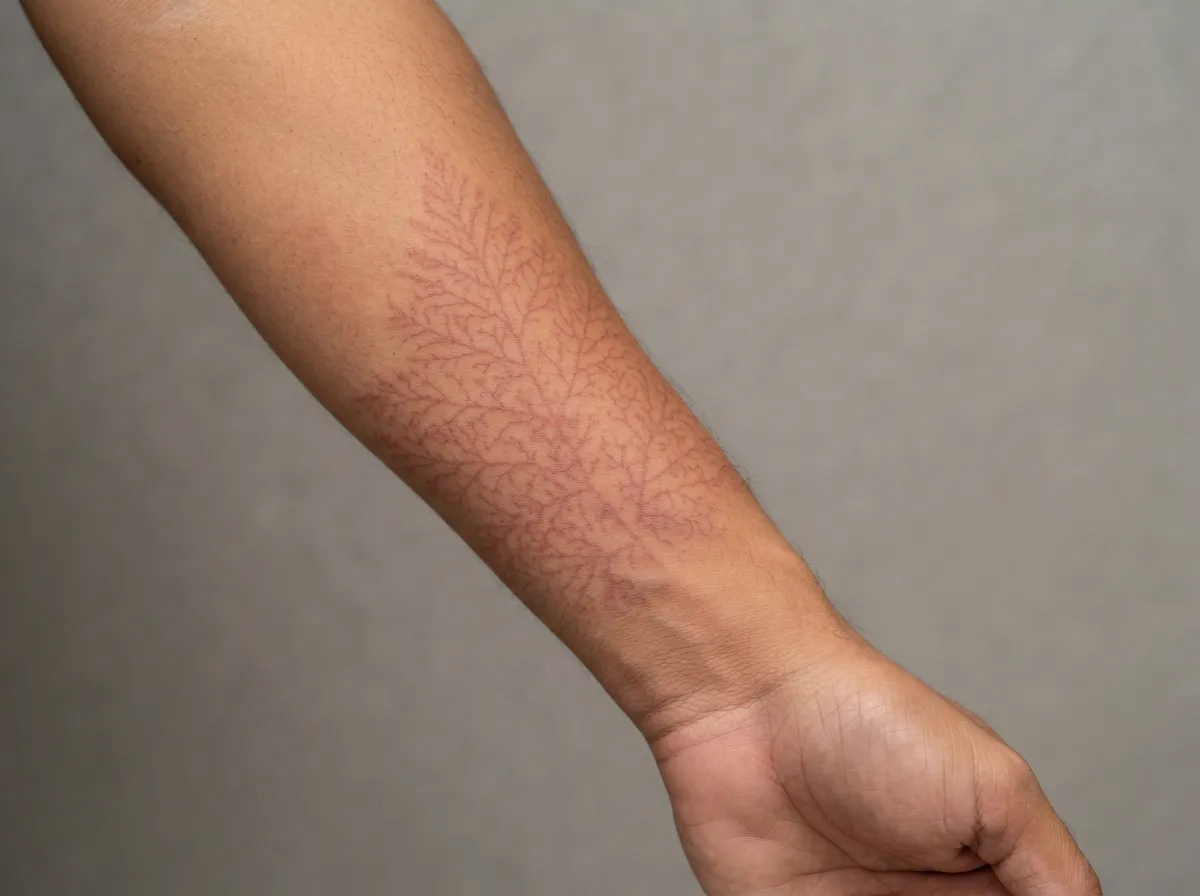
- Lichtenberg figures: fern-like, branching skin patterns that appear hours after a strike and fade over a few days. Present in only about 10% of cases, they are a dead giveaway when seen, but their absence rules out nothing.
Evacuate as soon as possible to a facility capable of managing neurological complications: most severe damage from a strike isn’t burns, but injury to the nervous system and the heart.
Real-world cases
On Lake Victoria in East Africa, a study among fishing communities found that over half of respondents personally knew someone injured by lightning within the past year — a stark reminder that outside Western statistics, lightning remains one of the deadliest weather hazards for people living and working outdoors on the water year-round.
Frequently asked questions
Can you be struck by lightning under clear skies without rain?
Yes. A significant portion of strikes happen before the rain arrives or after it stops, under a sky that already looks clear — that’s why the 30-minute rule after the last thunder rumble matters more than looking at the sky.
Does crouching with feet together actually protect you?
It slightly reduces ground current risk by minimizing ground contact points, but it offers no protection from a direct strike. The US NWS stresses: it is not a safe solution, only a last resort when no real shelter can be reached in minutes.
Is it dangerous to touch someone who was just struck by lightning?
No, not at all. The human body holds no electrical charge after a strike. This myth delays life-saving first aid, particularly CPR.
Why does lightning kill groups of livestock more often than single humans?
Because of ground current (step voltage): current travels through the ground from the point of impact. The wider the gap between contact points, the higher the voltage difference — and the stronger the current flowing through the body. The distance between a cow’s front and back legs is far greater than between a human’s two feet.
Does taking shelter under a tree protect you from lightning?
No, it’s the exact opposite: sheltering under an isolated tree is one of the leading causes of lightning fatalities due to side flashes jumping from the tree to the person.
How long should you wait after a storm before going back outside?
Wait thirty minutes after the last thunder rumble heard — not after the last drop of rain or the last flash seen.
Key takeaways
- Ground current — not direct strikes — injures and kills the most people: two contact points on the ground are all it takes.
- Count the seconds between flash and thunder, divide by 3: under 30 seconds (about 10 km / 6 miles), you are in danger — find hard shelter.
- Avoid isolated trees, ridges, shallow cave entrances, open water, and long metal items (via ferrata cables, raised ice axes).
- A car protects you because of its enclosed metal body, not its tires; a tent offers zero protection.
- A lightning victim is safe to touch and must be resuscitated immediately, even — especially — if they appear dead: their heart can restart if you give them oxygen in time.
Going further
- NWS/NOAA, Lightning Safety — the most comprehensive, regularly updated reference: weather.gov/safety/lightning
- Davis, Engeln, Johnson, McIntosh, Zafren et al., WMS practice guidelines for the prevention and treatment of lightning injuries (2014), Wilderness & Environmental Medicine — the core field medical guide
- Ströhle M. et al., Lightning accidents in the Austrian alps (2018) — the study quantifying real risks during hiking and mountaineering
- Wikipédia FR, Orage en montagne — a solid summary on risks specific to alpine terrain
Sources for this module (22)
- NWS/NOAA — Lightning Safety
- NWS/NOAA — Lightning Myths
- NWS/NOAA — How Lightning Strikes People
- NWS/NOAA — Lightning Safety Outdoors
- NWS/NOAA — Lightning Victims
- National Park Service — Lightning Safety
- Wikipédia FR — Foudroiement
- Wikipédia FR — Orage en montagne
- Wikipédia FR — Tonnerre (règle des 3 secondes)
- Wikipédia FR — Via ferrata
- Wikipédia FR — Feu de Saint-Elme
- Wikipedia EN — Lightning injury
- Wikipedia EN — Lightning strike
- Wikipedia EN — Lightning safety
- Wikipedia EN — Keraunoparalysis
- Wikipedia EN — Faraday cage
- Wikipedia EN — Roy Sullivan
- Davis, Engeln, Johnson, McIntosh, Zafren et al. — WMS practice guidelines for the prevention and treatment of lightning injuries: 2014 update, Wilderness & Environmental Medicine
- Ströhle M, Wallner B, Lanthaler M, Rauch S, Brugger H, Paal P — Lightning accidents in the Austrian alps, a 10-year retrospective nationwide analysis, Scand J Trauma Resusc Emerg Med, 2018
- Gasser E. et al. — Cases of Lightning Strikes during Mountain-Sports Activities: An Analysis of Emergencies from the Swiss Alps, 2022
- Duclos PJ, Sanderson LM — Lightning-related mortality and morbidity in Florida, International Journal of Epidemiology, 1990
- Tushemereirwe R, Tuhebwe D, Cooper MA, D'ujanga FM — Early warnings to fishermen on Lake Victoria, 2017
Continue in "Critical situations"
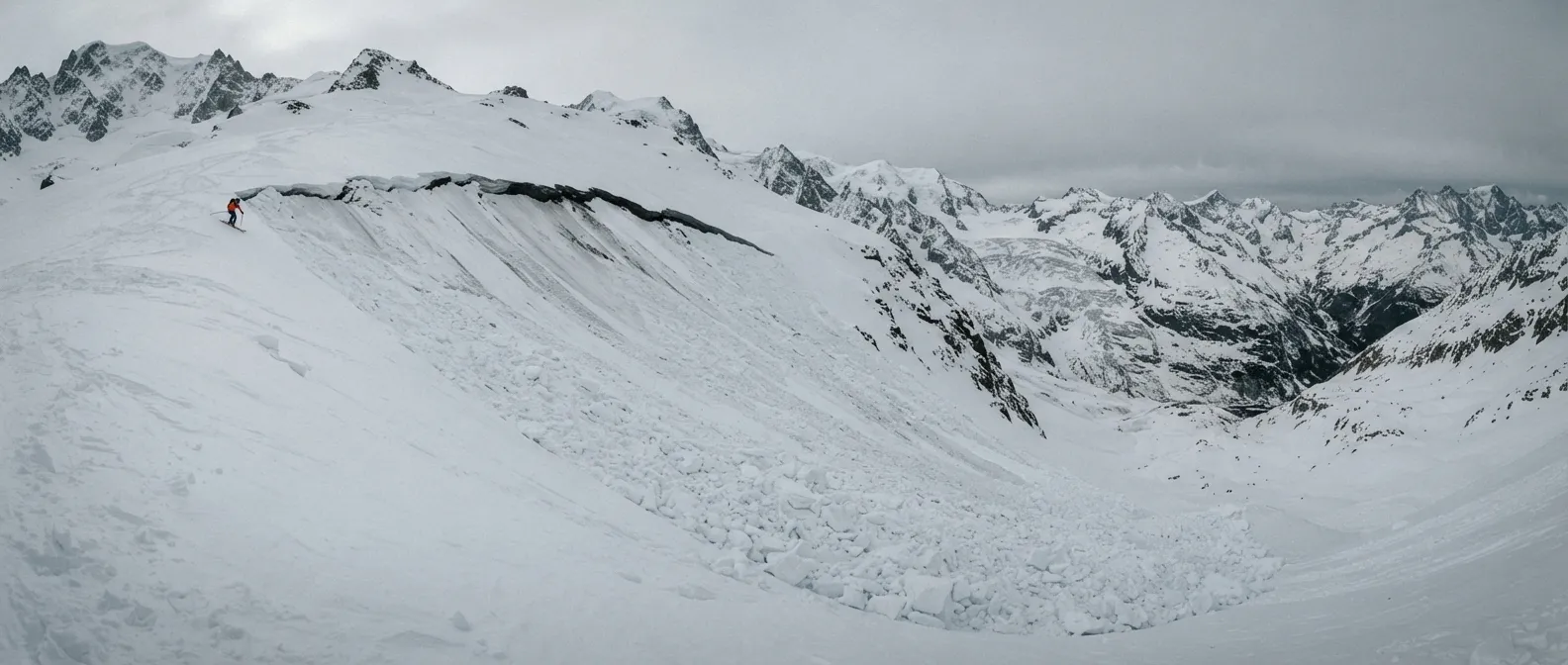
Avalanche: the 15 minutes that decide
A slab breaks loose under your skis, you have fifteen minutes before the stats turn against you: what you need to know instinctively, the night before heading out.
Flash Flood: Water Arriving Faster Than You
It isn't raining where you are, the creek has been dry all morning, yet you have less time than you think before a wall of water rushes down the valley.
Forest Fire: Evacuating, or Protecting Yourself When You Can No Longer Run
It moves faster than you uphill, jumps roads via embers, and won't wait for you to figure out what's happening.