Bears, wolves, cougars, wild boars: what to do when facing wild animals
What saves you with a black bear can kill you with a grizzly: the rules change depending on the animal in front of you.
It’s 7:00 PM, dusk is falling, and thirty meters ahead on the trail, an animal is staring at you. Your brain screams a single rule—one you saw in a movie or heard around a campfire. And that’s precisely the problem: there’s a good chance that rule applies to the wrong animal. Facing a black bear, playing dead can get you eaten alive. Facing a grizzly charging by surprise, fighting back instead of dropping to the ground can turn a defensive bite into a fatal mauling. This module doesn’t teach “the” ultimate survival rule for wild animal encounters. It teaches you how to identify the animal before you act—because out here, your survival depends entirely on that distinction.
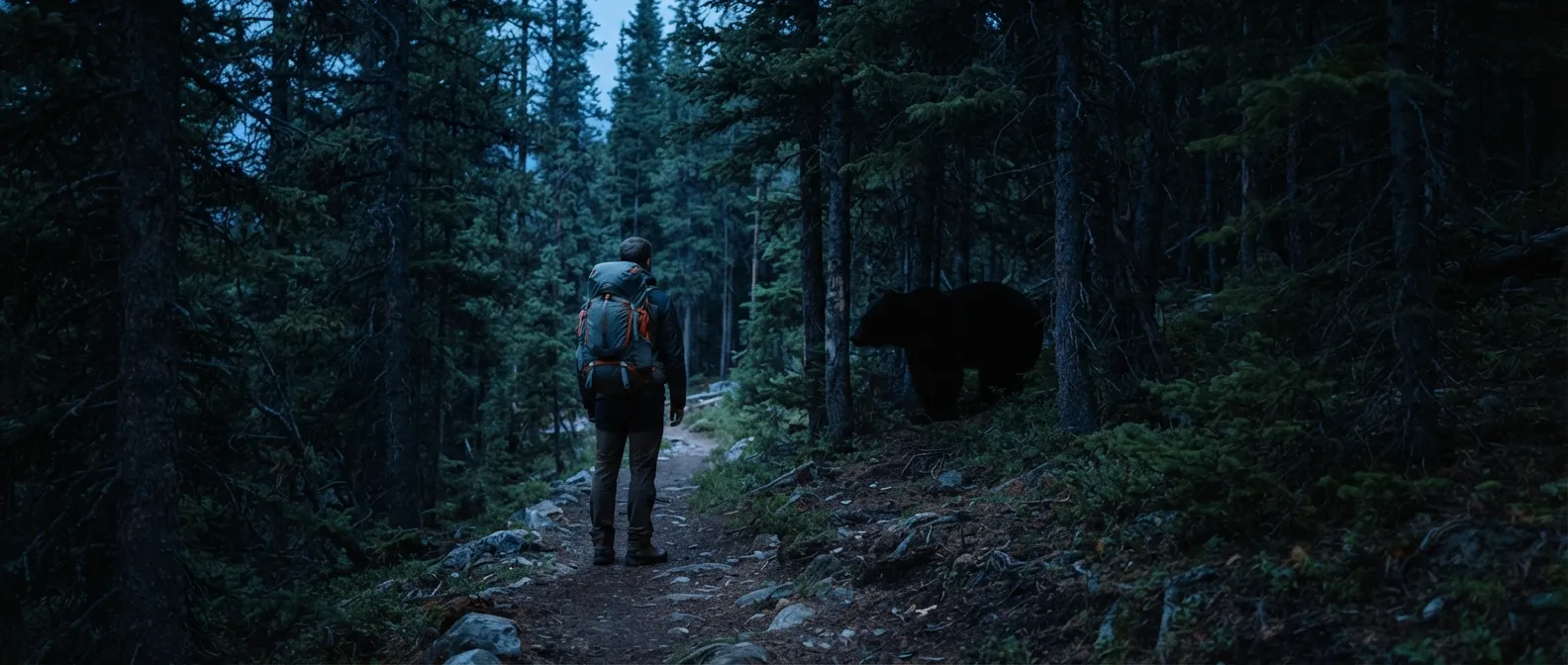
Three bears, three opposite rules
Three species of bears inhabit the Northern Hemisphere, and they share almost nothing when it comes to recommended behavior. Confusing them is the fatal mistake.
Brown bear / grizzly: back away, speak, and play dead only as a last resort
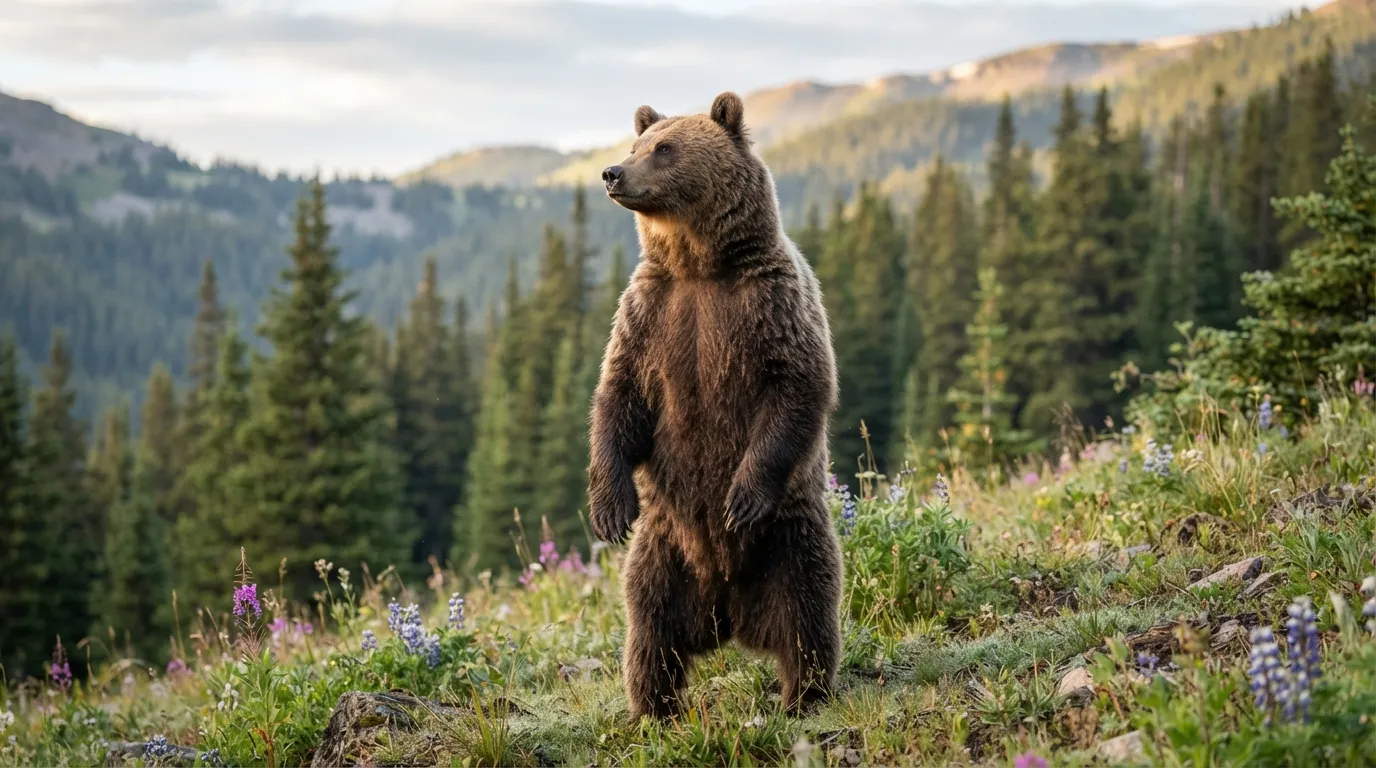
A grizzly surprised at close range, or a mother protecting her cubs, attacks defensively—mothers are responsible for roughly 70% of human fatalities caused by this species. The right reaction starts long before physical contact: never run. Statistically, people who run are much more likely to be attacked than those who stand their ground. Slowly back away diagonally, speak in a firm and calm voice, raise your arms to appear larger, and do not stare directly into its eyes, as this is perceived as a challenge.
Most grizzly charges are bluffs—the animal stops just a few meters short. Standing your ground is the only way to find out; running turns a bluff into a real pursuit.
- Lie flat on your stomach, legs slightly apart to prevent the bear from flipping you over easily.
- Protect the back of your neck by lacing your fingers behind your head.
- Keep your backpack on: it absorbs part of the bites and scratches.
- Remain motionless and silent, even if it lasts—most defensive attacks cease within a few minutes once the threat is neutralized.
- If the bear keeps biting after a prolonged time, only then fight back furiously: this indicates the attack is no longer defensive.
Black bear: the exact opposite—never play dead, always fight back
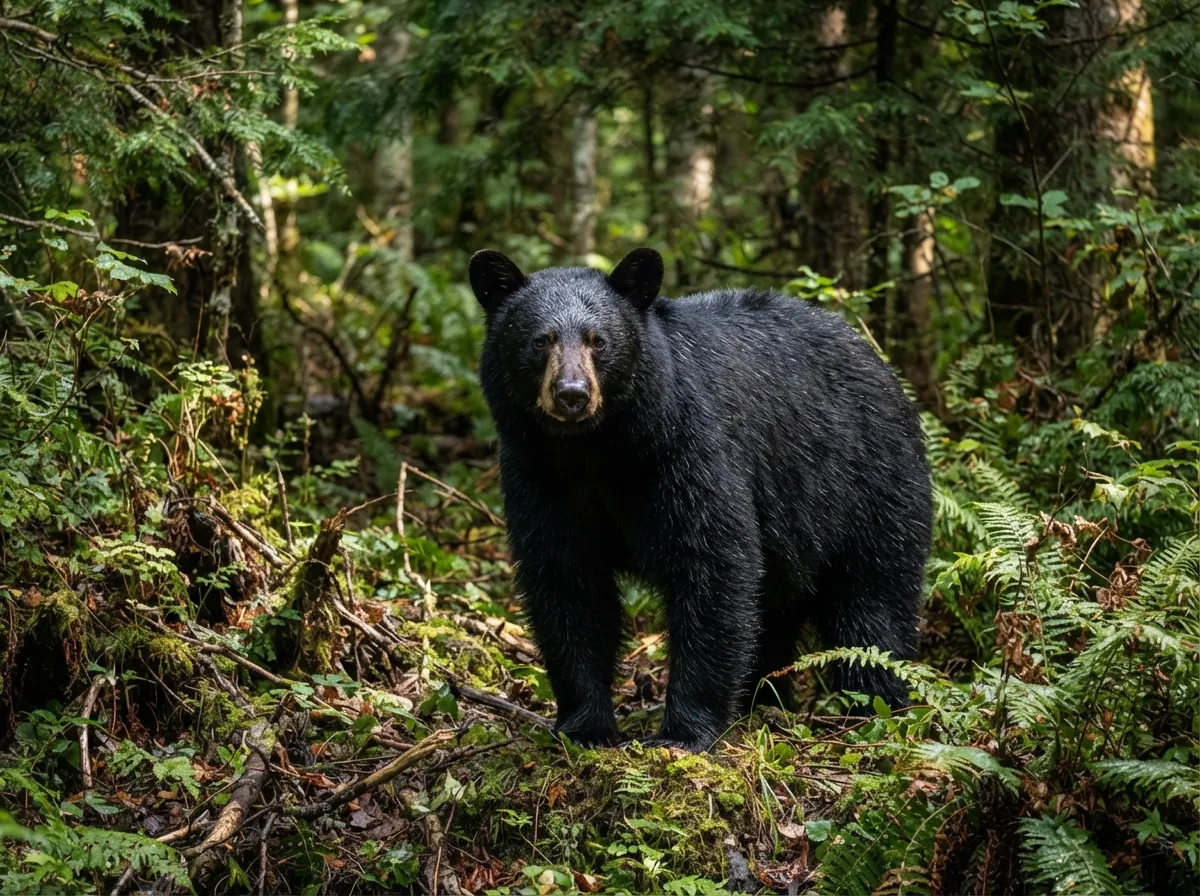
Black bears almost never have cubs to defend when attacking a human: when an aggression occurs, it is overwhelmingly predatory—the bear considers you as potential food. Playing dead in this scenario only speeds up its meal. The rule is completely inverted: make yourself big, shout, and if contact occurs, fight back immediately using anything at hand (rocks, sticks, fists), targeting the snout and eyes—the only truly sensitive areas on an animal covered in thick fur and muscle.
Polar bear: the only true obligate predator of the three
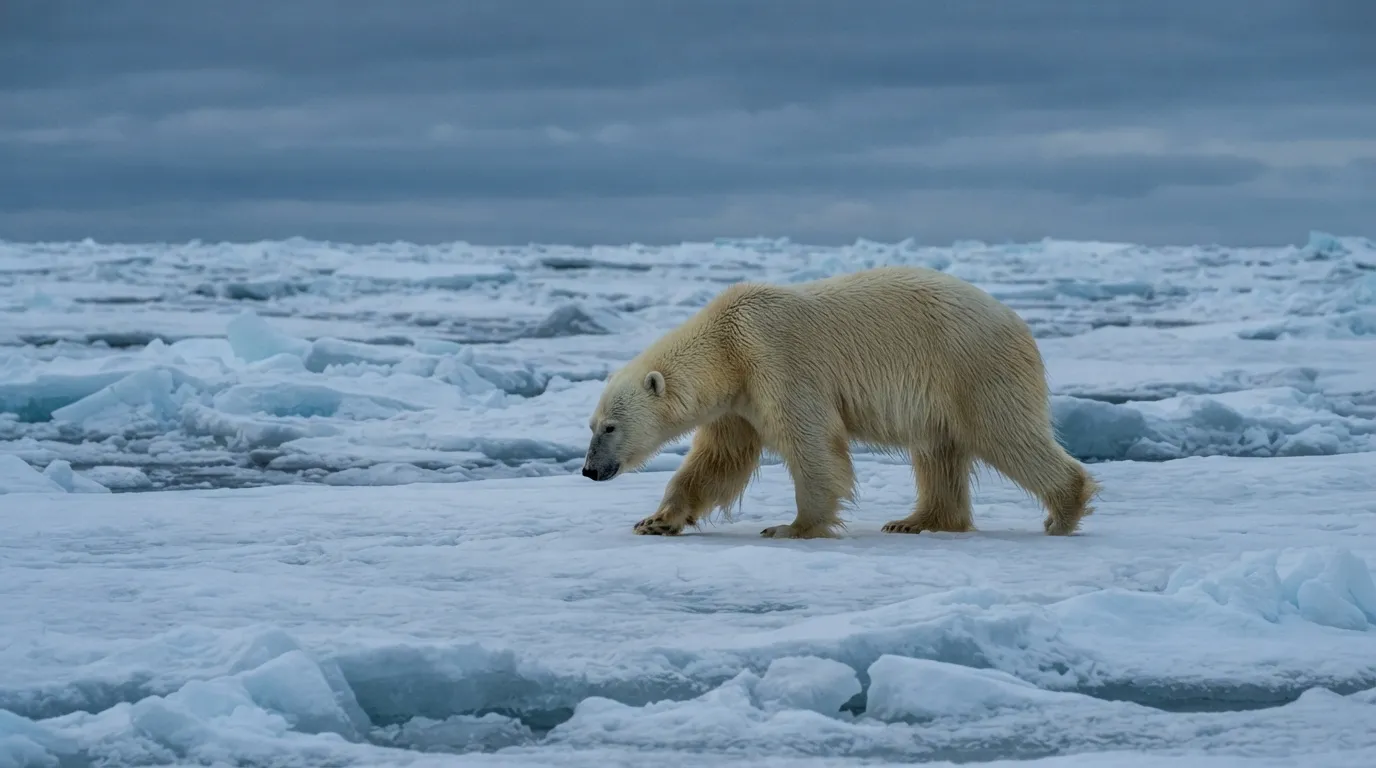
Unlike its cousins, a polar bear—especially a hungry male late in the season—may actively stalk a human as prey, without any provocation or cubs to protect. Between 1870 and 2014, 73 documented attacks caused 20 fatalities and 63 injuries across Arctic range countries—a rare frequency, but a fundamentally different predatory behavior compared to the other two species. Facing a polar bear, playing dead is never an option: active deterrence (noise, signal flares, guard dogs) and, if contact becomes unavoidable, an immediate fight for your life targeting its eyes.
Wolf and cougar: same core principle, two very different terrains
Wolf: the oldest fear, the rarest threat
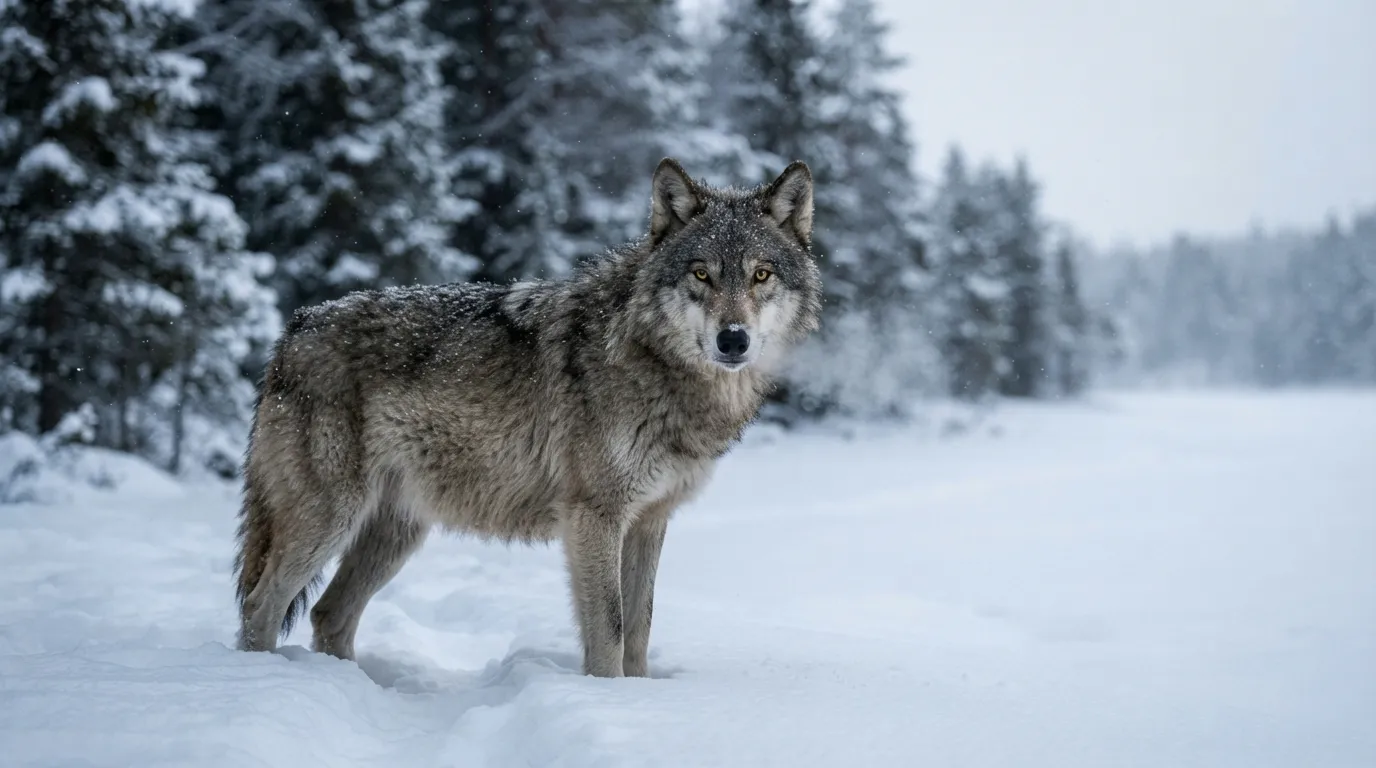
The wolf holds a unique place in European folklore—and that’s precisely the issue: fear has vastly outpaced actual risk since its return to the Alps and the Vosges in the early 1990s. Between 2002 and 2020, 498 wolf attacks were recorded worldwide, resulting in 25 deaths, the overwhelming majority occurring in Asia where rabies remains endemic. In Europe and Russia, barely eight fatal attacks were documented over half a century up to 2002. Italy, where wolf populations have grown significantly in the Apennines, has no record of a fatal attack on humans since World War II.
In the rare event of an encounter—almost always at a distance—the general rule for all large wild canids applies: never run, make yourself appear large, step back slowly while facing the animal, and if it approaches persistently, throw rocks or sticks to restore its natural flight distance.
Cougar / mountain lion: never turn your back
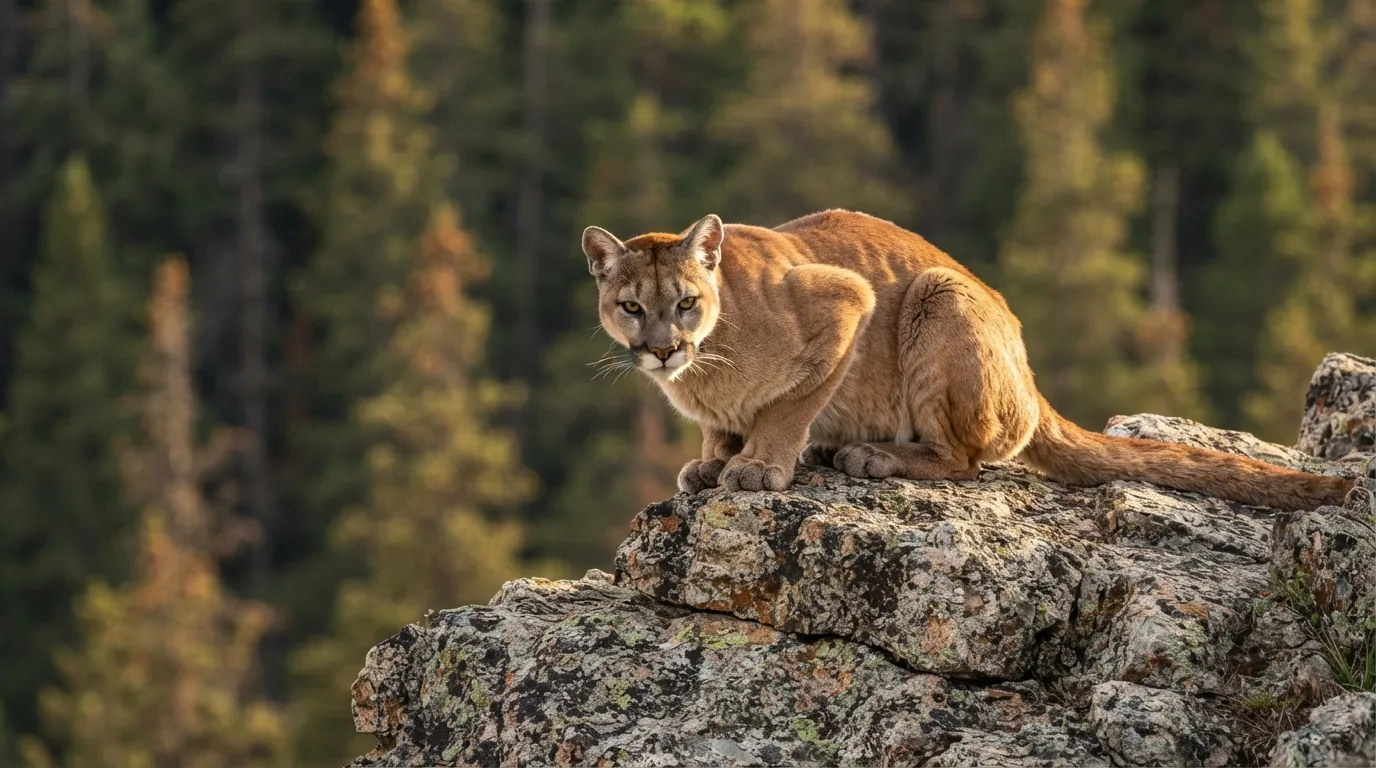
Cougars are ambush predators that target the back of the neck between the vertebrae to sever the spinal cord—this specific attack technique makes neck protection your top priority if ambushed. Between 1890 and 2004, confirmed attacks in North America rose from 53 to 88, resulting in 20 fatalities over the period, with a sharp increase in California since the 1980s.
If you encounter a cougar: stay upright, make yourself look as large as possible (open your jacket, raise your arms), speak loudly, and never crouch down—bending over to pick up a rock or tie a shoelace mimics prey behavior, sending an immediate signal to attack. Do not run: remaining stationary and maintaining a dominant posture forces an ambush hunter—which relies on surprise—to hesitate. If it attacks, cover your neck with your arms and fight back aggressively with everything you have—sticks, rocks, bare fists: unlike with grizzlies, there is no scenario where playing dead helps.
Wild boar: the real threat in European forests
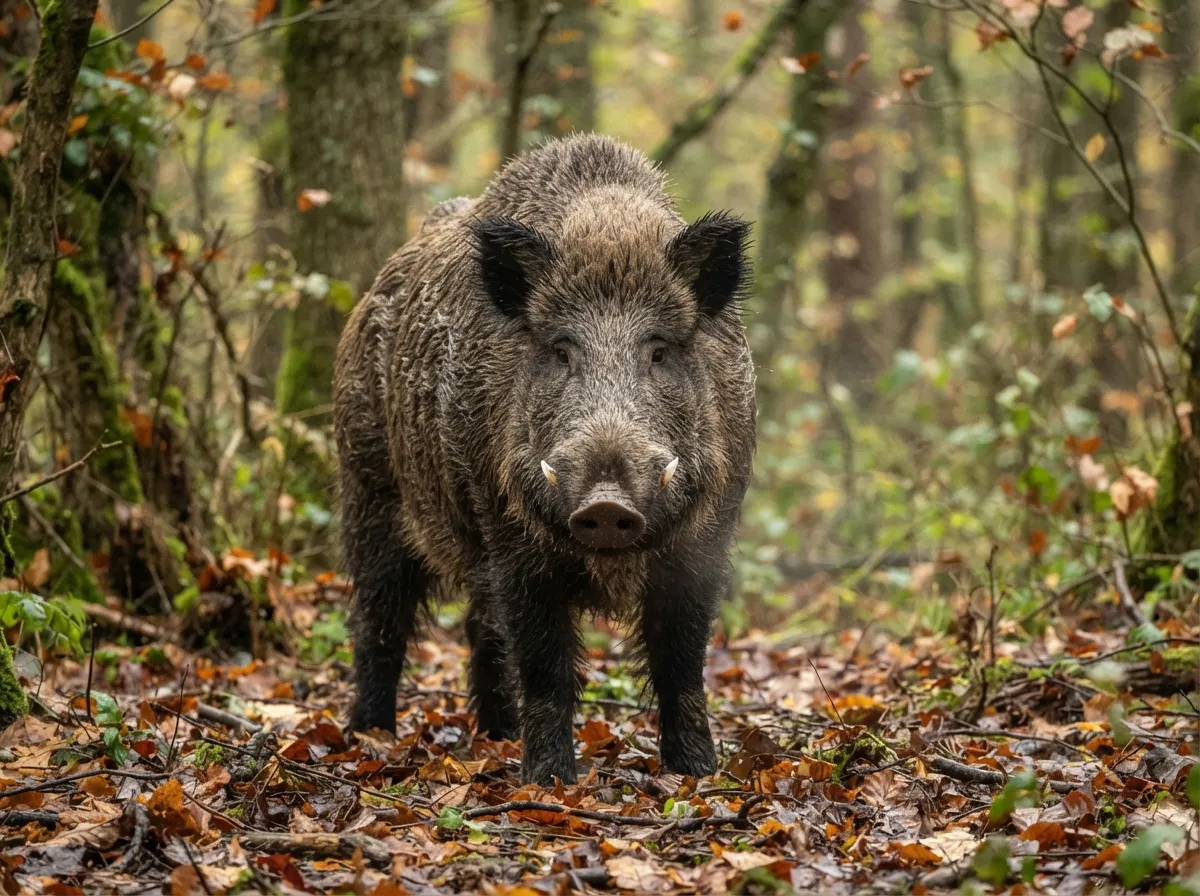
While wolves and bears dominate headlines, wild boars cause harm in silence: in France alone, they account for one out of three traffic accidents involving wildlife, causing roughly 500 bodily injuries and a dozen deaths annually on roads. Direct attacks on hikers remain uncommon, but they regularly occur in two specific scenarios: a wounded animal (from a missed shot or vehicle strike) and a sow protecting her piglets, charging aggressively to defend her brood.
An agitated wild boar pops its jaws loudly—a behavior hunters call “cracking the nut”—just before charging. Its tusks, which continuously grow and self-sharpen through friction throughout its life, can inflict severe lacerations to the thighs and calves, posing a critical danger to the femoral artery.
- Do not run in open terrain: boars are surprisingly fast and nimble over short distances.
- Find a tree to climb or stand behind a thick trunk—unlike bears or cougars that climb or bypass obstacles, a simple solid barrier is often enough to stop a boar.
- Put an obstacle between you and the animal if you can’t climb: a boulder, an embankment, or a vehicle.
- Protect your legs if contact occurs: curl up, protecting your thighs with your arms and hands.
Stray dogs and livestock guardians: herd safety rules
In Western Europe, your most likely encounter with a potentially dangerous animal isn’t a bear or a wolf: it’s a dog, most often a working Livestock Guardian Dog (LGD) like the Pyrenean Mountain Dog (Patou). Used to protect sheep flocks in the Alps and Pyrenees, these dogs aren’t inherently aggressive toward hikers—they simply defend their livestock against anything they perceive as a threat.
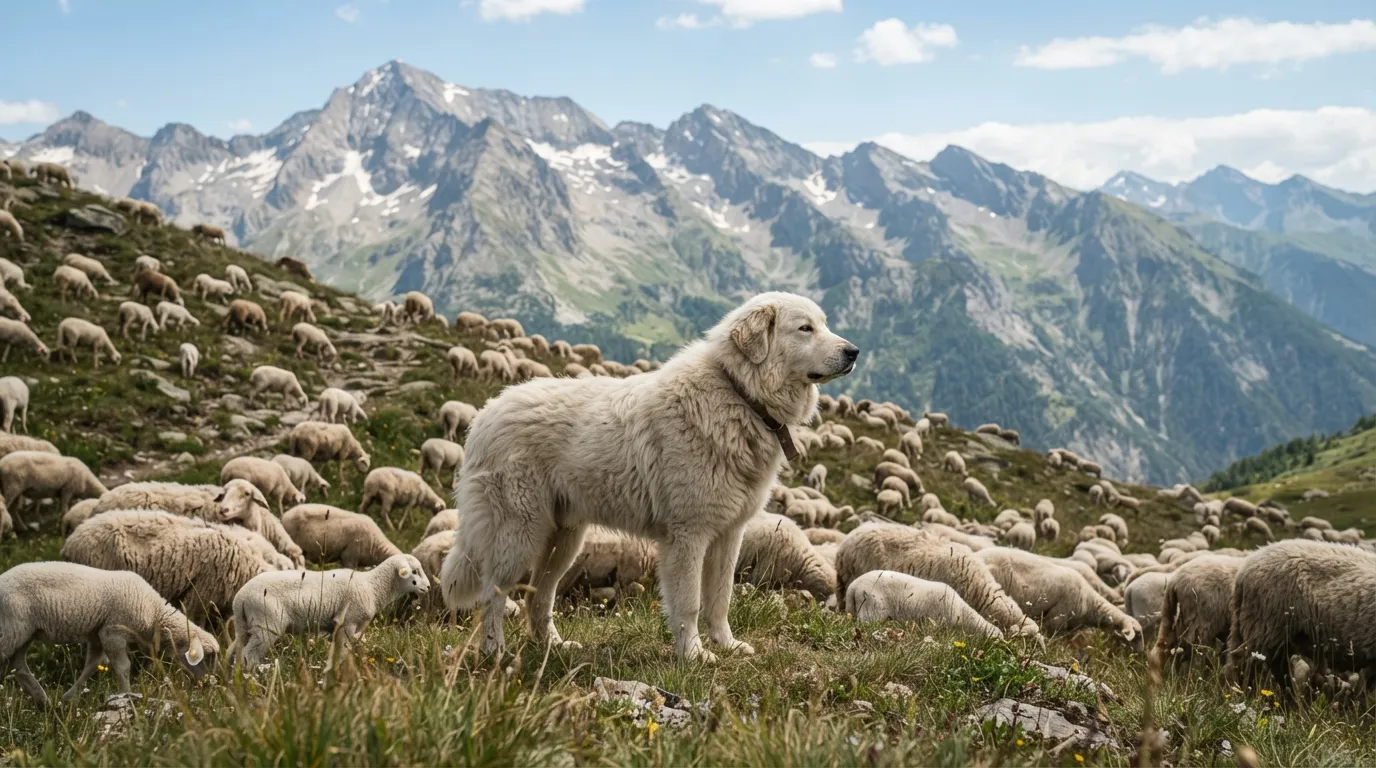
- Spot the herd early and give it a wide berth, avoiding cutting through it even if the marked trail goes straight through.
- Keep your trekking poles down, never raised—a brandished stick looks like a weapon to a guard dog.
- Do not run or stare directly into the dog’s eyes: holding eye contact is interpreted as a direct challenge.
- Let the dog approach and sniff you if necessary while standing still with your arms by your side, then calmly resume walking around the perimeter.
- Never attempt to pet a working guard dog, even if it appears friendly: it is actively on duty.
- Put your own dog on a short leash far in advance—an unleashed pet is the single most common trigger for a guard dog charge.
Herbivores that kill more people than carnivores
It’s the counterintuitive reality few expect: the animals that injure and kill the most hikers worldwide are not carnivores.
- Bison: Between 1980 and 1999, bison injured more than three times as many visitors in Yellowstone National Park as bears did (79 versus 24), reaching sprint speeds of 65–70 km/h. They can charge without warning, even from a posture of apparent indifference.
- Moose: Moose attack and injure more people in North America than bears and wolves combined, though injuries are usually non-fatal. Worldwide among mammals, only hippos injure more humans. A moose can kick forcefully in all directions, including sideways—there is no safe angle around one. Raised hackles on the neck and shoulders signal an imminent charge.
- Cows with calves: In the UK, the Health and Safety Executive reports several walker fatalities every year from cattle—more than from any other animal in the country. It almost always involves a mother cow protecting her calf, especially when hikers are walking a dog. The rule: never walk between a cow and her calf, drop your dog’s leash if cattle charge (the dog can outrun them, you can’t while tethered), and walk along the perimeter of the field rather than through the center.
- Rutting stags: In autumn, testosterone-driven male deer lose much of their natural fear of humans. Urban parks in the UK where deer and visitors coexist (such as London’s Richmond Park) issue annual safety warnings during the rut—antler goring injuries are real, even from animals accustomed to people.
Hippos, crocodiles, sharks: water has its own rules
Outside Europe and North America, two aquatic animals dominate wildlife fatality statistics: the hippopotamus and the Nile crocodile. Both are widely recognized as far more deadly than Africa’s big cats, though precise annual figures vary by region and can be difficult to track reliably.
- Hippopotamus: Highly territorial and aggressive toward watercraft, a hippo can capsize a canoe effortlessly—an incident in Niger in 2014 resulted in 13 deaths in a single event. Never position yourself between a hippo and deep water (its escape route) or between a mother and her calf.
- Nile crocodile: An ambush predator that strikes up to 50 meters from the water’s edge, including along paths and frequented banks, boasting a bite force of around 22 kilonewtons. The fundamental rule: stay away from the water’s edge at night, never dangle limbs into the water, and remain several meters back from the bank even during daylight in known crocodile territory.
- Sharks: Roughly 80 unprovoked shark attacks occur globally each year, resulting in 4 to 8 deaths annually—a statistically microscopic risk relative to the millions of ocean swimmers, but real under specific conditions. Avoid swimming at dawn, dusk, or night, and stay clear of fishing zones and murky river mouths.
Setting up a camp that attracts nothing
The best way to handle a dangerous animal—especially a bear—is never to encounter it in the first place by giving it zero reason to approach your camp.
- Hang your food at least 4.5 m (15 ft) off the ground and 3 m (10 ft) horizontally from any tree trunk or vertical support—this is the classic “bear hang” standard, which fails if either distance is compromised.
- Use an approved bear canister where required (many North American national parks now mandate canisters because local bears have learned to defeat traditional bear hangs).
- Cook away from your sleeping area—100 m (300 ft) is the standard food/fire/sleeping triangle recommended in North America.
- Store all scented items (toothpaste, sunscreen, trash, lip balm) together with your food, never inside your tent.
- Make noise while hiking, especially near rushing water or dense vegetation, to avoid surprising animals around blind bends.
| Brown bear | Black bear | Polar bear | Cougar | Wild boar | |
|---|---|---|---|---|---|
| Back away, never run | ✅ | ✅ | ✅ | ✅ | ✅ (toward cover) |
| Make yourself big, make noise | ✅ | ✅ | moderate | ✅ | ❌ useless |
| Play dead on contact | ✅ (defensive attack) | ❌ never | ❌ never | ❌ never | ❌ never |
| Fight back, target eyes/snout | last resort | ✅ | ✅ | ✅ | useless |
| Climb a tree | ❌ ineffective | ❌ climbs just as well | n/a (no trees) | ❌ climbs very well | ✅ only one it stops |
Frequently asked questions
Should you play dead when facing a bear?
It depends entirely on the species and context. If a grizzly attacks defensively by surprise or to protect its cubs, yes—play dead as a last resort upon physical contact. Against a black bear or a polar bear, never play dead: these attacks are typically predatory, and you must fight back aggressively.
Is bear spray really more effective than a firearm against a bear?
Yes. According to the landmark study by Smith, Herrero et al. (2008) analyzing 71 incidents in Alaska, bear spray stopped aggressive bear behavior in 92% of cases, with 98% of users escaping uninjured. Studies on firearms show a lower success rate and a higher incidence of injury to the user, who must aim accurately under extreme panic.
Are wolves dangerous to hikers in Western Europe today?
No, the risk is virtually zero. Historical fatal wolf attacks in Europe were almost exclusively linked to rabies, which is now controlled in the region. Since wolves naturally returned to Western Europe in the 1990s, there have been no documented fatal attacks on humans.
How should you react when encountering a flock guarded by a livestock dog?
Give the flock a wide berth without cutting through it, keep your trekking poles low, avoid direct eye contact with the dog, never attempt to pet it, and put your pet dog on a short leash well before reaching the herd—unleashed pets are the primary trigger for defensive charges.
What is the most dangerous wild animal encountered while hiking in Western Europe?
Neither bears nor wolves: wild boars cause far more harm, accounting for roughly one out of three wildlife-related vehicle collisions in countries like France and posing real attack risks when injured or protecting piglets. They are closely followed by cows with calves and stray or working dogs.
Do bear bells actually work?
There is very little evidence supporting their effectiveness. An analysis of incident reports from Glacier National Park found only one case where a bear bell successfully alerted a bear prior to an encounter. Calling out periodically with a human voice is significantly louder and far more effective at preventing surprise encounters.
Key takeaways
- Three bears, three opposite rules: playing dead only works against defensive grizzlies—never against black bears, never against polar bears.
- Bear spray outperforms firearms: a 92% success rate compared to roughly two-thirds for firearms, with significantly fewer injuries to the user.
- Wolves and bears cause fear; wild boars, cows with calves, and dogs cause far more real injuries across Europe.
- The wild boar is the only animal in this module truly stopped by a tree trunk—bears, cougars, and wolves can all climb or bypass simple obstacles.
- Prevention remains your best defense: 4.5 m bear hangs, 100 m campsite triangles, keeping poles low around guard dogs, and never stepping between a mother and her young.
Further reading
- Stephen Herrero, Bear Attacks: Their Causes and Avoidance — the global benchmark resource based on decades of real case analysis.
- National Park Service — Bears — official US safety protocols, continuously updated.
- Parks Canada — Wildlife Safety — Canadian safety guidelines detailing bear spray and firearm protocols.
- Office Français de la Biodiversité — European wildlife management perspectives on wolves and wild boars.
Sources for this module (20)
- Stephen Herrero, Bear Attacks: Their Causes and Avoidance (1985/2002)
- Wikipedia EN — Bear attack
- Wikipedia EN — Bear spray (études Smith et al., JWM 2008)
- Wikipedia EN — Bear danger
- Wikipedia EN — Grizzly bear
- Wikipedia EN — Polar bear attack
- Wikipedia EN — Bear-resistant food storage container
- Wikipedia EN — Wolf attacks on humans
- Wikipedia EN — Cougar
- Wikipedia FR — Sanglier
- Wikipedia EN — Moose
- Wikipedia EN — American bison
- Wikipedia EN — Hippopotamus
- Wikipedia EN — Nile crocodile
- Wikipedia EN — Shark attack
- Wikipedia EN — Stray dog (rage, OMS 2024)
- Office Français de la Biodiversité (OFB, ex-ONCFS)
- National Park Service — Bears
- Parcs Canada — Sécurité en milieu sauvage
- Alaska Department of Fish and Game
Continue in "Critical situations"
Avalanche: the 15 minutes that decide
A slab breaks loose under your skis, you have fifteen minutes before the stats turn against you: what you need to know instinctively, the night before heading out.
Lightning: When the Sky Targets You
In 3 seconds, a lightning bolt heats the air to 30,000 kelvins and kills 10% of those it strikes: here is what is at stake before you count to thirty.
Flash Flood: Water Arriving Faster Than You
It isn't raining where you are, the creek has been dry all morning, yet you have less time than you think before a wall of water rushes down the valley.