Quicksand, mud, and marshes: getting stuck without drowning
The sand will never swallow you whole — but the rising tide while you struggle doesn't negotiate.
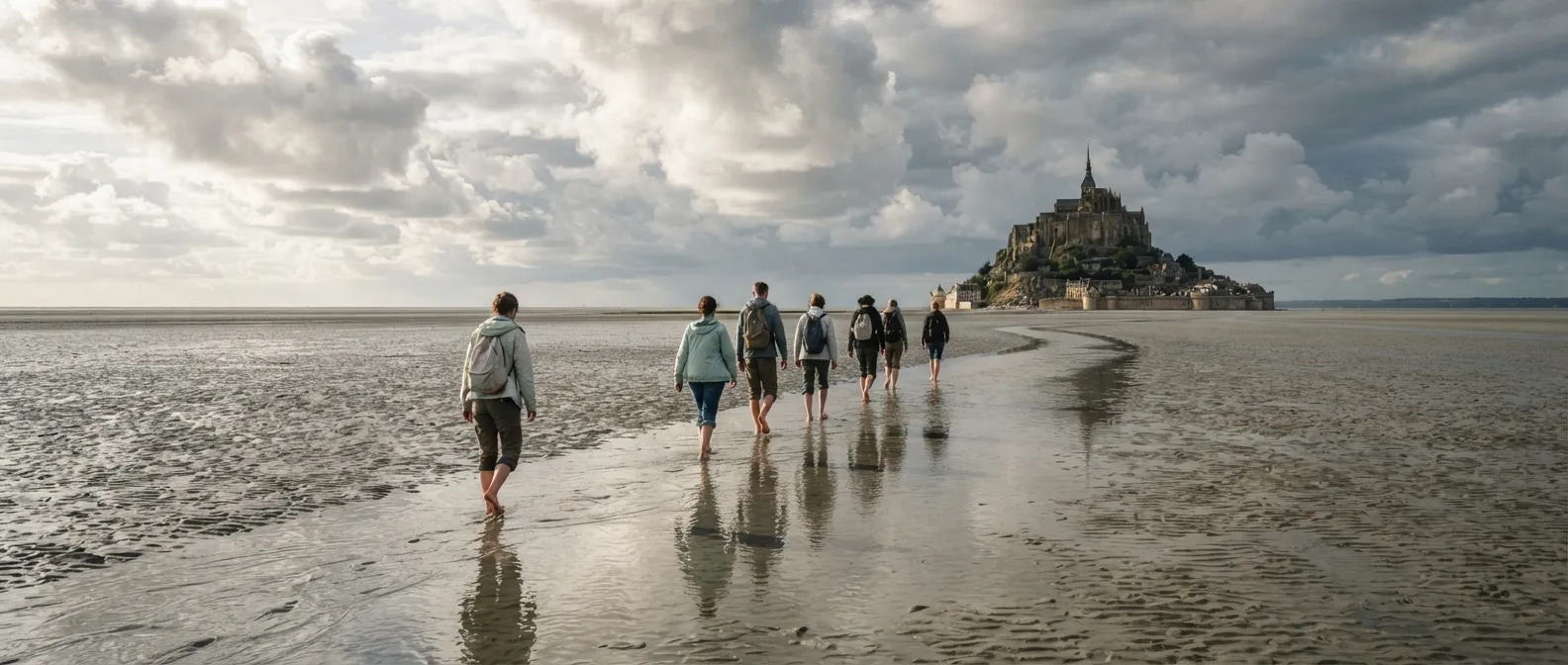
It’s 3 p.m., low tide, and the bay’s tidal flat stretches out as far as the eye can see, smooth, golden, almost inviting. You walk toward the Tombelaine rocks to get a photo, and suddenly your right foot sinks ankle-deep into sand that, just a second earlier, looked as firm as the rest. Movies have taught you to scream and thrash around. Physics tells you to do the exact opposite.
The physics: why you never actually sink all the way
Quicksand isn’t a special type of sand: it’s an ordinary mixture of sand, water (sometimes salty), and clay, in which the clay particles arrange themselves into a three-dimensional lattice of platelets. As long as this lattice holds, the ground seems solid. All it takes is stress — a footstep, a vibration, added weight — for this structure to collapse and release the trapped water: the mixture abruptly liquefies, and this sudden liquefaction is what causes a foot, a leg, or a body to sink.
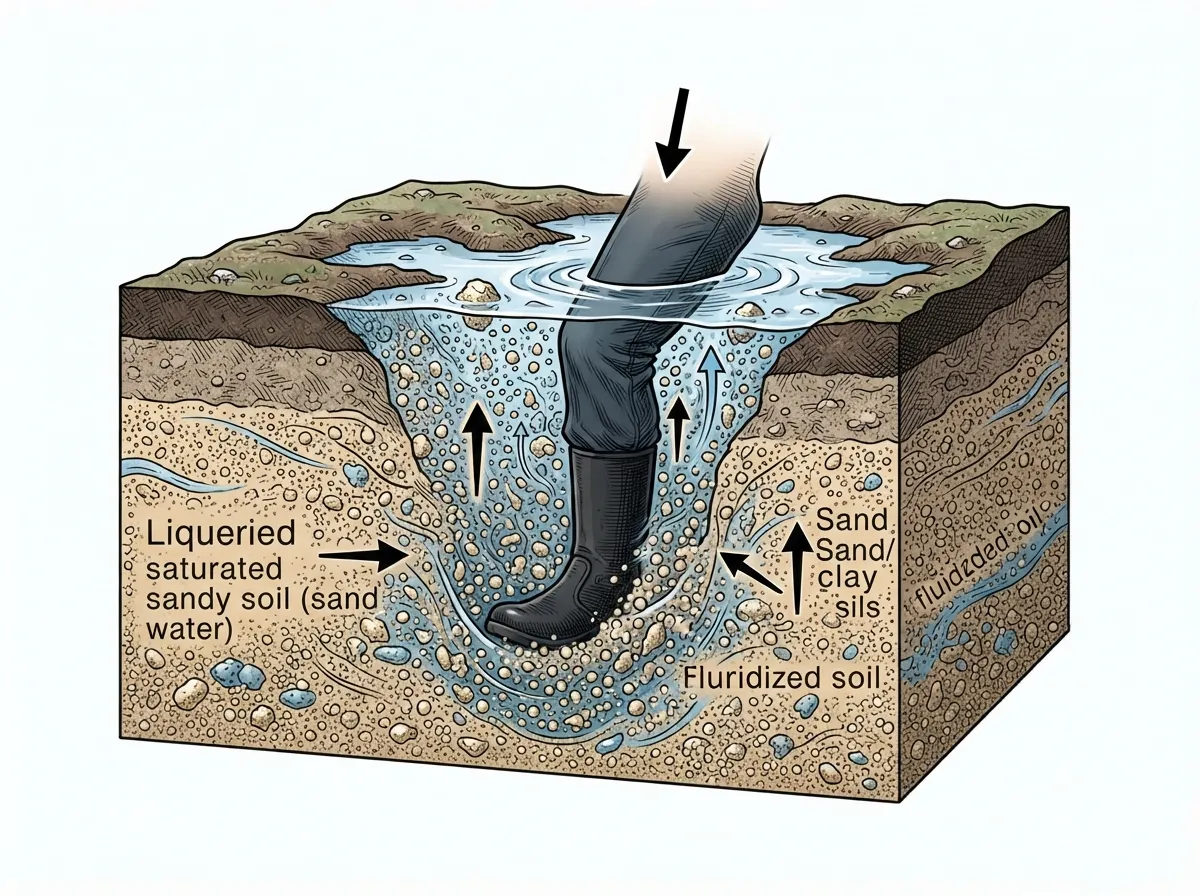
A team led by physicist Daniel Bonn uncovered this mechanism in 2005, in a study published by Nature: a stress agitation of just 1% is enough to cause the mixture’s viscosity to drop drastically, triggering liquefaction. Once liquefied, quicksand has a density close to 2, nearly double that of the human body. Practically speaking, this density imbalance creates a buoyant force (Archimedes’ principle) that prevents the human body, naturally less dense than the mixture, from sinking entirely: you physically cannot disappear under the surface, at worst sinking to mid-thigh or waist level.
The paradox is that quicksand turns solid again almost as fast as it liquefied: once the agitation stops, the sand-rich phase — which can account for up to 80% of the volume — behaves like cement again. It is this rapid solidification, combined with a suction effect created by vacuum pressure under a limb pulled out too quickly, that makes sudden movements far more costly than patient immobility.
What actually kills: the tide, not the sand
If quicksand almost never drowns anyone directly, why do people still die every year in areas containing it? Because the real danger is almost never the sand itself, but what surrounds it.
- The rising tide while you’re immobilized, in bays where water advances rapidly across a very flat intertidal zone — Mont-Saint-Michel bay and Somme bay are two of the fastest examples in continental Europe.
- Hypothermia, in temperate or cold climates, when your body stays motionless and partially wet for long minutes or even hours.
- Exhaustion, in someone who panics, struggles, and eventually lacks the strength to keep their head above the rising water, even if they aren’t sinking any deeper into the sand.
Where it hides
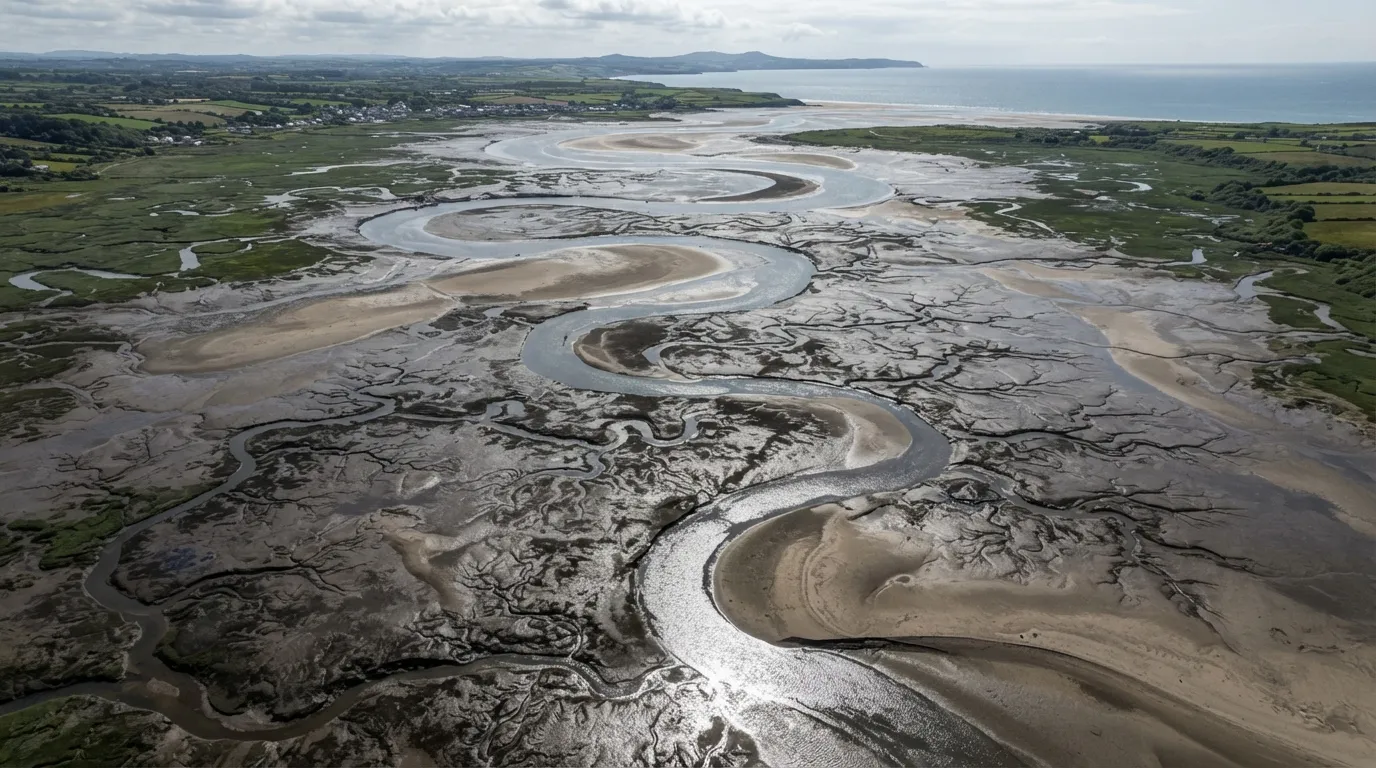
Quicksand and its muddy relatives aren’t rare — they are simply misidentified. In France, Mont-Saint-Michel bay, one of Europe’s largest areas with a massive tidal range, is the most documented case: crossing it on foot requires a guide certified by the local prefecture, precisely because quicksand, shifting channels, and tidal speed combine there. Somme bay, less dramatic but equally deceptive, sees its channels and sandbanks reshape constantly: an area stable one summer can become a trap the next.
More broadly, any estuary, river with heavy sediment flow, peat bog, or marsh can produce ground that behaves like quicksand — the physical mechanism (fine grains + water + low cohesion) is identical, whether the sediment is sand, silt, or peat. Tropical mangroves, with water-saturated mud and tides flooding the ground twice a day, present a comparable risk, compounded by dense vegetation hiding the softest areas.
Conversely, a very common misconception needs clearing up: desert sand, being dry, has nothing to do with quicksand. Without excess free water to break down cohesion between grains, desert sand remains ordinary sand, even when extremely fine — the idea of “Sahara quicksand” is entirely an adventure movie fiction.
Recognizing the trap before stepping in
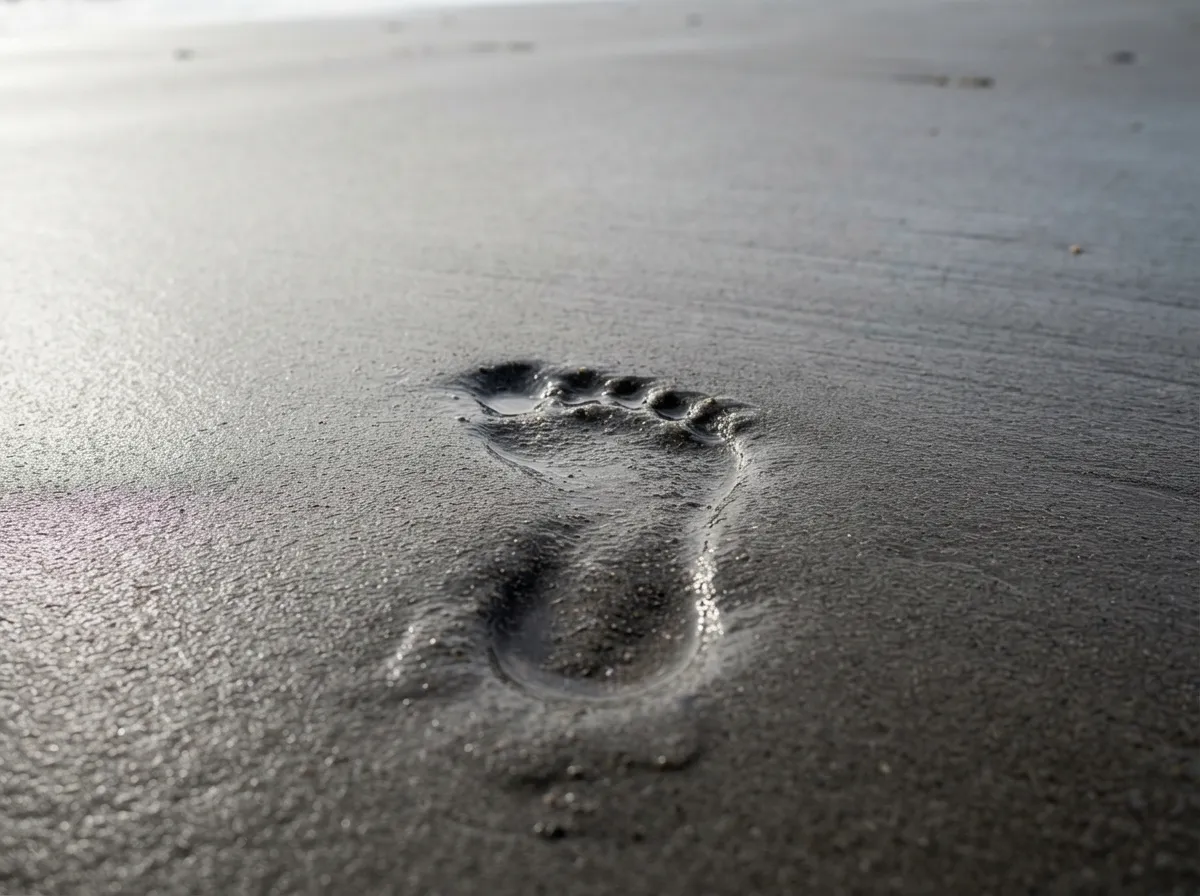
A trained eye picks up several warning signs before putting weight down:
- An abnormally smooth surface, lacking the small ripples that wind or water leave on firm sand, and especially devoid of animal or bird tracks — birds instinctively avoid unstable ground.
- Water seeping or pooling around a nearby step or a stick pushed into the ground, signaling that the water table is close to the surface and loosely held.
- A slightly darker or shinier tint than surrounding sand, indicating higher water saturation.
- Visible trembling of the surface when you jump lightly nearby, or a feeling of softness under a trekking pole while surrounding ground offers resistance.
Getting out alone: the technique that works
The first, counterintuitive rule is do not struggle. Sudden movements trigger liquefaction and sink you deeper; relative immobility allows the sand to re-solidify around the trapped limb, which feels worse in the moment but stabilizes the situation.
- Stop all panicking movements. Take a deep breath and ditch your backpack or any heavy gear you’re carrying: less concentrated weight means less downward pressure on a small surface area.
- Lean back onto your back or front, arms spread wide, as soon as you feel yourself sinking. By spreading your weight over a larger surface area, you reduce the pressure exerted on any single point — the same principle that allows walking on fresh snow with snowshoes.
- Work one leg at a time, never both together: small, slow, circular movements allow water to seep between sand grains around your leg, gradually loosening the grip. Moving both legs at once increases pressure and sinks your hips deeper.
- Bring your knees up toward the surface once a leg is free, rather than trying to stand up immediately: staying flat on your stomach or on all fours keeps your weight distributed while moving toward firmer ground.
- Take your time. Freeing yourself completely can take several minutes, sometimes longer: it is a naturally slow process, not a sudden burst of action.
Helping someone without becoming the second victim
The most dangerous reflex when seeing someone trapped is running toward them on foot. The ground that trapped the first person will likely trap the second, and two stuck victims are always worse than one.
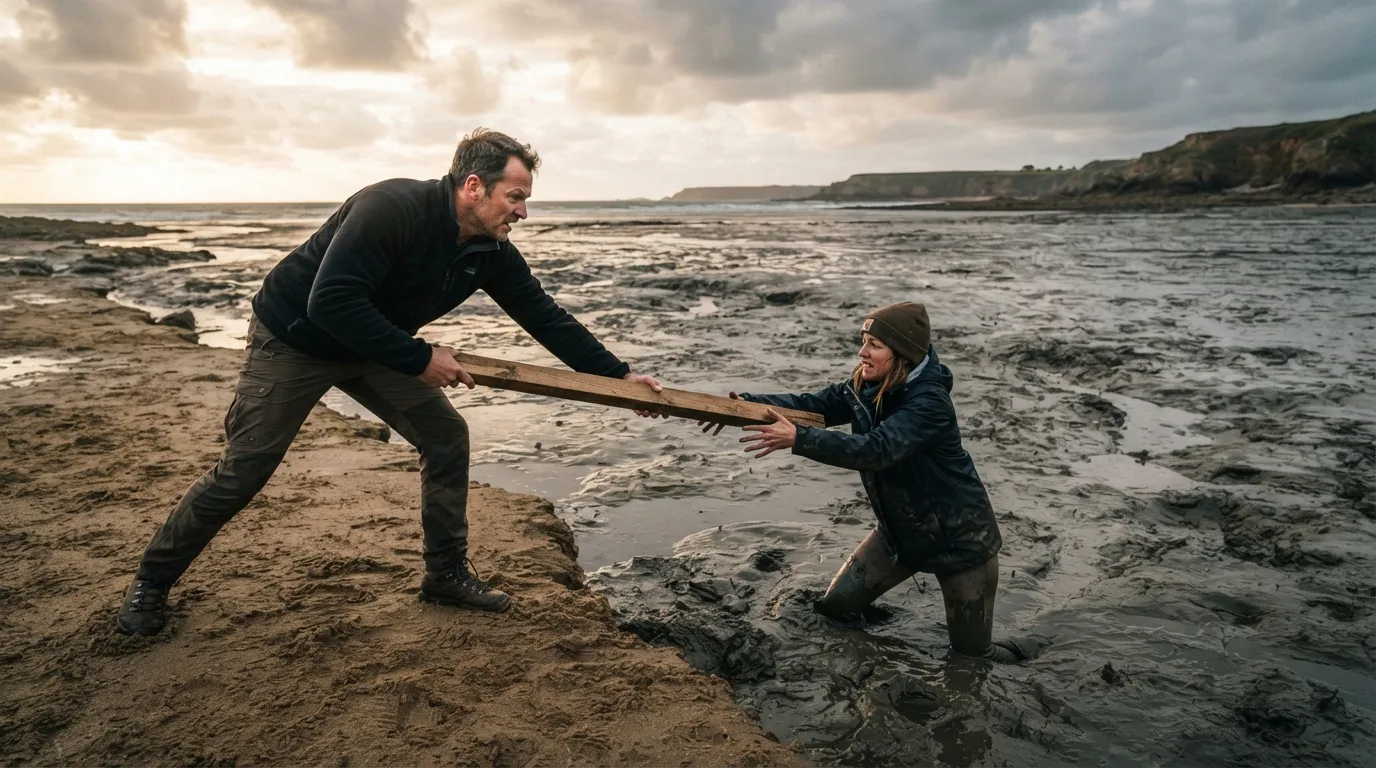
- Call emergency services immediately (112 in Europe, 999 or VHF Channel 16 for Coastguard in the UK) before attempting any direct rescue: the sooner the call goes out, the sooner equipped responders arrive.
- Stay on ground you know is firm. Never walk out to the victim unless you are absolutely certain of the ground’s stability beneath your own feet.
- Reach out with a long, rigid object — a plank, sturdy branch, trekking pole, or weighted rope — so the victim can grab hold without you having to step closer.
- Encourage them to lie back and slowly work their legs free, rather than pulling hard on your arms with theirs: sudden pulling can increase suction force and injure the victim without freeing them.
- If an anchor point exists (a tree, post, or vehicle on firm ground), tie the other end of the rope to it: the victim can then haul themselves out at their own pace without relying solely on your physical strength.
Marshes and peat bogs: unforgiving cousins
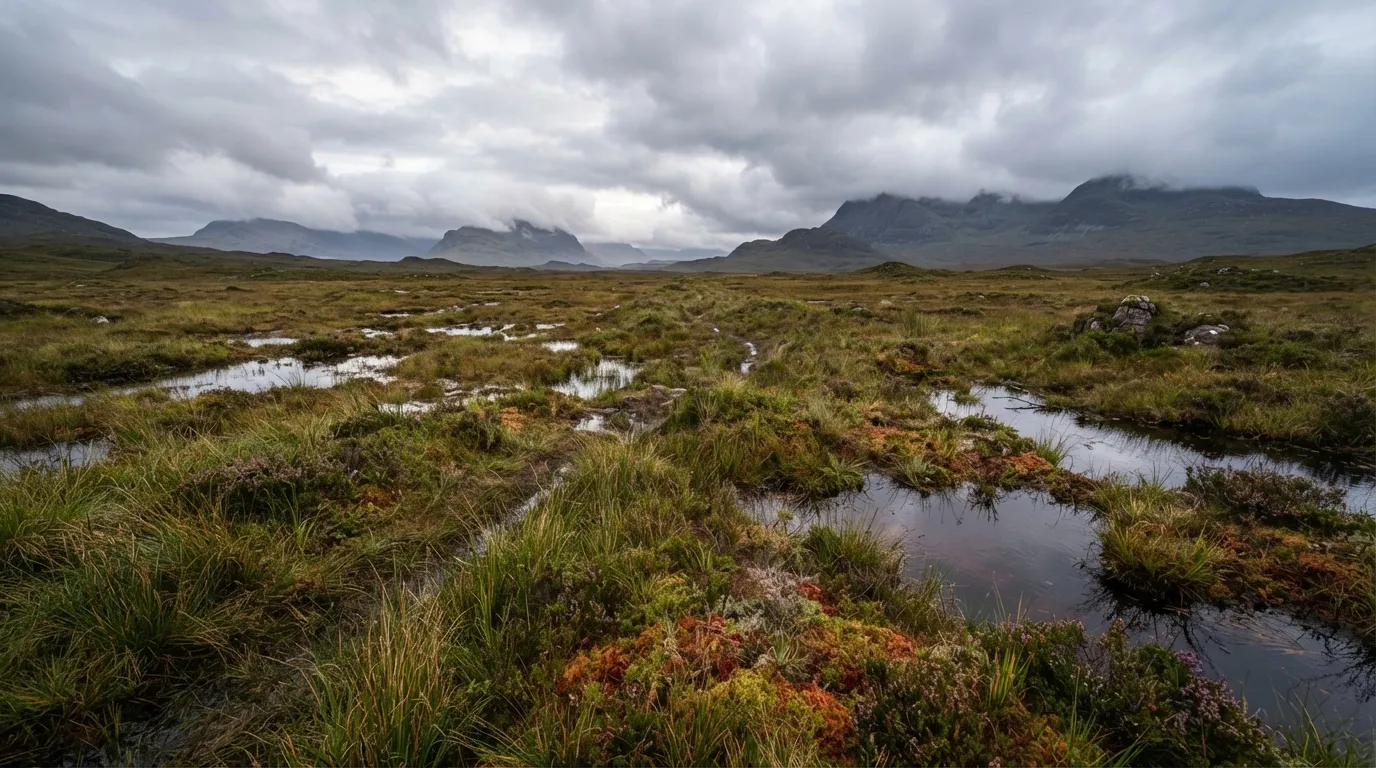
Peat bogs work on a principle similar to quicksand, but with a major difference: some, known as quaking bogs, rest on a floating mat of vegetation over open water that can be several meters deep. Walking on them literally causes the ground to shake for meters around your step — hence the name — and a tear in the plant mat can cause you to drop straight into open water below, without the relative safety cushion of classic quicksand. Peat bogs in Scotland and Ireland, which are extremely common, can drop you hip-deep in an instant on ground that looked just as solid as the rest of the moorland.
The resulting rule is simple and non-negotiable: never cross an unfamiliar marsh or peat bog without a marked trail or local guide, no matter how firm the terrain appears. Tropical mangroves add tides to the equation: mud between roots sinks like quicksand, and water rising twice a day turns a minor entrapment into a life-threatening emergency if you don’t break free before the tide turns.
The myth of the galloping horse, and what’s actually true
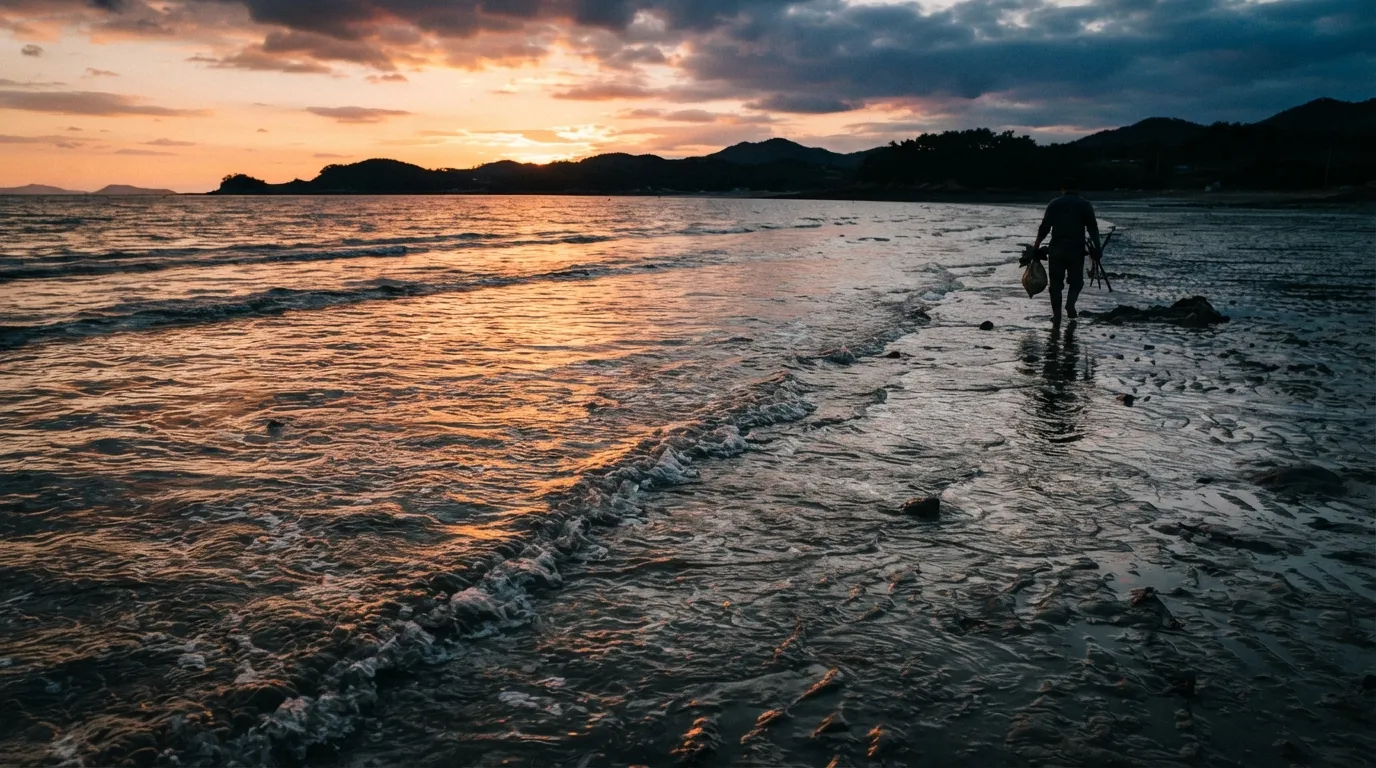
Local legend has it that in Mont-Saint-Michel bay, the sea “comes in at the speed of a galloping horse” — a galloping horse reaching 40 to 60 km/h (25 to 37 mph) on a racetrack. That is false, and easily measured: the incoming tide advances at about 8 to 10 km/h (5 to 6 mph), compared to 4 to 5 km/h along the rest of the French coastline. That speed is still far faster than a normal walking pace, but nowhere near a galloping horse.
| Coastal quicksand | Estuary mud | Quaking bog | |
|---|---|---|---|
| Primary danger | Rising tide while trapped | Tide + depth of sinking | Mat rupture, drowning underwater |
| Sinking speed | gradual | gradual | sudden if mat tears |
| Escaping alone | possible, a few minutes | possible but slower, very sticky | difficult, help almost essential |
| Guide/local trail | strongly recommended (e.g. Mont-Saint-Michel) | recommended | essential, boardwalk trails |
Frequently asked questions
Can you really sink completely into quicksand?
No. The density of liquefied quicksand is about twice that of the human body, creating enough buoyancy to stop you from sinking long before you could drown in the sand itself, at worst reaching waist or chest level. Movie scenes where someone disappears entirely below the surface are physically impossible without an external force pushing the body down.
How do you get out of quicksand on your own?
Whatever you do, don’t struggle: lie back to spread your weight over a larger area, then work one leg at a time using slow, circular movements to let water seep in and break the sand’s grip. The process takes several minutes, sometimes longer: it requires patience, not brute force.
Why do people still die in quicksand areas if you don’t sink completely?
Because the real danger rarely comes from the sand itself, but from the surrounding environment: the rising tide while you are trapped, hypothermia from prolonged immobility, or exhaustion from panicking and struggling uselessly. The 2004 Morecambe Bay disaster, which killed at least 21 people, illustrates this mechanism: it was the tide, not the sand, that killed them.
Should you go out yourself to rescue someone trapped in quicksand?
No, never on foot unless you are certain the ground beneath you is firm: the same ground that trapped the victim will very likely trap a makeshift rescuer. Call emergency services immediately, stay on solid ground, and reach out with a long object (plank, branch, rope) instead of walking over.
Does a peat bog work like quicksand?
The physical principle is similar, but a quaking bog is more dangerous: its plant mat sometimes floats over deep open water, and it can collapse suddenly under weight rather than sinking gradually. That is why guides in the Scottish Highlands and Irish bogs strictly forbid leaving marked boardwalks.
Is there quicksand in the desert?
No, or almost never in the way adventure movies depict it. Quicksand requires excess free water to break down cohesion between grains; dry desert sand, even when extremely fine, remains ordinary ground. “Sahara quicksand” is entirely fictional.
Key takeaways
- Quicksand is simply sand, water, and clay whose structure breaks under stress — and the mixture’s density physically prevents total submersion.
- In almost all documented cases, what kills isn’t the sand: it’s the rising tide, hypothermia, or exhaustion while immobilized.
- Getting out alone means lying back to spread your weight, then working one leg at a time, slowly — never fighting or pulling both legs at once.
- Helping someone is always done from firm ground using a extended object, never by walking out to the victim on foot.
- Mont-Saint-Michel bay, Somme bay, Scottish or Irish bogs, mangroves: these are areas for guides or marked trails, not improvisation, regardless of how firm the ground looks.
Going further
- Khaldoun, Eiser, Wegdam, and Bonn, Liquefaction of quicksand under stress, Nature 437 (2005) — the benchmark study that put an end to the cinematic myth.
- Destination Mont Saint-Michel Normandie, Bay crossings with certified guides — experience quicksand safely under professional guidance.
- RNLI and HM Coastguard UK, safety advice on British mudflats and estuaries — the most regularly updated English-language resource.
- Wikipedia, Morecambe Bay cockling disaster — the full account of a tragedy that changed UK labor laws.
Sources for this module (17)
- Khaldoun, Eiser, Wegdam, Bonn (2005), Liquefaction of quicksand under stress, Nature 437
- Wikipédia — Sables mouvants
- Wikipédia (EN) — Quicksand
- Wikipédia (EN) — Morecambe Bay cockling disaster
- Destination Mont Saint-Michel Normandie — Traversées de la baie, guides attestés
- France 3 Normandie — Les sables mouvants du Mont-Saint-Michel : comment s'en sortir
- Préfecture maritime de la Manche et de la mer du Nord — Communiqués, sauvetages en baie du Mont-Saint-Michel
- Guide-Crotoy / crotoybaiedesomme.com — Traversée de la Baie de Somme à pied, le guide complet
- Le Mont-Saint-Michel — La mer ne monte pas à la vitesse d'un cheval au galop, une légende
- Choses à Savoir — La mer peut-elle monter à la vitesse d'un cheval au galop ?
- Countryfile — Sinking mud and quicksand safety advice
- HM Coastguard UK — Stuck in the mud and caught out by the tide
- RNLI — Rhyl RNLI launch to reports of a person stuck in quicksand
- Guide-Irlande.com — Un bog, terme désignant les tourbières
- SDIS 35 — Les sapeurs-pompiers spécialistes du sauvetage côtier expérimentent l'utilisation de planches d'intervention
- Outdoors with Bear Grylls — How to Escape Quicksand
- Primal Survivor — The Worst Bear Grylls Survival Advice
Continue in "Critical situations"
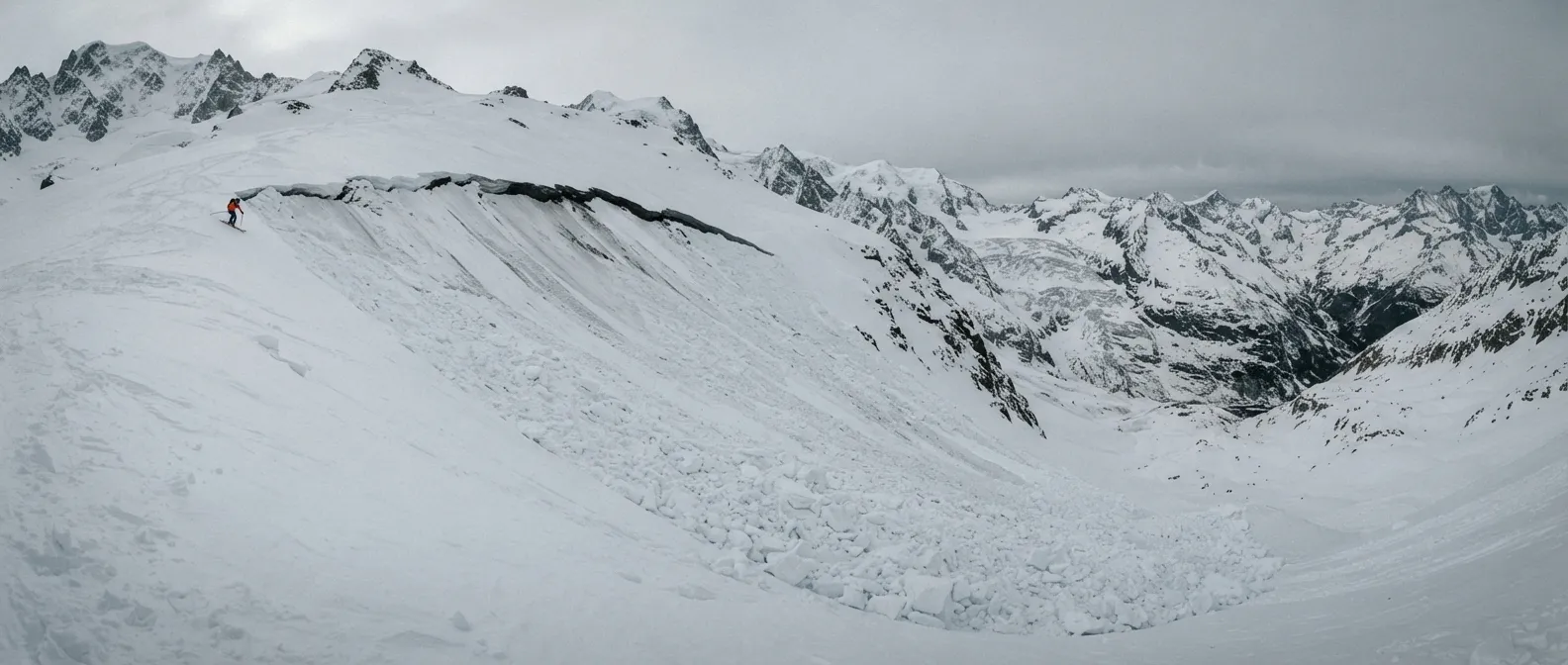
Avalanche: the 15 minutes that decide
A slab breaks loose under your skis, you have fifteen minutes before the stats turn against you: what you need to know instinctively, the night before heading out.
Lightning: When the Sky Targets You
In 3 seconds, a lightning bolt heats the air to 30,000 kelvins and kills 10% of those it strikes: here is what is at stake before you count to thirty.
Flash Flood: Water Arriving Faster Than You
It isn't raining where you are, the creek has been dry all morning, yet you have less time than you think before a wall of water rushes down the valley.