Skip to content

Your account

With an account, your progress (modules read, XP, badges, cards, notebook, pack, challenges) follows you on every device. Without one, it stays in this browser.

or
Deadly☠️ To avoid

☠️ Rosary pea (jequirity bean, Indian liquorice)

Abrus precatorius · Fabaceae
🧠 To remember it“Red and black, keep out of your mouth” — the black spot on the scarlet seed marks the most violent plant poison after ricin.
Rosary pea (jequirity bean, Indian liquorice) — Abrus precatorius

🔍 Identify it without mistakes

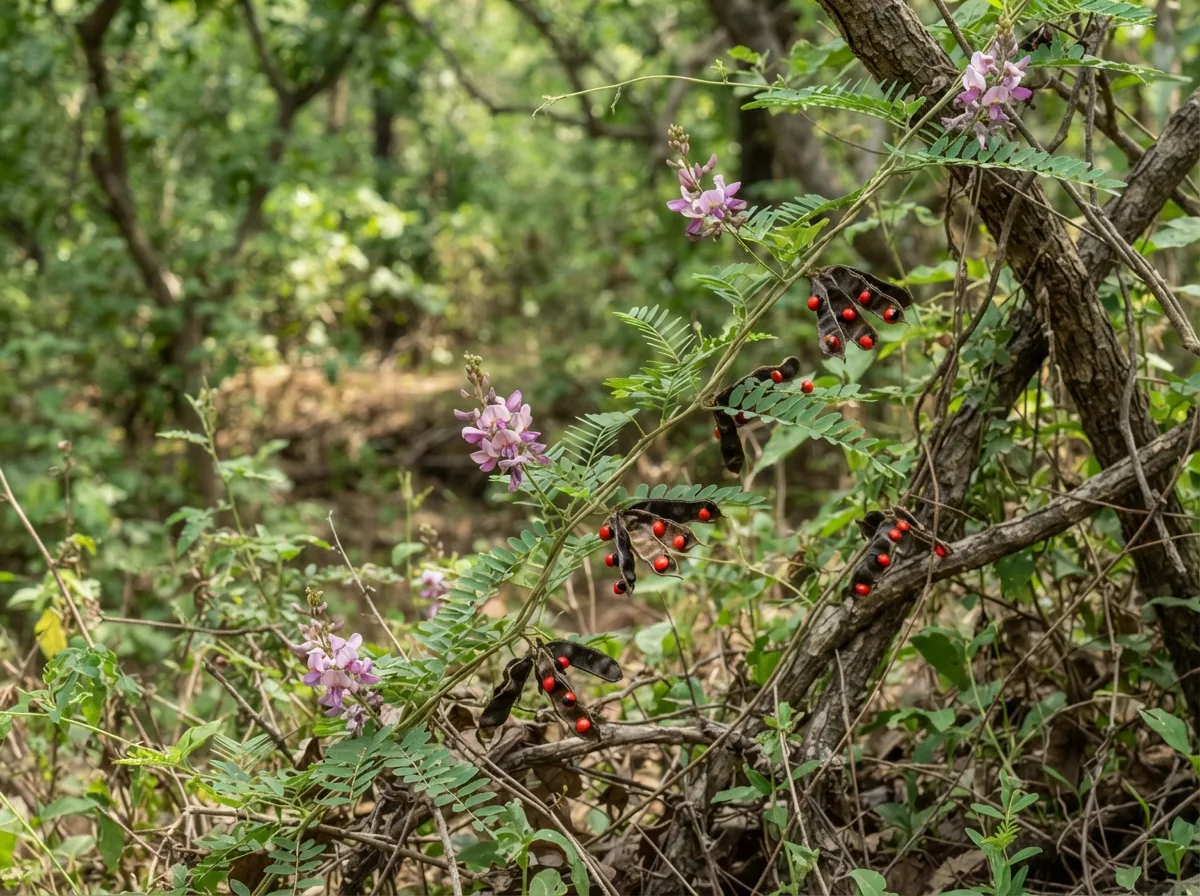
Slender climbing vine with compound pinnate leaves, widespread throughout the tropical belt and Africa, producing small pods that split open to reveal glossy, bright scarlet-red seeds marked with a black spot at one end — deceptively beautiful, these seeds are among the most potent plant poisons known, with a single chewed seed capable of killing an adult.

  1. slender, climbing vine with pinnate compound leaves made of numerous small leaflets
  2. small flat pods that curl and split open at maturity to expose the seeds
  3. oval, glossy bright red seeds marked with a distinct black spot at one end
  4. sweet-tasting root reminiscent of liquorice (hence the common name, though completely unrelated in safety to the rest of the plant)
Sizevine climbing up to 3-6 m
Floweringsmall pinkish-purple flowers in clusters, mature pods releasing seeds at the end of the dry season
Habitatforest edges, wasteland, and hedges throughout tropical and subtropical Africa, also present in Asia and the tropical Americas; often found near dwellings where it is sometimes grown out of ignorance of its danger for its decorative seeds

⚠️ Not to be confused with

Red sandalwood / Bead tree seeds, non-toxic and used in jewelry (Adenanthera pavonina)seeds of Adenanthera pavonina are solid red without a black spot and non-toxic; they are traditionally used as weight units and in jewelry, which maintains visual confusion with the deadly seeds of Abrus precatorius

To tell them apart: systematically check for the presence of a distinct black spot at one end of the red seed: its presence confirms Abrus precatorius and means you must never chew, pierce, or swallow the seed; its absence (uniform red seed) points toward Adenanthera, but when in absolute doubt, no red seed found in the wild should ever be put in your mouth

☠️ What kills

nomAbrin (a toxalbumin that inhibits cellular protein synthesis), concentrated in the seed — chemically similar to ricin but roughly 75 times more toxic by weight
dose letale estimeea single properly chewed and swallowed seed can be fatal to an adult; an intact unchewed seed, protected by a very hard shell, is significantly less dangerous as it passes through the digestive tract without releasing the toxin (Poison Control, approx)
delaia few hours to 5 days depending on reported cases
symptomesnausea, vomiting, abdominal pain, and diarrhea that can become bloody, followed by progressive organ failure (liver, kidneys, heart) in severe cases
antidoteno specific antidote; intensive symptomatic hospital care
morts documenteesyes, including children who swallowed seeds from jewelry or rosaries made with this plant

First steps : Call emergency services or poison control immediately as soon as a seed has been chewed or is suspected of being swallowed chewed, even without immediate symptoms (onset delay can be long). Do not induce vomiting without medical advice. Keep any seeds or fragments for identification by emergency personnel.

Sources (2)

No entry replaces a certain identification in the field, or medical advice. When in doubt: don't eat it. If ingestion is suspected: poison control or 112/911.