🌳 Gum acacia (Senegal acacia)
Senegalia senegal · Fabaceae
🔍 Identify it without mistakes
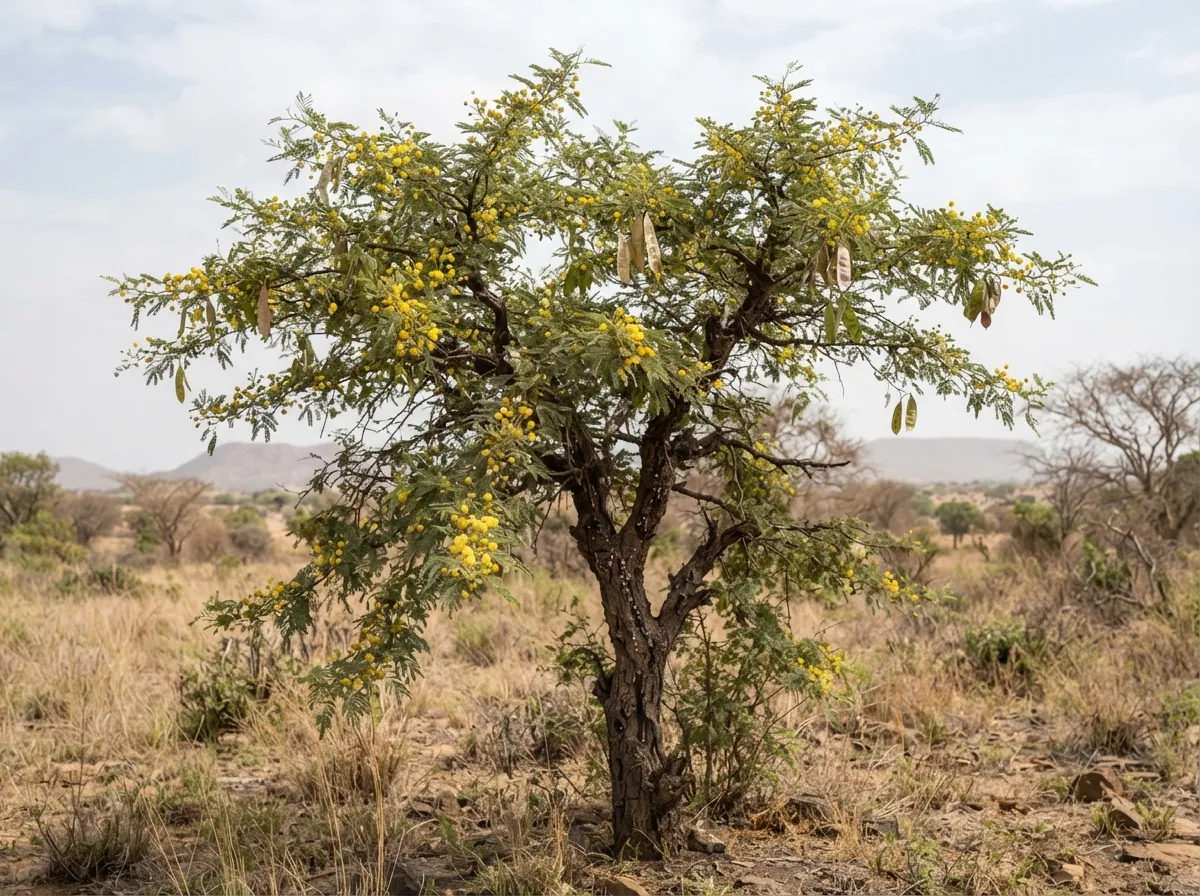
Small thorny tree of the Sahel, grey trunk peeling in thin papery flakes, straight paired thorns at the base of the leaves on zigzagging branches. Very fine bipinnately compound leaves, typical of acacias. Key feature: a translucent amber gum that naturally oozes from bark fissures and hardens into tears.
- grey trunk peeling in thin papery flakes
- straight paired thorns at the base of leaves, zigzagging branches
- very fine bipinnately compound leaves, typical of acacias
- translucent amber gum oozing from bark fissures and hardening into tears
⚠️ Not to be confused with
To tell them apart: the translucent amber gum oozing naturally from bark fissures, combined with straight paired thorns and zigzagging branches, is unique to the Senegalia/Acacia genus and is not found on any toxic tree in the Sahel
To tell them apart: the adult umbrella thorn takes on a very distinct flat-topped umbrella silhouette with characteristic spirally twisted pods, whereas the Senegal acacia has a more zigzagging bushy growth habit and branches that naturally ooze a translucent amber gum, absent in the umbrella thorn
🍽️ Eating it
Preparation : chew the hardened gum directly or dissolve it in water (highly soluble mucilage, natural thickener) as energy support and hydration during food shortages in the Sahel; cook seeds thoroughly to reduce bitterness in severe famine conditions
💊 Healing with it
the mucilaginous gum is traditionally used to soothe digestive and throat irritations; bark and roots are used in traditional African medicine against diarrhea and wounds
Level of evidence : tradition, gum arabic is also a recognized pharmaceutical excipient (binding/thickening agent in many medications) — The Conversation — La gomme arabique issue des acacias du Sahel africain
⚠️ none known at normal dietary doses
🪓 Other bushcraft uses
- gum arabic: natural exudate from slashed bark, dried into amber tears, major food and industrial thickener/binder (confectionery, watercolor, pharmaceuticals) — essential Sahelian commercial resource since Egyptian antiquity
- cordage: fibrous bark and roots produce strong fibers woven into durable ropes, used for lashings and nets
- defensive hedges: dense thorny branches form impenetrable enclosures to protect livestock from predators at night, a traditional Sahelian pastoral technique
- charcoal: hardwood used for quality charcoal and small agricultural tools
- soil regeneration: nitrogen-fixing nodulated roots naturally enrich poor Sahelian soils — actively planted in desertification control programs (Great Green Wall)
- fodder: foliage and pods valued by livestock (camels, goats) in the dry season when grass has disappeared
- landmark: distinct silhouette in open savanna, often the only available shade over long distances, navigation point for traditional caravans
Sources (2)
No entry replaces a certain identification in the field, or medical advice. When in doubt: don't eat it. If ingestion is suspected: poison control or 112/911.