🌳 Umbrella thorn acacia
Vachellia tortilis · Fabaceae (Mimosoideae)
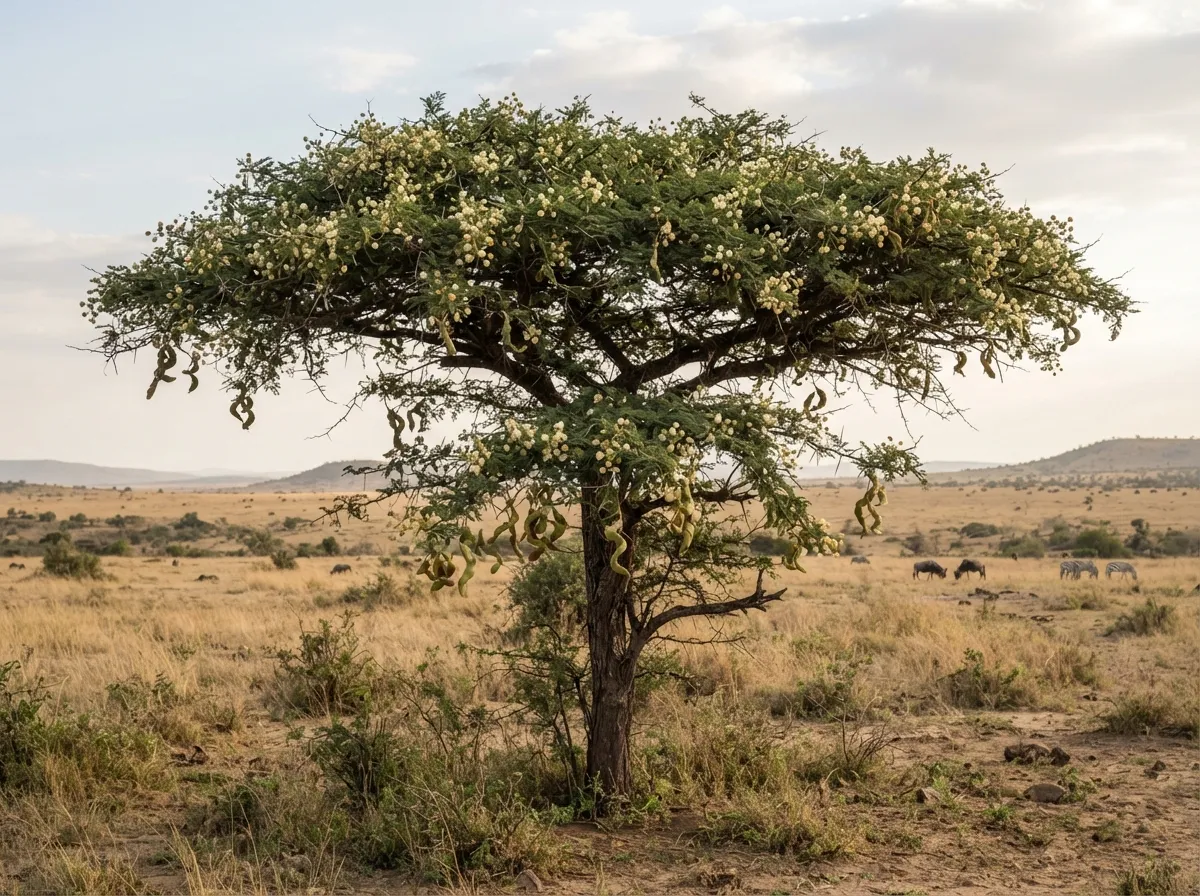
🔍 Identify it without mistakes
Tree with a characteristic flat-topped umbrella silhouette when mature, which can shrink to a simple shrub under extremely dry conditions. Features pairs of contrasting thorns — one long, straight, and pale, the other short, hooked, and dark — along with fragrant white flowers in dense spheres and distinctive spiral-shaped pods.
- flat-topped umbrella silhouette at maturity, the only Sahara tree with such a distinct shape
- pairs of contrasting thorns: one long, straight, and pale; one short, hooked, and dark
- distinctive, spirally coiled pods
- fragrant white flowers in dense spheres
⚠️ Not to be confused with
To tell them apart: the adult umbrella thorn takes on a very distinct flat-topped umbrella shape with characteristic spirally coiled pods, whereas the gum acacia has a more bushy, zigzag growth habit with branches that naturally exude a translucent amber gum, absent in the umbrella thorn
🍽️ Eating it
Preparation : pods and seeds consumed and processed into fodder for desert livestock; the gum, comparable to gum arabic, is harvested from bark fissures and can be chewed or dissolved in water
💊 Healing with it
no major traditional medicinal uses documented in the consulted sources
Level of evidence : traditional use — Wikipedia — Vachellia tortilis
⚠️ no known specific precautions for pods, seeds, and gum
🪓 Other bushcraft uses
- wood used for furniture, cart wheels, and fencing
- tannin-rich bark
- nitrogen fixation in the soil via symbiotic root bacteria, useful for rehabilitating degraded land
Sources (1)
No entry replaces a certain identification in the field, or medical advice. When in doubt: don't eat it. If ingestion is suspected: poison control or 112/911.