🫐 Açaí Palm
Euterpe oleracea · Arecaceae (Palms)
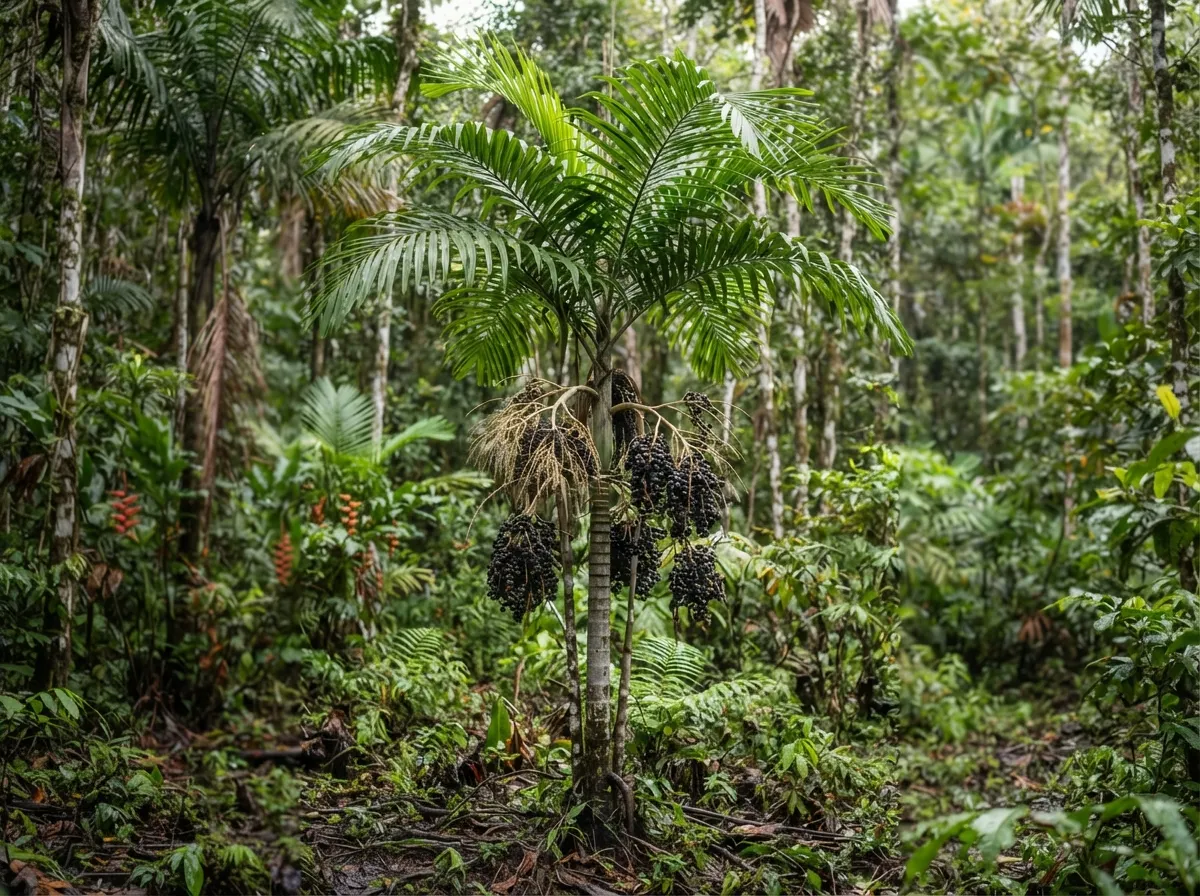
🔍 Identify it without mistakes
Slender multi-stemmed palm tree from the floodplains of the Amazon delta, growing in clusters of several thin trunks from the same rootstock. Its small purple-black fruits, the size of a grape but with very little pulp around a large seed, grow in hanging clusters and are harvested by climbing into the fronds.
- clumped growth habit: several thin, smooth trunks originating from the same rootstock
- crown of large, arching pinnate fronds at the top of each stem
- round purple-black fruits when ripe, grape-sized, in dense hanging clusters
- typically grows in floodplains or along Amazonian waterways
⚠️ Not to be confused with
To tell them apart: açaí grows in clumps of several thin trunks from the same rootstock, while juçara palm grows as a single trunk; never cut down a single-trunk palm for its heart unless it is an absolute survival necessity
🍽️ Eating it
Preparation : soak the fruits in lukewarm water, then knead them by hand to separate the thin pulp from the large seed, filter to get a thick purple paste or juice; heart of palm can be cooked or eaten raw in salads
💊 Healing with it
la pulpe est étudiée pour ses fortes propriétés antioxydantes et anti-inflammatoires (activité ORAC parmi les plus élevées mesurées par des laboratoires de recherche alimentaire)
Level of evidence : limited studies — PubMed — Açaí (Euterpe oleracea Mart.) in Health and Disease: A Critical Review
⚠️ no known toxicity from dietary consumption; commercial "superfood" claims far exceed what clinical human studies have confirmed
🪓 Other bushcraft uses
- trunks used in rural Amazonian construction
- seeds used in handcrafted jewelry and agricultural mulching
Sources (2)
No entry replaces a certain identification in the field, or medical advice. When in doubt: don't eat it. If ingestion is suspected: poison control or 112/911.