🌼 Yarrow
Achillea millefolium · Asteraceae
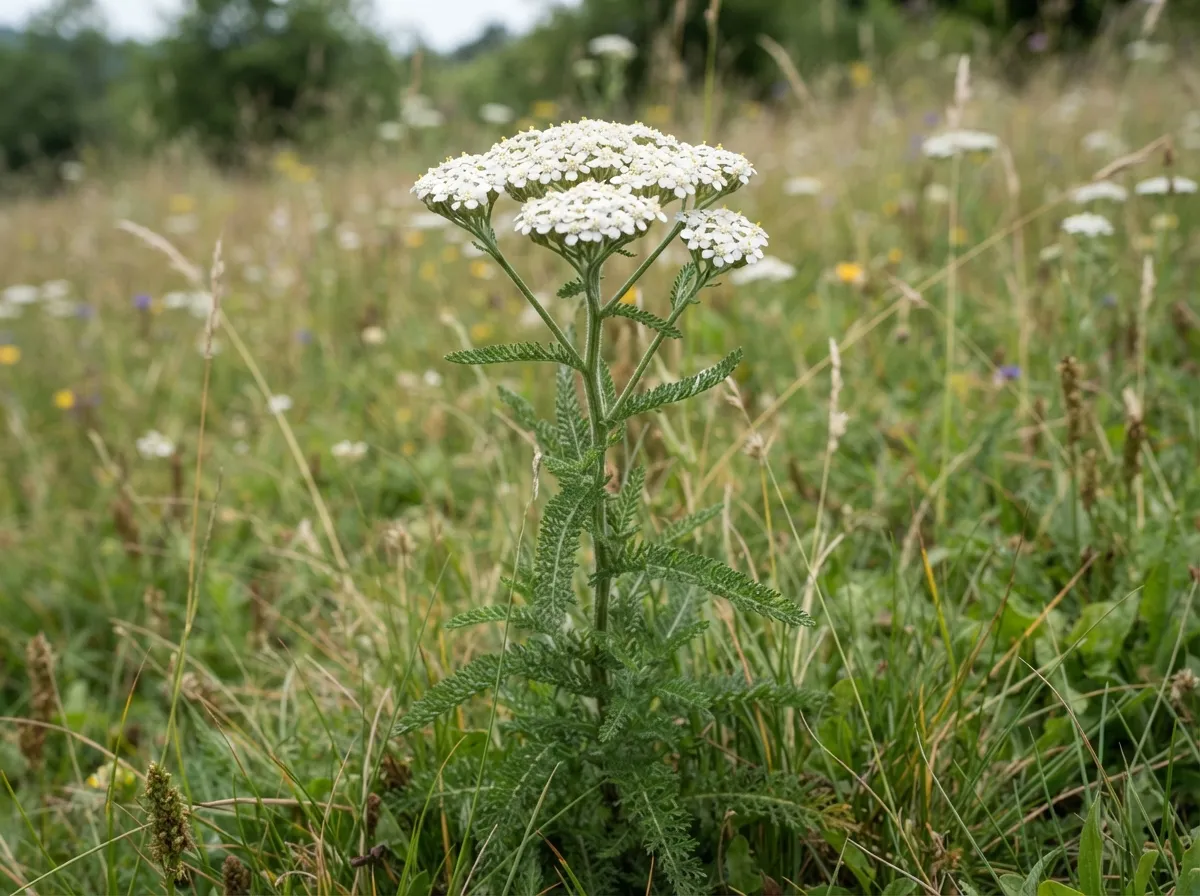
🔍 Identify it without mistakes
Aromatic plant with leaves finely dissected into multiple thread-like segments (hence 'millefolium' or thousand-leaf), giving it a feathery appearance that is easily recognizable both to touch and sight. Erect, hairy stem, topped with a large flat corymb of tiny white to pinkish flower heads, grouped in a broad composite umbel.
- leaves finely dissected into thread-like segments, feathery look
- flat corymb of tiny white to pinkish flower heads at the top of the stem
- erect, angular, hairy stem
- characteristic aromatic scent when crushing the leaves
- tufted colonies in untreated meadows
⚠️ Not to be confused with
To tell them apart: the extremely finely cut, feathery lacy leaf is unique among common meadow plants
🍽️ Eating it
Preparation : young raw leaves in very small quantities in salads (strong, bitter-aromatic taste) or as seasoning like an herb; dried flowers as herbal tea
💊 Healing with it
traditionally used for mild digestive disorders (spasms, bloating), superficial wounds (hemostatic and wound-healing properties recognized since antiquity), and feverish states
Level of evidence : tradition (recognized by EMA/HMPC for traditional digestive use and small wounds) — EMA/HMPC, community monograph Millefolii herba
⚠️ possible allergy in people sensitive to Asteraceae (ragweed family); not recommended during pregnancy (traditional emmenagogue effect); rare skin photosensitization reported at high doses
🪓 Other bushcraft uses
- used since antiquity to stop wound bleeding in battle — its botanical name 'Achillea' is said to come from the Greek hero Achilles, who allegedly used it to treat his soldiers' wounds during the Trojan War
- traditional brewing ingredient in certain beers before the widespread use of hops
Sources (3)
No entry replaces a certain identification in the field, or medical advice. When in doubt: don't eat it. If ingestion is suspected: poison control or 112/911.