Skip to content

Your account

With an account, your progress (modules read, XP, badges, cards, notebook, pack, challenges) follows you on every device. Without one, it stays in this browser.

or
Deadly☠️ To avoid

💜 Monkshood

Aconitum napellus · Ranunculaceae
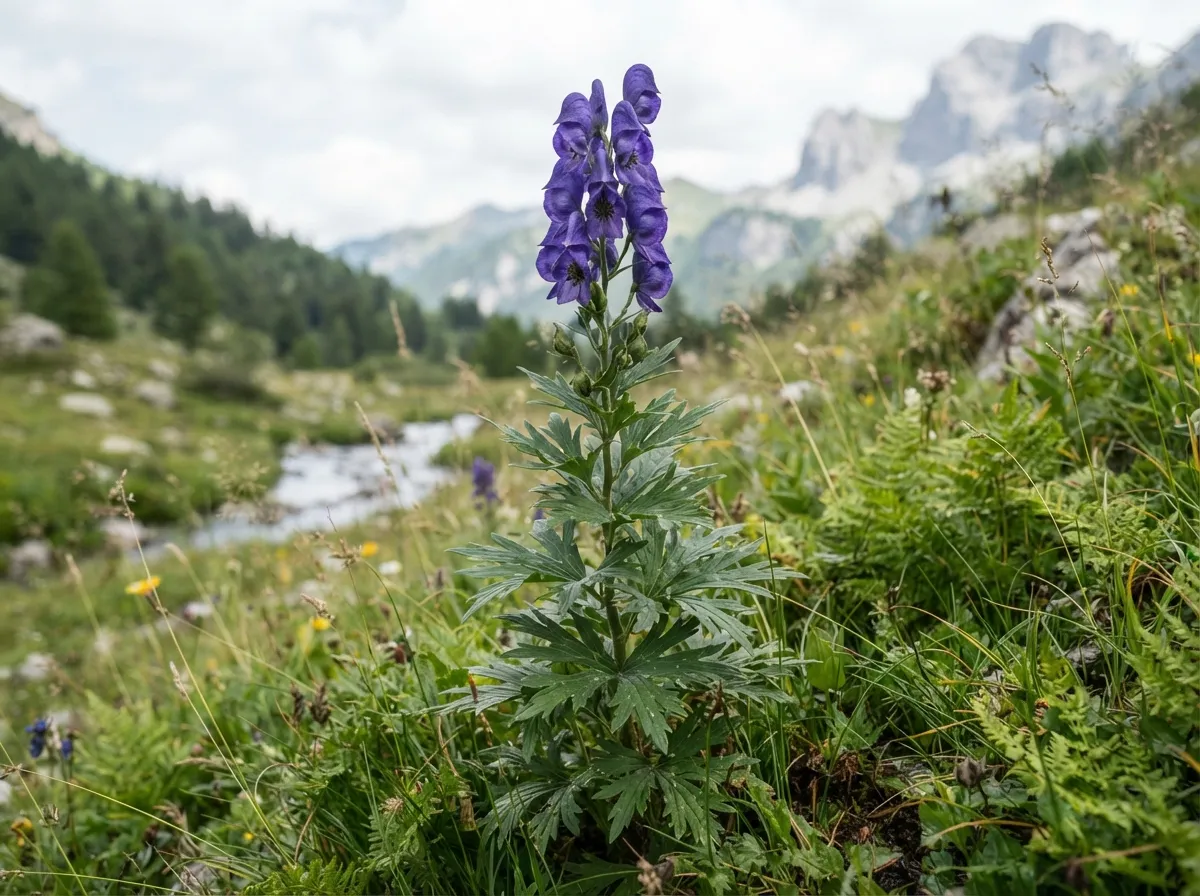
🧠 To remember it“Violet helm, heart stops fast” — the knight's helmet flower guards Europe's most toxic plant.
Monkshood — Aconitum napellus

🔍 Identify it without mistakes

Tall plant of moist mountain meadows with a characteristic dark violet-blue helmet-shaped flower, considered one of the most toxic plants in Europe. The tuberous, elongated turnip-shaped root has caused fatal poisonings when mistaken for horseradish or celery by hikers or foragers.

  1. flower shaped like a knight's helmet, deep violet-blue, grouped in an erect spike
  2. leaves deeply divided into narrow lobes, shiny dark green
  3. fusiform tuberous root, brownish-black on the outside, white when cut
  4. grows in dense clumps in damp mountain meadows and clearings
Size0,5 à 1,5 m
Floweringjuin-septembre
Habitatdamp mountain meadows and tall herb communities, stream banks, cool high-altitude clearings

⚠️ Not to be confused with

Horseradish (Armoracia rusticana)none for horseradish, but this confusion is ranked among the deadliest in the mountains

To tell them apart: monkshood root has a distinct small, spindle-shaped turnip form, unlike the long white taproot of horseradish; if in doubt, never taste the raw root

Wild celery or parsley (root) (Apium graveolens / Petroselinum crispum)none for these species

To tell them apart: no root resembling a small blackish turnip harvested in a damp mountain meadow should ever be tasted without 100% positive identification

☠️ What kills

nomAconitine and related alkaloids, highly concentrated in the root and seeds
dose letale estimeeabout 2 to 6 mg of pure aconitine is enough to kill an adult; chewing a whole root or simply crushing a leaf with your fingers and touching your mouth can be fatal (Toxinz, approx)
delai10 to 20 minutes for the first signs, a few hours to a fatal outcome
symptomestingling and numbness of the mouth then the whole body, nausea, salivation, muscle weakness, severe heart rhythm disturbances (tachyarrhythmias followed by bradycardia), respiratory paralysis, death by cardiac arrest
antidoteno specific antidote; intensive cardio-respiratory resuscitation
morts documenteesyes — fatal cases documented in Europe, particularly due to confusing the root with horseradish or improper dosage in traditional folk medicine

First steps : Call emergency services immediately at the slightest tingling in your mouth after contact: even prolonged skin contact with sap can lead to dangerous absorption. Do not induce vomiting. Wash your hands and save a piece of the plant for identification.

Sources (3)

No entry replaces a certain identification in the field, or medical advice. When in doubt: don't eat it. If ingestion is suspected: poison control or 112/911.