🍄 Wood mushroom
Agaricus silvicola · Agaricaceae
🔍 Identify it without mistakes
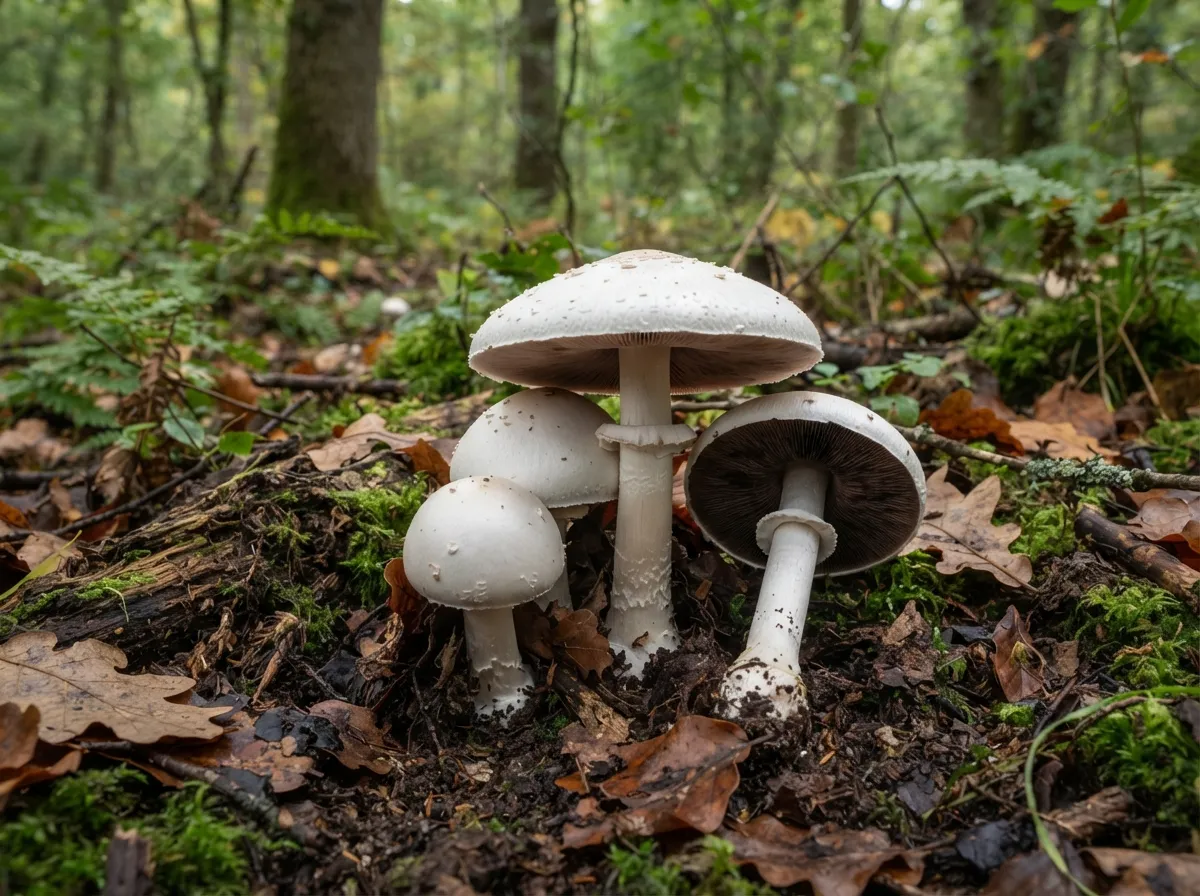
Woodland agaric with a strong anise smell, a cousin of the field mushroom but growing under trees. Like all white agarics, it requires the same vigilance as the field mushroom regarding young deadly amanitas, which are also white.
- cap 6-12 cm, spherical then flattening, creamy white, staining yellow when touched or with age
- gills free, creamy then pink, turning dark brown at maturity
- stem slender, bulbous base, fragile and hanging white ring
- flesh white with a strong, characteristic ANISE or almond smell
- spore print chocolate-brown
- no volva at the base of the stem
⚠️ Not to be confused with
To tell them apart: deadly amanitas have a sack-like VOLVA at the base of the stem (always dig up the full stem to check), gills that REMAIN white, and no anise smell; the wood mushroom never has a volva, its gills turn pink then brown, and its anise smell is clear and immediate
To tell them apart: the yellow-staining mushroom turns bright yellow immediately at the base of the stem when cut, with an unpleasant phenol/ink smell, unlike the frank anise scent of the wood mushroom
🍽️ Eating it
Preparation : always cooked; only harvest normal-sized adult specimens to avoid any confusion with young amanitas
No entry replaces a certain identification in the field, or medical advice. When in doubt: don't eat it. If ingestion is suspected: poison control or 112/911.