🟡 Common Gorse
Ulex europaeus · Fabacées
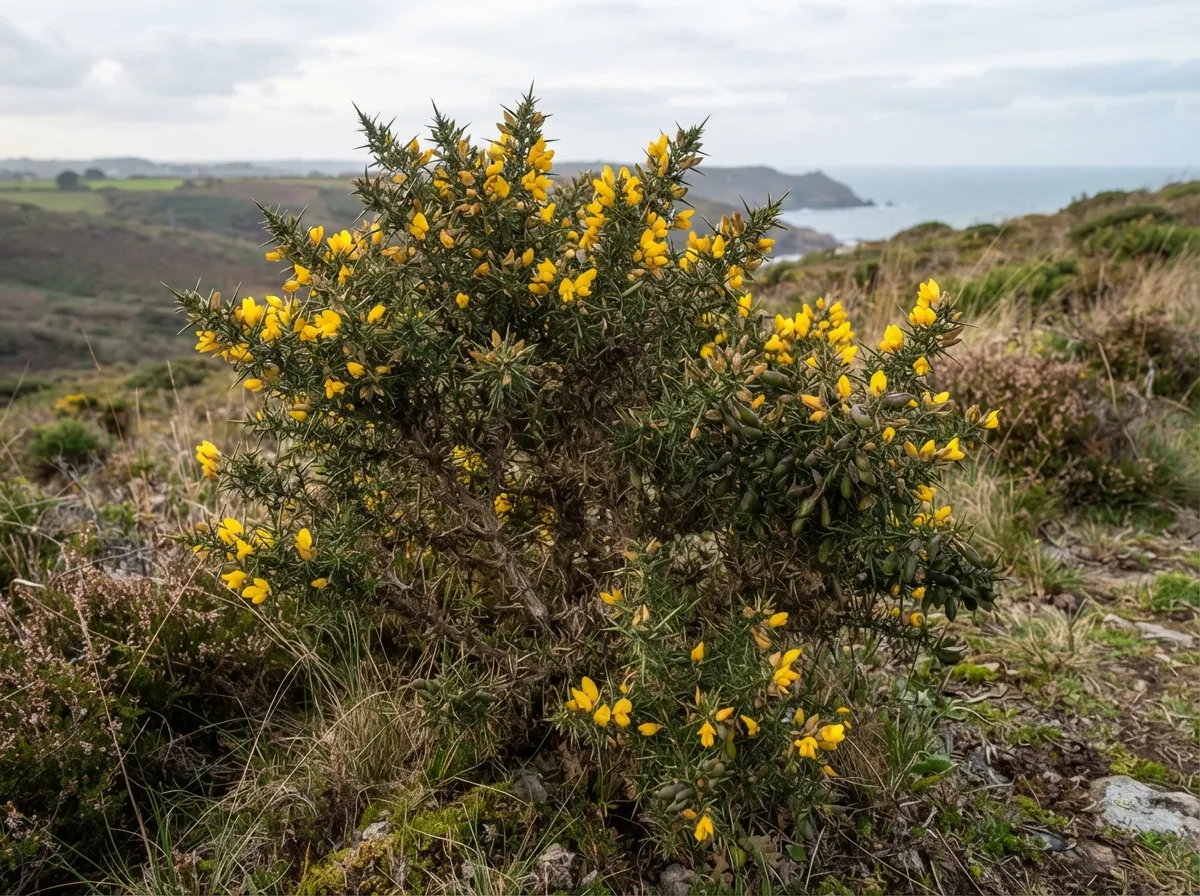
🔍 Identify it without mistakes
An impossible-to-miss shrub: completely transformed into a dense tangle of rigid, sharp spines, with adult leaves also reduced to thorns. Covered in winter and spring with bright golden-yellow flowers that have a characteristic coconut scent in the sun, contrasting sharply with its aggressive foliage.
- fully spiky shrub: stems and adult leaves transformed into rigid, dark green spines
- golden-yellow flowers of 12-15 mm, highly fragrant with a coconut scent in the sun
- blooming possible almost year-round, peaking between February and June
- hairy black pods that burst open when mature
- forms dense, impenetrable thickets, often in colonies on heaths and dunes
⚠️ Not to be confused with
To tell them apart: gorse pricks intensely (rigid spines everywhere), while broom has flexible, smooth twigs with no thorns at all
🍽️ Eating it
Preparation : only the petals, carefully picked between the thorns, can be eaten raw in small quantities to garnish salads or infuse for their coconut scent; the rest of the plant (spiky leaves, pods, seeds) is not edible and has no documented food use
🪓 Other bushcraft uses
- traditionally crushed with a mill or mallet to soften its thorns and serve as winter fodder for livestock in poor regions of Brittany and the British Isles, before modern forage crops took over
- used as a Dr. Bach flower remedy ("Gorse") to symbolize hopelessness, under its English name
No entry replaces a certain identification in the field, or medical advice. When in doubt: don't eat it. If ingestion is suspected: poison control or 112/911.