🍈 Ackee
Blighia sapida · Sapindaceae
🔍 Identify it without mistakes
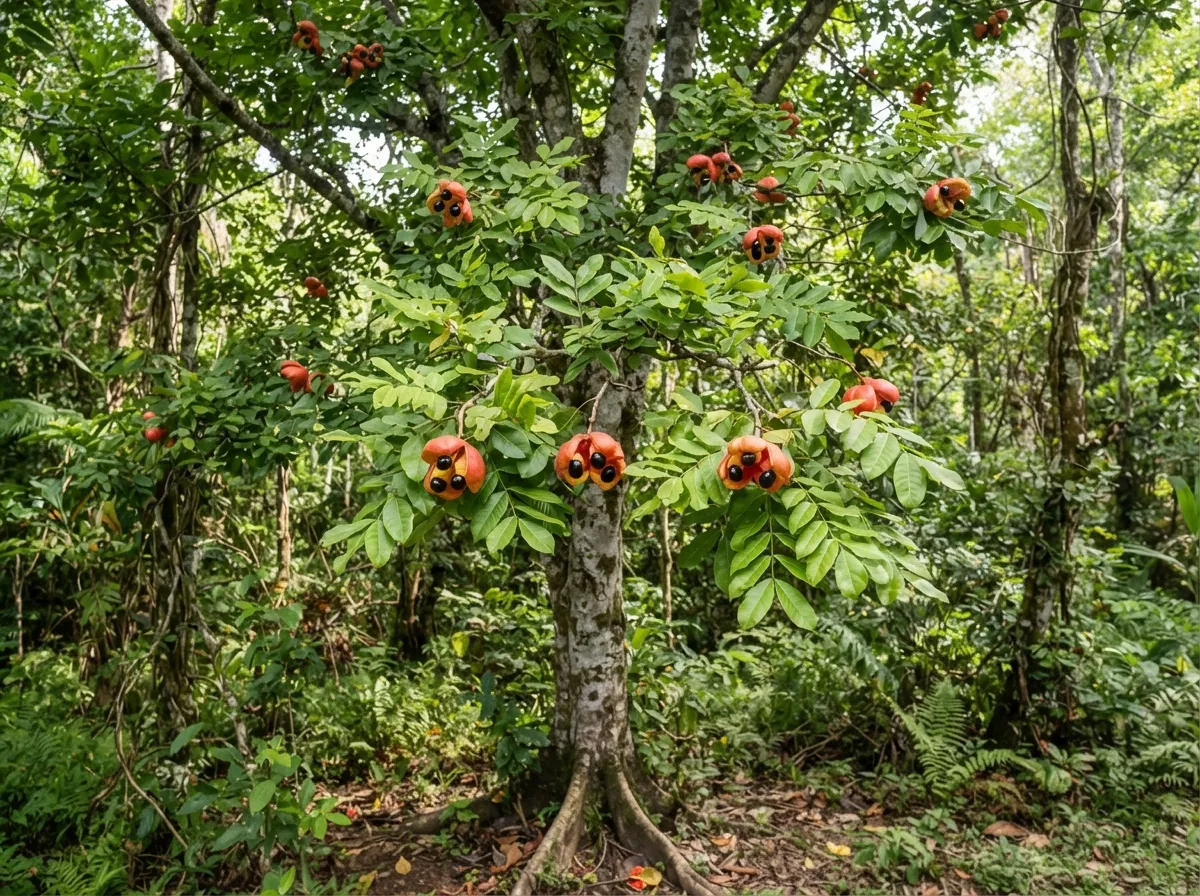
Medium-sized tree with shiny pinnately compound leaves. The pear-shaped fruit with three lobes turns from green to bright red-orange when ripe, then splits open spontaneously into three valves, revealing three glossy black seeds each surrounded by a fleshy cream-yellow aril - the only edible part, and only at this stage.
- three-lobed red-orange fruit that splits open spontaneously when ripe
- fleshy cream-yellow aril surrounding a glossy black seed
- closed or still green fruit = absolute stop sign
⚠️ Not to be confused with
To tell them apart: harvest ONLY fruits that have already split open spontaneously on the tree; never force open a closed fruit; also discard the pinkish membrane underneath the aril and the seeds, which are always toxic
🍽️ Eating it
Preparation : only pick arils from fruits that opened by themselves on the tree (never those fallen on the ground for a long time, nor forced open); remove the pink vein/membrane and the black seeds; wash thoroughly then cook (boiled or sautéed) before eating - cooking does NOT make an immature fruit edible, it only prepares an already ripe fruit
cooked aril, indicative value from Jamaican culinary literature
💊 Healing with it
aucun
Level of evidence : traditional use — StatPearls - Ackee Fruit Toxicity
⚠️ the bark, leaves, and seeds are toxic and have no documented safe medicinal use
No entry replaces a certain identification in the field, or medical advice. When in doubt: don't eat it. If ingestion is suspected: poison control or 112/911.