🍁 Wild Service Tree
Sorbus torminalis · Rosaceae
🔍 Identify it without mistakes
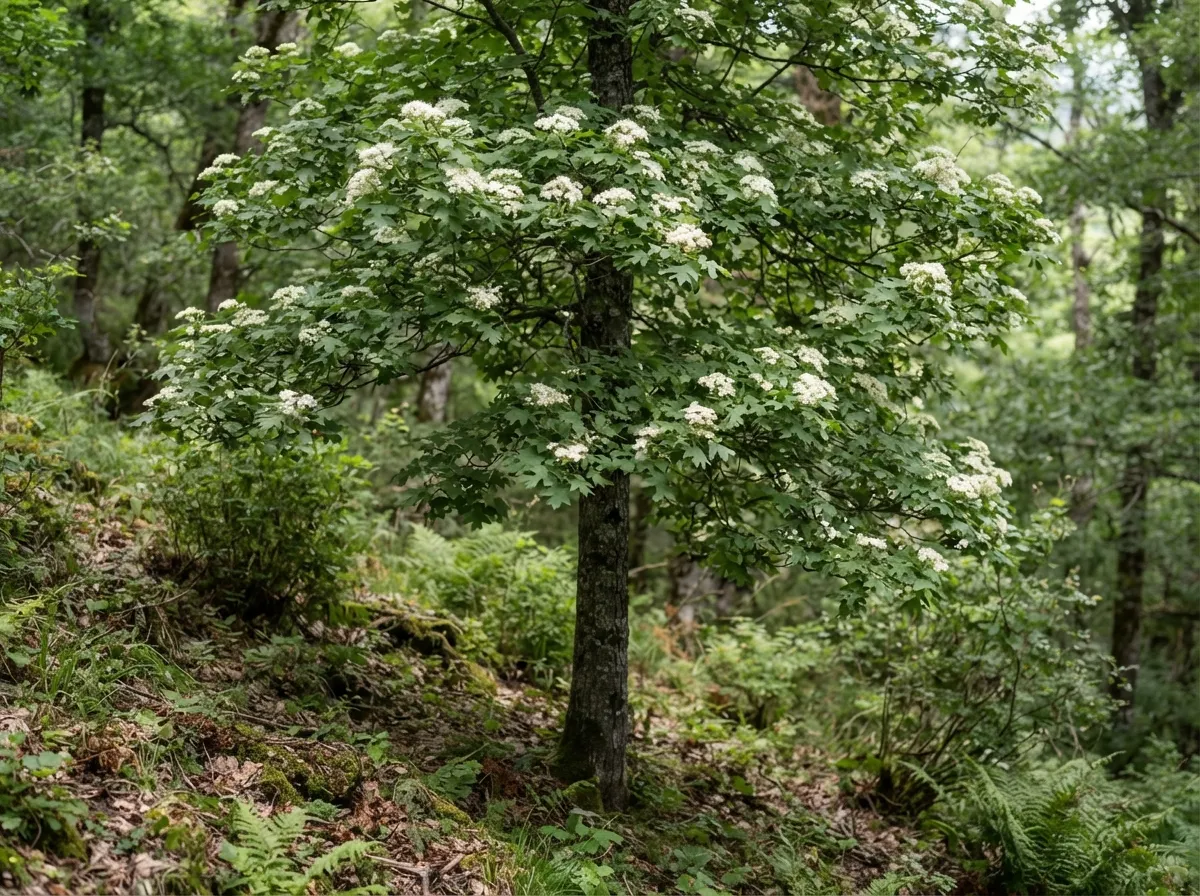
Unobtrusive forest tree, often mistaken for a maple because of its simple, lobed leaves — a unique trait among European sorbs, which almost all have pinnately compound leaves. Bark cracks into greyish-red scales as it ages. Small white flowers in corymbs in spring, reddish-brown fruits speckled with small pale dots (lenticels).
- SIMPLE leaves (not compound) with 3-5 pairs of pointed, toothed lobes, maple-like appearance
- underside of the leaf initially downy whitish, becoming hairless later
- bark cracking into greyish-red scales with age
- oval reddish-brown fruits, speckled with small light dots (lenticels), in small clusters
- white flowers in loose corymbs, May
⚠️ Not to be confused with
To tell them apart: maple has OPPOSITE leaves (two per node, facing each other) while wild service tree has ALTERNATE leaves (one per node, staggered) — the most reliable feature to tell them apart in the field
🍽️ Eating it
Preparation : fruit is acrid and astringent when picked, like medlars and rowan berries: leave it to blet after the first frosts, or cook into jam or brandy; was also traditionally consumed dried for the winter
🪓 Other bushcraft uses
- very fine and hard wood, sought after in cabinetmaking and for making musical instruments and precision rulers, under the commercial name of "Swiss pearwood"
Sources (2)
No entry replaces a certain identification in the field, or medical advice. When in doubt: don't eat it. If ingestion is suspected: poison control or 112/911.