🌵 Cape aloe (Bitter aloe)
Aloe ferox · Asphodelaceae (Xanthorrhoeaceae)
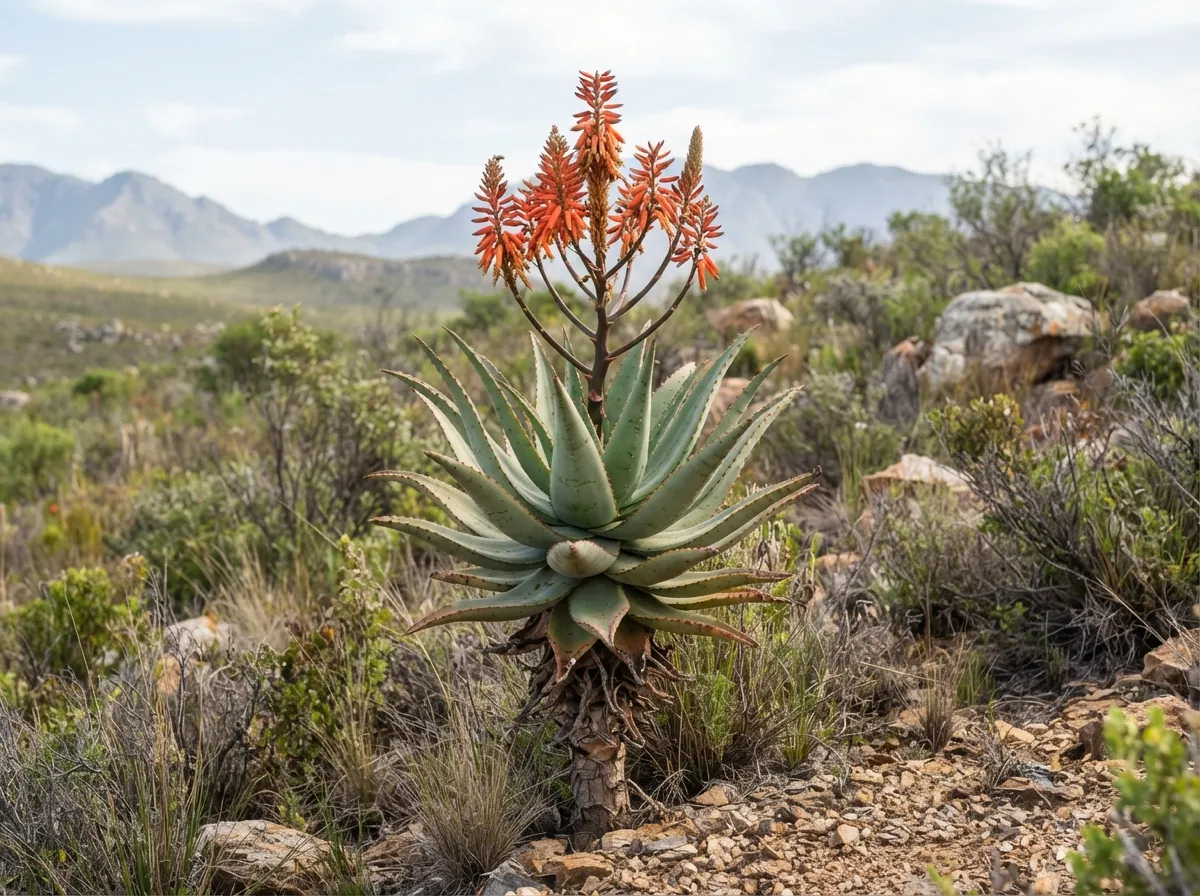
🔍 Identify it without mistakes
Large single-stemmed South African aloe, often covered with the dried remains of its old leaves, bearing a rosette of thick leaves armed with reddish spines on both surfaces — significantly more robust and spiky than aloe vera. Its upright, tall, bright red-orange inflorescence stands out against the arid hills of the Karoo during the austral winter.
- single, robust stem, often clothed in dried dead leaves hanging down the trunk
- thick leaves in a rosette, edged with distinct reddish spines on both surfaces (not just the margins)
- bitter yellow sap that flows immediately as soon as a leaf is cut
- bright red-orange upright inflorescence, reaching over 2-3 m, highly visible from afar in austral winter
⚠️ Not to be confused with
To tell them apart: Aloe ferox is significantly larger, with a clearly visible single stem often covered in dead leaves, prominent spines on both surfaces of the leaves, and a very bitter yellow sap (aloin); Aloe vera remains lower, often stemless or short-stemmed, with spines limited to leaf edges and a much less bitter inner gel
💊 Healing with it
la sève jaune amère séchée (« Cape aloes ») est utilisée depuis plus de 250 ans comme laxatif stimulant puissant ; le gel de la pulpe interne des feuilles est aussi utilisé en usage externe pour apaiser la peau, dans la même logique que l'aloe vera
Level of evidence : limited studies — ScienceDirect — Cape aloes: a review of the phytochemistry, pharmacology and commercialisation of Aloe ferox
⚠️ internal laxative use should be limited to short periods; contraindicated during pregnancy, in inflammatory bowel disease, or in children; prolonged use of aloin-based laxatives can cause potassium loss and bowel dependence
🪓 Other bushcraft uses
- commercial export of dried sap ('Cape aloes') to Europe since the 18th century, one of southern Africa's oldest plant export industries
- pulp gel used in local cosmetics for skin and hair
Sources (2)
No entry replaces a certain identification in the field, or medical advice. When in doubt: don't eat it. If ingestion is suspected: poison control or 112/911.