🪴 Aloe vera
Aloe vera · Asphodelaceae (Xanthorrhoeaceae)
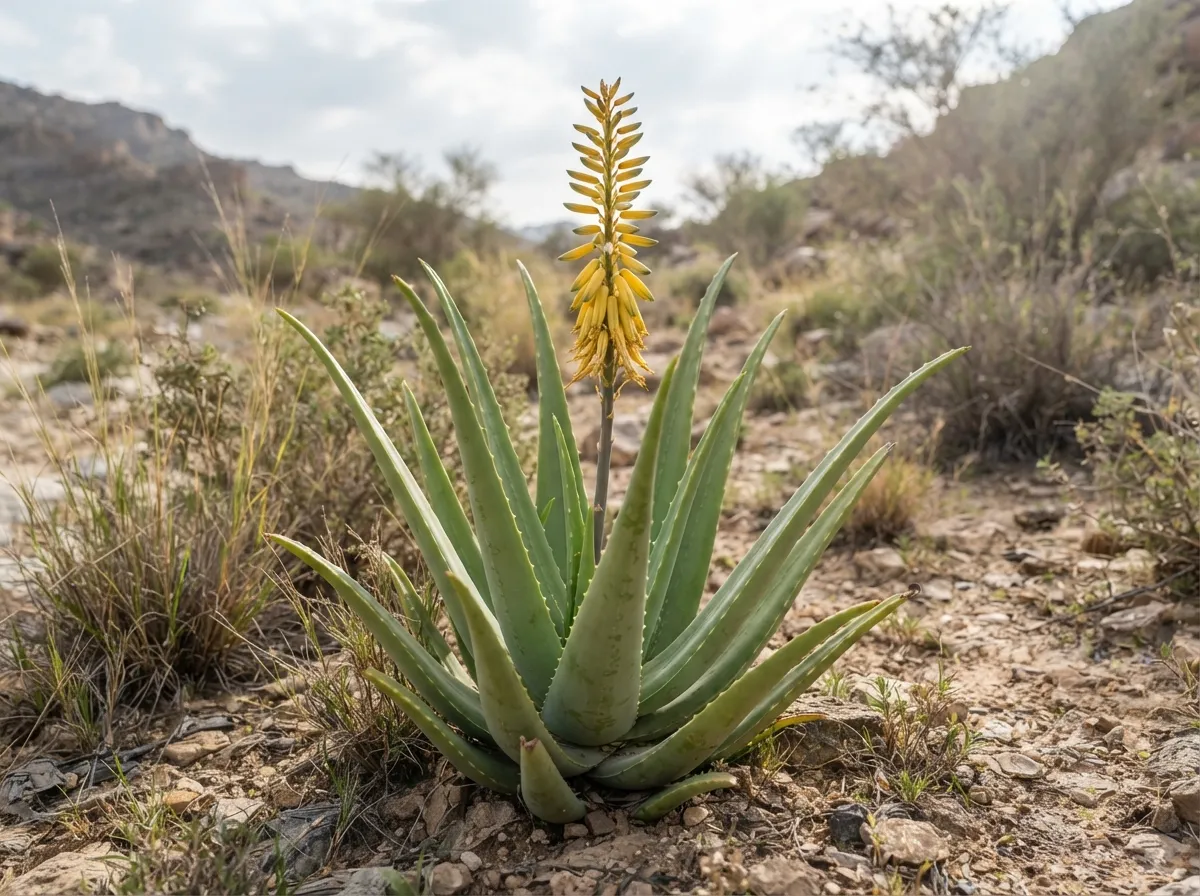
🔍 Identify it without mistakes
Succulent plant growing in a basal rosette, stemless or with a very short stem, made up of thick, fleshy, lanceolate grey-green leaves bordered with small soft teeth. Cutting a leaf open reveals a clear central gel and, just beneath the skin, a layer of bitter yellow latex.
- thick leaves in a rosette, edged with soft teeth (not sharp like an agave)
- clear gel in the centre of a cut leaf
- bitter yellow latex between the skin and the gel
⚠️ Not to be confused with
To tell them apart: aloe has soft leaves with pliable teeth and a gelatinous clear gel in the centre; agave has rigid leaves, a sharp black terminal spine, and hard marginal teeth without gel — its cut flesh is fibrous and pulpy, not gelatinous
To tell them apart: Aloe ferox is significantly larger, with a clearly visible single trunk often covered in dead leaves, prominent spines on both leaf surfaces, and very bitter sap; Aloe vera stays shorter, stemless or short-stemmed, with spines strictly limited to the leaf margins
🍽️ Eating it
Preparation : cut a leaf, remove the skin and the bitter yellow latex layer just beneath it (a digestive irritant), keep only the clear inner gel, rinse before eating in small quantities
💊 Healing with it
externally applied gel is recognized to soothe mild burns (including sunburn), skin irritations, and promote superficial wound healing
Level of evidence : solid studies — indexed clinical literature (topical gel use widely documented), herbal medicine monographs
⚠️ the yellow latex (just under the skin, not to be confused with the gel) is a powerful laxative and can be toxic if ingested in large quantities or over prolonged periods; not recommended internally for pregnant women; always thoroughly separate the gel from the latex before use
🪓 Other bushcraft uses
- gel used in cosmetics (skin and hair moisturizer)
- latex historically exported as a pharmaceutical purgative (commercial aloe)
Sources (1)
No entry replaces a certain identification in the field, or medical advice. When in doubt: don't eat it. If ingestion is suspected: poison control or 112/911.