🍄 Death Cap
Amanita phalloides · Amanitaceae
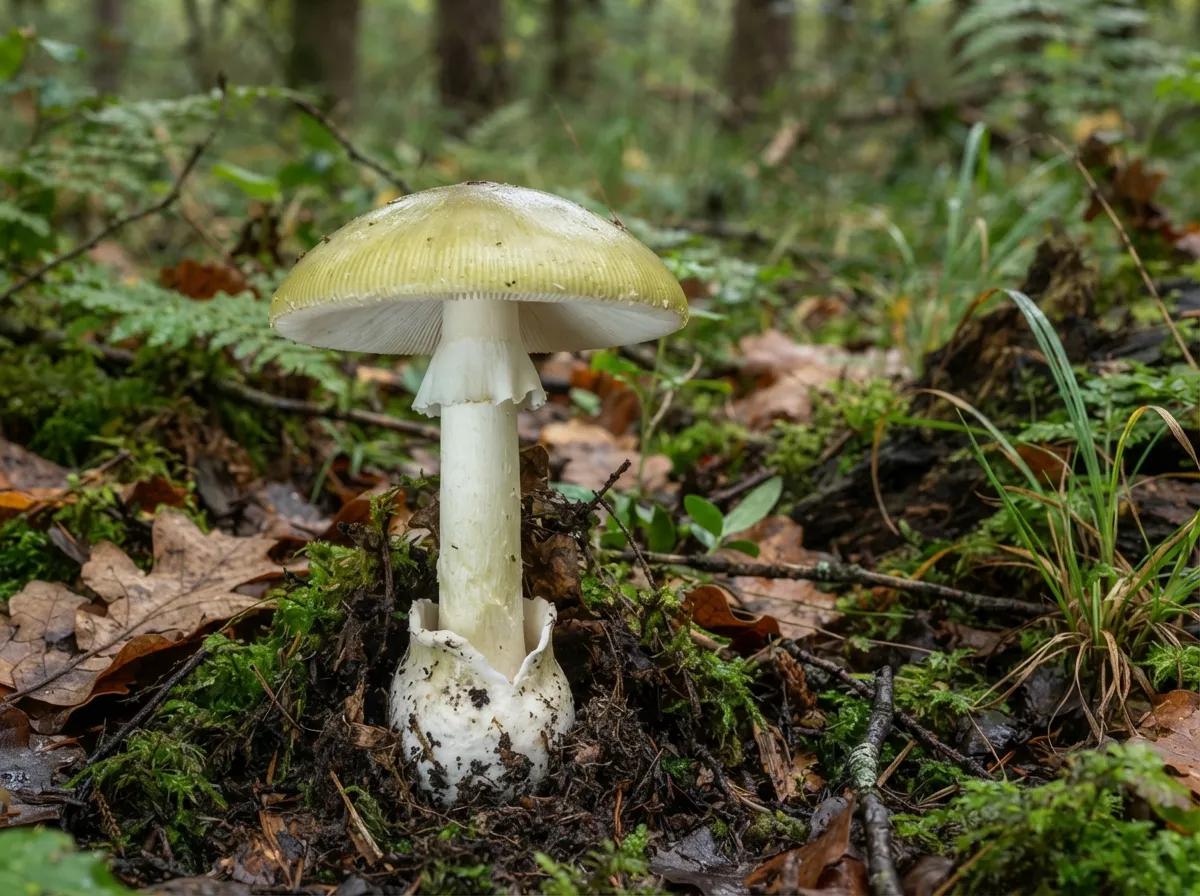
🔍 Identify it without mistakes
Responsible for the vast majority of mushroom-related deaths in Europe. Olive-green to yellowish-green cap, often streaked with radial fibrils, white gills and stem, membranous sac-like volva at the base—a ordinary-looking mushroom, sometimes mistaken for an edible russula or knight mushroom by inexperienced foragers. A single cap can kill an adult.
- olive-green to yellowish-green cap, sometimes almost whitish, smooth to slightly fibrillose surface
- gills white, crowded, free (not attached to the stem)
- persistent membranous ring on the stem
- white sac-like volva enclosing the base of the stem, often buried—ALWAYS DIG IT UP, never cut the stem at ground level
⚠️ Not to be confused with
To tell them apart: the russula has neither a ring nor a volva at the base of the stem, and its gills snap cleanly (brittle), unlike the pliable gills of the death cap
To tell them apart: St. George's mushroom grows in spring in fairy rings on lawns, never with a sac-like volva at the base
☠️ What kills
First steps : Call the poison control center IMMEDIATELY, even in the absence of symptoms, as soon as you have any doubt about the identification of a consumed mushroom—every hour counts before liver damage sets in. Do not induce vomiting. You must keep a whole mushroom (uncooked if possible, with the stem and base intact) for formal identification by a mycologist or laboratory.
Sources (4)
No entry replaces a certain identification in the field, or medical advice. When in doubt: don't eat it. If ingestion is suspected: poison control or 112/911.