🍄 Blusher mushroom
Amanita rubescens · Amanitaceae
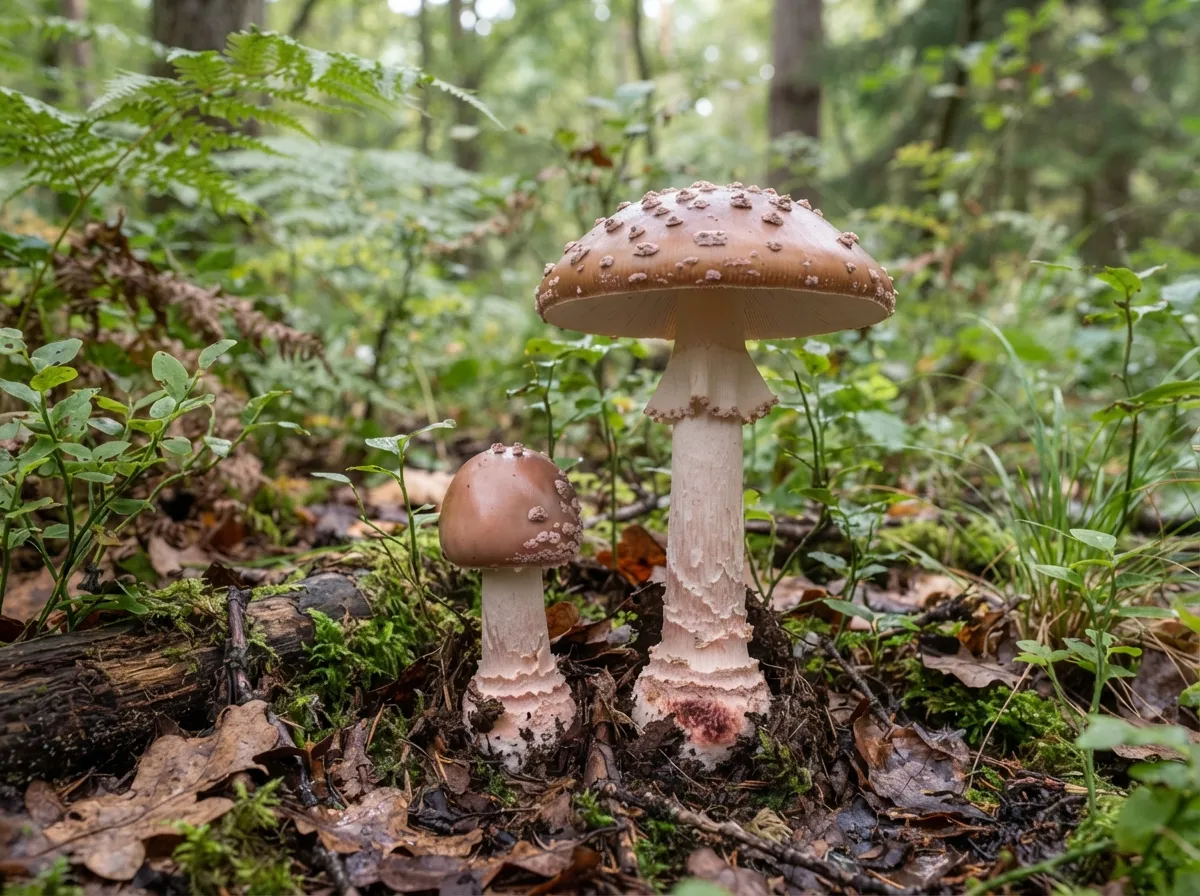
🔍 Identify it without mistakes
Also known as the blusher, this is THE most common and studied confusion in field mycology: its resemblance to the panthercap (deadly) is such that it causes severe poisoning every year. Toxic when raw, it must always be cooked thoroughly, even after a positive identification.
- pinkish-brown to reddish-brown cap, dotted with grayish to pinkish-brown patches (remnants of the veil, never pure crisp white)
- flesh and gills that distinctly TURN RED when bruised, cut, or damaged by insects — key criterion
- stem with a STRIPED (striate) ring on top, base swollen into a bulb WITHOUT a clear bag-like volva (just faint remnants)
- white spore print
- no particular unpleasant odor
⚠️ Not to be confused with
To tell them apart: THE key confusion to remember: the panthercap NEVER TURNS RED when cut or bruised (flesh and gills stay white), its ring is NOT striped, its cap patches are pure crisp white (never grayish/pinkish), and the volva at the base forms a clearer gutter-like rim; if you have the slightest doubt about the reddening, never eat it — this is the criterion that most often tricks experienced foragers
🍽️ Eating it
Preparation : ALWAYS thoroughly cooked for at least 15-20 minutes (toxic when raw, causes digestive distress and potential hemolysis), never eat in large quantities, especially the first time
Sources (3)
No entry replaces a certain identification in the field, or medical advice. When in doubt: don't eat it. If ingestion is suspected: poison control or 112/911.