🫐 Serviceberry / Saskatoon (Amélanchier)
Amelanchier alnifolia · Rosaceae
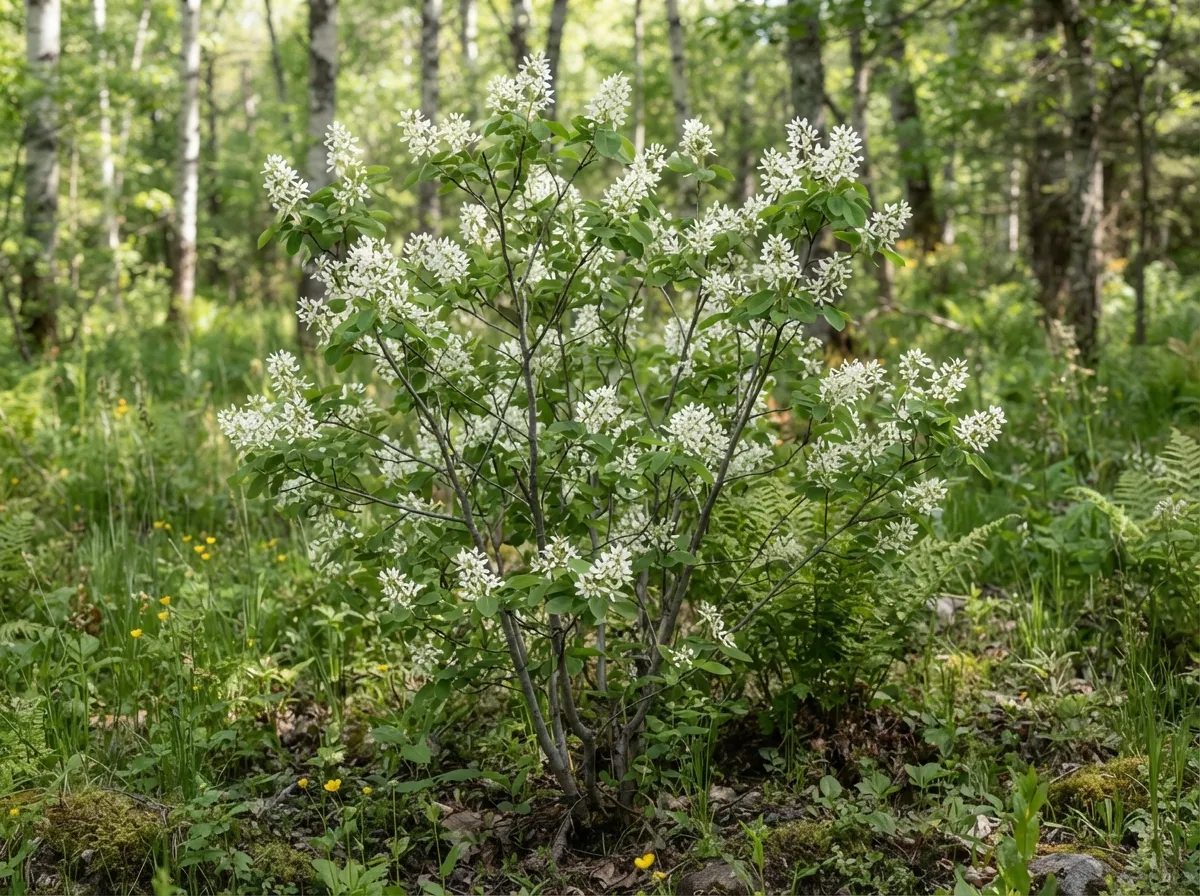
🔍 Identify it without mistakes
Shrub or small tree with an early and spectacular white bloom in very early spring, often before other forest-edge shrubs. Oval leaves finely toothed only on the upper half. Small round fruits turning from red to purple-black when ripe, resembling small blueberries but borne in loose clusters typical of the Rosaceae family, with a small crown at the tip opposite the stem.
- early white bloom, before full leaf emergence
- leaves toothed only on the upper half of the blade
- round purple-black fruit when ripe, in loose clusters, with a small residual star-shaped crown
- smooth light grey bark with subtle striping
⚠️ Not to be confused with
To tell them apart: the early white bloom before full leaf emergence and the small residual star-shaped crown at the top of the ripe fruit (a pome-fruit Rosaceae trait) confirm the serviceberry; no toxic fruit of North American forest edges shares this combination
🍽️ Eating it
Preparation : eat it raw, fresh, dried (like raisins), or cooked in jam, pie, and especially in Plains pemmican, where it replaced or accompanied chokecherries
💊 Healing with it
bark and root in decoction traditionally used as a digestive tonic and against gynecological disorders among several Plains and Rockies nations
Level of evidence : traditional use — Native American Ethnobotany Database (Moerman, University of Michigan)
⚠️ like other stone-fruit Rosaceae, the seeds contain small amounts of cyanogenic compounds; safe for normal fruit consumption (the small seeds are generally not chewed in large quantities)
🪓 Other bushcraft uses
- hard wood used to make tool handles and arrows
- one of the three historic ingredients of classic Plains pemmican alongside dried meat and fat
Sources (3)
No entry replaces a certain identification in the field, or medical advice. When in doubt: don't eat it. If ingestion is suspected: poison control or 112/911.