🌿 Garden Angelica (Archangel)
Angelica archangelica · Apiaceae
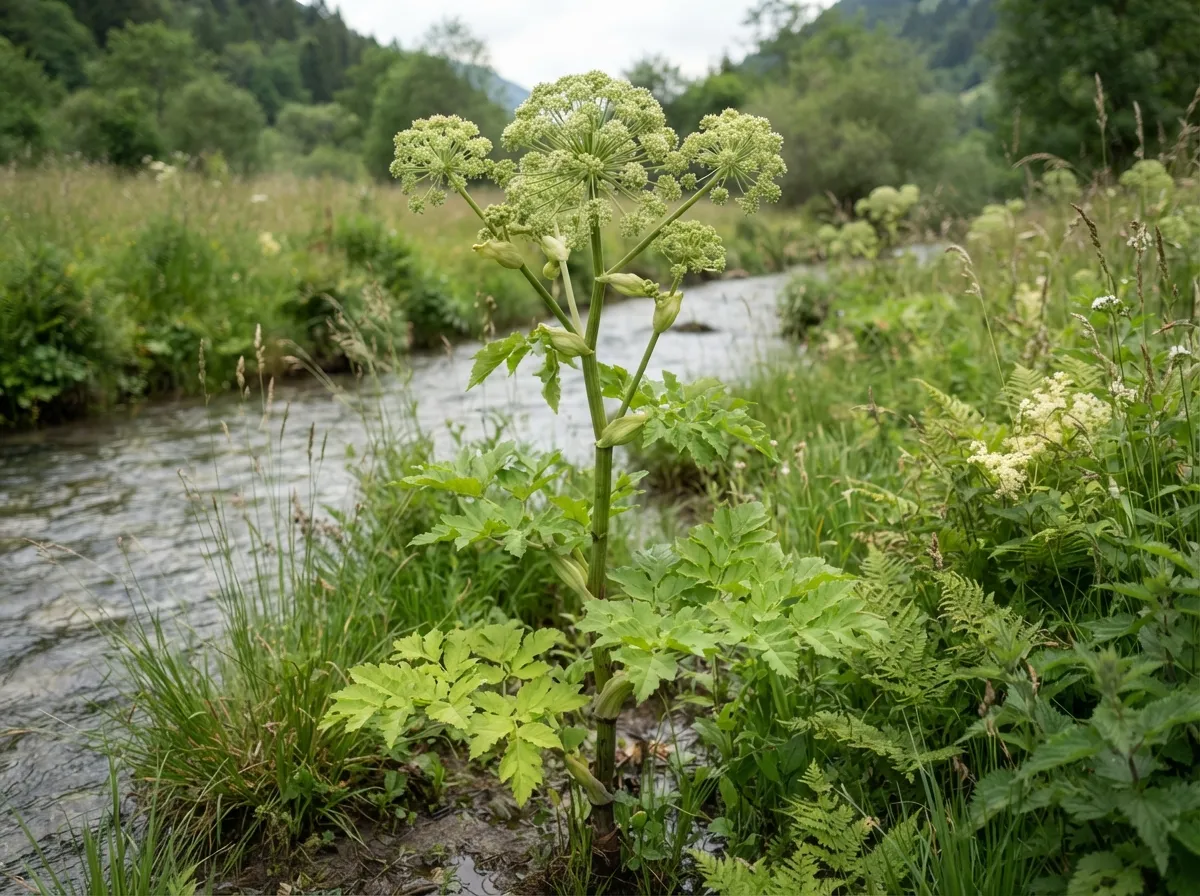
🔍 Identify it without mistakes
Large, robust perennial or biennial plant, 1 to 2.5 m, with a thick hollow stem often tinged with purple at the base. Very large leaves, two to three times divided with toothed leaflets, giving off a characteristic sweet and musky aromatic smell. Large, spherical terminal umbel of yellowish-green flowers, particularly impressive and clustered (unlike the flat umbels of many other Apiaceae).
- thick hollow stem, often purplish at the base
- sweet and musky aromatic smell (never unpleasant)
- large spherical terminal umbel, not flat
- highly developed and swollen leaf sheath at the base of the leaves
⚠️ Not to be confused with
To tell them apart: angelica gives off a pleasant, musky aromatic smell, never the nauseating mousy odor of hemlock; its stem is never spotted with purple along its entire length (at most tinged at the base)
To tell them apart: giant hogweed is significantly taller (up to 5 m), its leaves are broader and less finely divided, its stem has purple spots and stiff hairs
To tell them apart: garden angelica is more massive, with a green stem (not purplish), an even more swollen sheath, and an almost spherical umbel
🍽️ Eating it
Preparation : tender stems peeled and candied into candied angelica (a historical specialty of Niort), young shoots cooked as a vegetable; major traditional use among the Sámi of Lapland, who have incorporated it for centuries into their food and pharmacopeia
💊 Healing with it
digestive disorders (bloating, spasms), appetite stimulant
Level of evidence : traditional use — Monograph EMA/HMPC Angelicae archangelicae radix (well-established traditional use)
⚠️ fresh sap coming into contact with skin exposed to the sun can cause a photosensitizing reaction (milder than giant hogweed, but real); not recommended during pregnancy in concentrated medicinal doses
🪓 Other bushcraft uses
- hollow stems traditionally used as straws or small flutes by Scandinavian children
- flavoring in numerous liqueurs (Chartreuse, Bénédictine)
Sources (3)
No entry replaces a certain identification in the field, or medical advice. When in doubt: don't eat it. If ingestion is suspected: poison control or 112/911.