🚫 Australian strychnine tree
Strychnos psilosperma · Loganiaceae
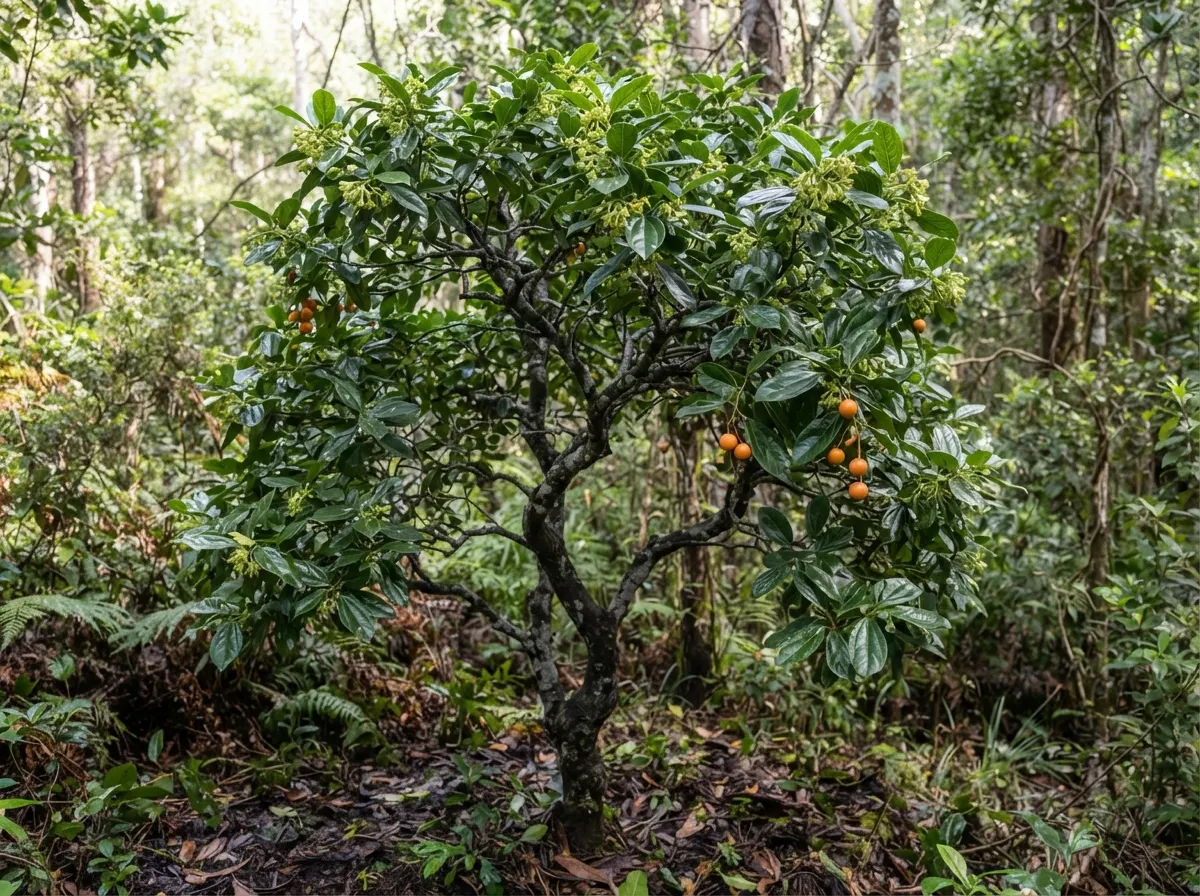
🔍 Identify it without mistakes
Shrub or small tree reaching up to 18 m, with gray bark and dense foliage of pointed, glossy leaves. Small fragrant white flowers appear during the warm season, followed by berries that turn from orange to red, then blacken at maturity. All parts of the plant contain toxic alkaloids related to strychnine.
- gray bark, dense canopy of pointed, glossy leaves forming thick cover
- small fragrant white flowers in the warm season
- berries changing color: orange then red, blackening when fully mature
- found in semi-deciduous vine thickets and mixed eucalyptus forests, often alongside hoop pine
⚠️ Not to be confused with
To tell them apart: the strychnine tree berry blackens at full maturity and its foliage is more oval and leathery, whereas the riberry fruit remains bright red and pear-shaped, with lanceolate, glossy foliage and pinkish-red young shoots
☠️ What kills
First steps : Call a poison control center immediately in case of ingestion, even partial. Do not induce vomiting without medical advice. Keep a sample of the plant for identification by emergency services.
💊 Healing with it
aucun usage traditionnel documenté dans les sources consultées ; la plante entière est classée toxique
Level of evidence : traditional use
⚠️ all parts of the plant are toxic; never consume the berries, even when dark and ripe, despite a distant resemblance to edible rainforest fruits
No entry replaces a certain identification in the field, or medical advice. When in doubt: don't eat it. If ingestion is suspected: poison control or 112/911.