🌼 Mountain Arnica
Arnica montana · Asteraceae
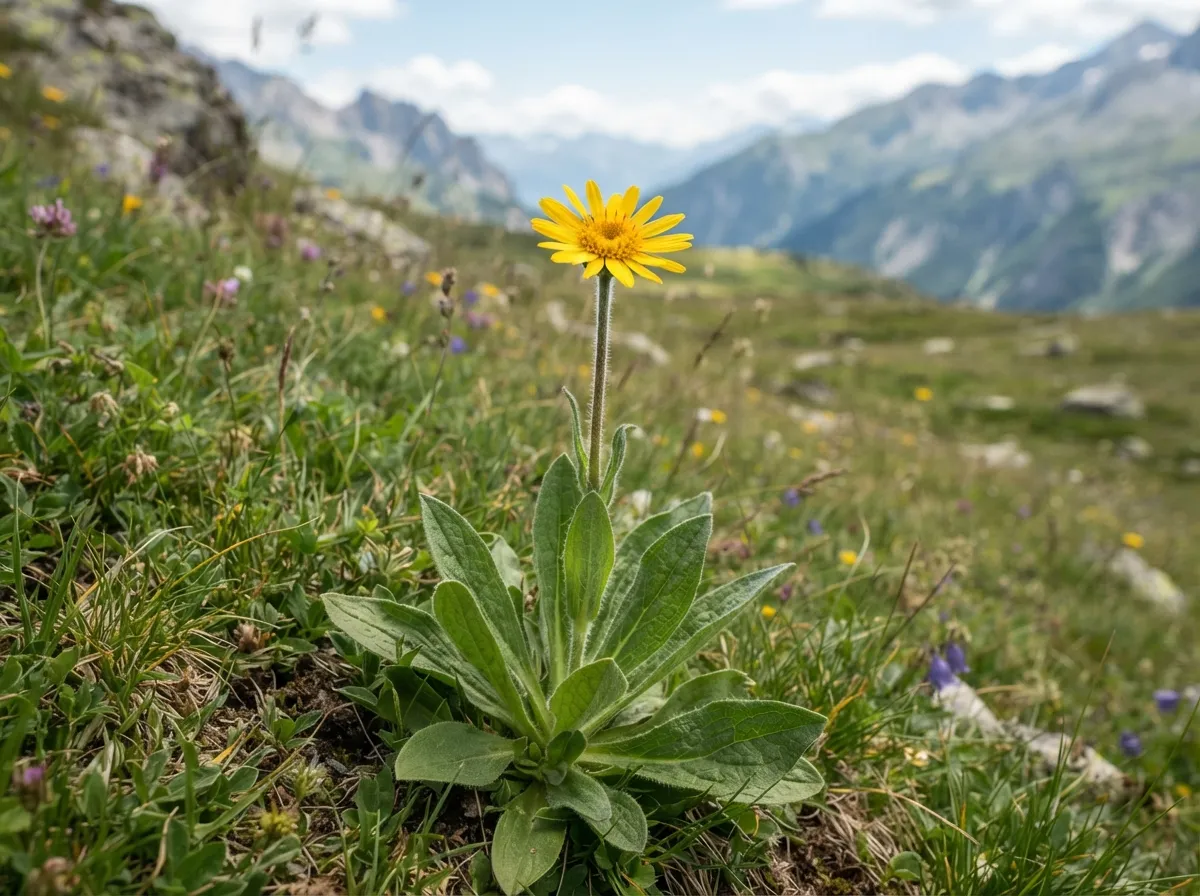
🔍 Identify it without mistakes
Perennial plant with a basal rosette of 2 to 4 large, entire oval leaves, growing a single flower stem (rarely branched) of 20 to 60 cm, topped by a large bright yellow-orange daisy-like flower head with a slightly camphorated aromatic scent. A protected species in many areas, never forage it in the wild.
- basal rosette of 2-4 large, entire, undivided oval leaves
- single flower stem bearing a single large orange flower head
- faint camphor smell when crushed
- grows in high-altitude acidic grasslands, never on limestone
⚠️ Not to be confused with
To tell them apart: numerous and toothed stem leaves on leopard's bane versus a simple basal rosette and mostly bare stem on arnica
💊 Healing with it
EXTERNAL use only: bruises, hematomas, sprains, post-traumatic edema, muscle and joint pain
Level of evidence : limited studies — EMA/HMPC Monograph Arnicae flos (well-established traditional use, external use only)
⚠️ NEVER take orally (toxic, digestive irritant, and cardiotoxic at non-homeopathic doses); apply only to unbroken skin, never on open wounds; not recommended for children under 12, pregnant or breastfeeding women, or people allergic to Asteraceae (daisies, chrysanthemums); protected species, never pick it in the wild
No entry replaces a certain identification in the field, or medical advice. When in doubt: don't eat it. If ingestion is suspected: poison control or 112/911.