🦋 Common milkweed (asclépiade commune)
Asclepias syriaca · Apocynacées
🔍 Identify it without mistakes
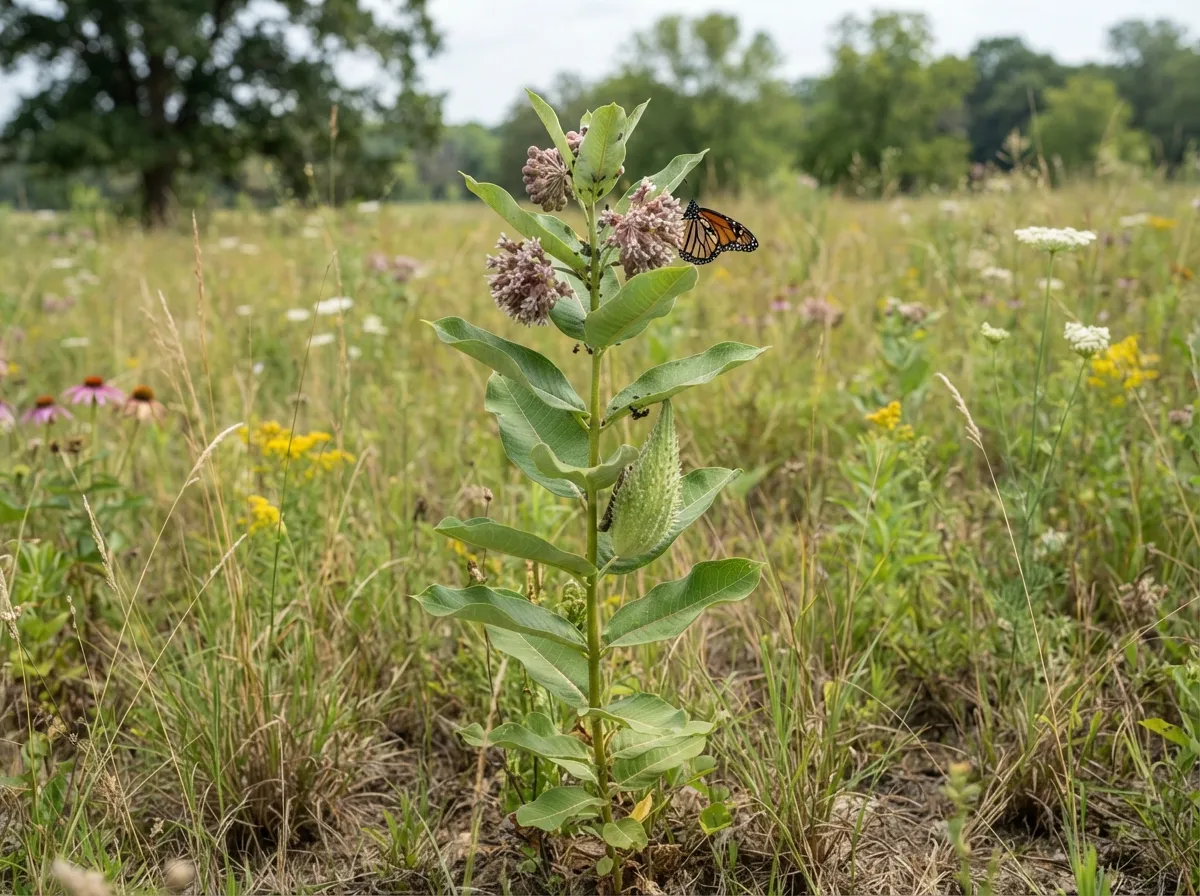
Robust plant with an unbranched erect stem, exuding milky white latex as soon as it is broken. Opposite, broad, oval leaves, downy on the underside. Spherical umbels of fragrant pink-purple flowers, followed by large warty pods that open in autumn to release seeds with silky tufts. Exclusive host plant for monarch butterfly caterpillars.
- abundant milky white latex when broken
- opposite, broad leaves, downy underneath
- spherical umbel of pink-purple flowers, very fragrant
- characteristic warty pod (follicle) in late summer
⚠️ Not to be confused with
To tell them apart: Asclepias syriaca (common milkweed) contains the lowest concentration of cardenolides in its genus and is the only species considered safe to harvest among milkweeds; do not generalize its edibility to other species in the genus
🍽️ Eating it
Preparation : boil each harvested part in plenty of water, once only, for a few minutes (the old myth of 'three successive boils' to detoxify it, popularized by older authors, was debunked by ethnobotanist Samuel Thayer in The Forager's Harvest: the bitter compounds are water-soluble and a single boil is enough); then eat like a green vegetable or like small broccoli for the buds
💊 Healing with it
latex traditionally used topically on warts and bites; root decoction used for respiratory and digestive complaints by several First Nations
Level of evidence : traditional use — Kindscher, Edible Wild Plants of the Prairie ; Samuel Thayer, The Forager's Harvest
⚠️ always cook before eating; raw latex is acrid and mildly irritating to skin and mucous membranes; other Asclepias species, richer in cardenolides (cardiac glycosides), must not be consumed the same way
🪓 Other bushcraft uses
- stem fiber used in traditional cordage
- silky seed tufts used as insulation and padding (flotation vests during WWII, supplementing cattail down)
- essential host plant for the monarch butterfly life cycle, whose caterpillar renders itself toxic to predators by accumulating the plant's cardenolides
Sources (3)
No entry replaces a certain identification in the field, or medical advice. When in doubt: don't eat it. If ingestion is suspected: poison control or 112/911.