🌿 Wild asparagus
Asparagus acutifolius · Asparagaceae
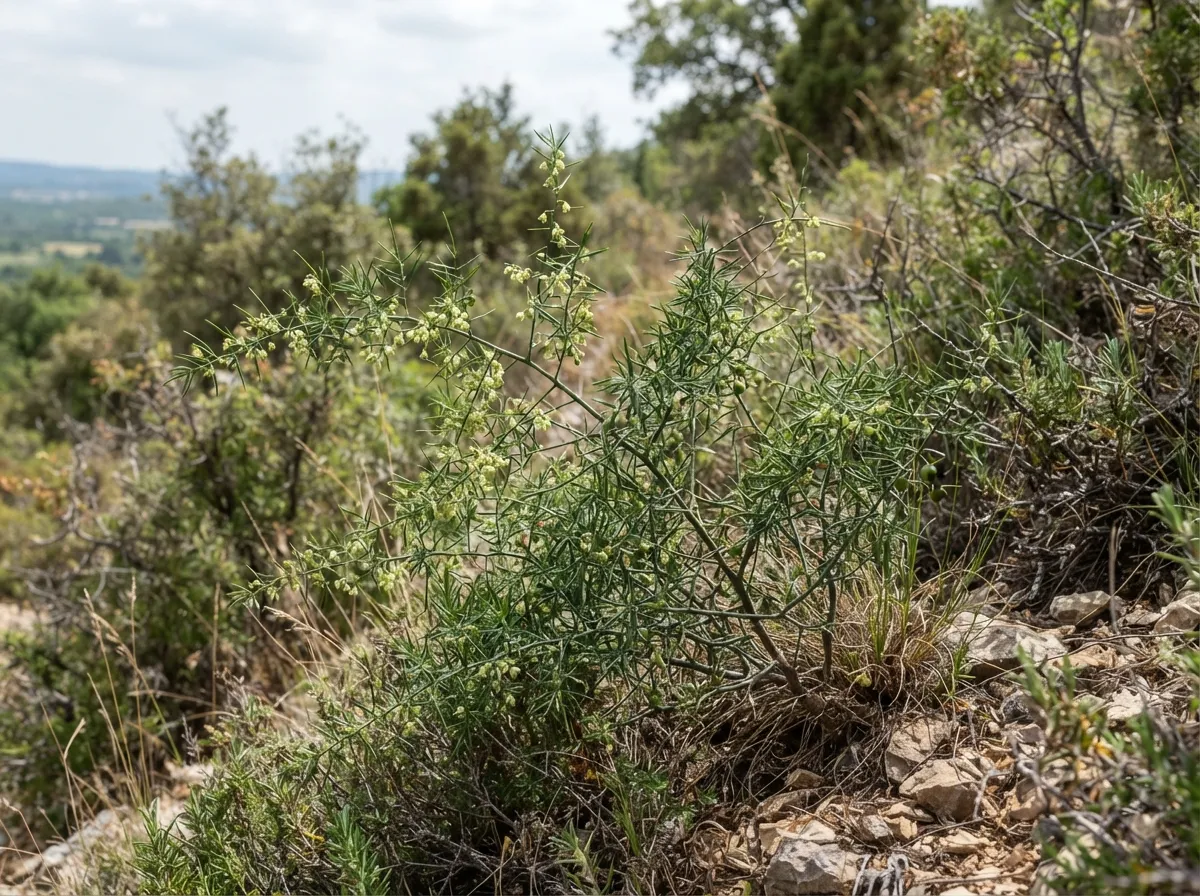
🔍 Identify it without mistakes
Perennial climbing or bushy plant with highly branched, spiny woody stems. It doesn't have true leaves, but rather cladodes (flattened, needle-like shoots grouped in clusters of 3-8). Thin and tender young spring shoots emerge from the ground before the plant turns into an impenetrable, thorny tangle. Red berries at maturity are toxic.
- fine needle-like cladodes grouped in clusters of 3-8 (no true leaves)
- woody stems, highly branched and spiny at maturity
- thin young shoots emerging from the ground in spring
- toxic red berries late in the season
⚠️ Not to be confused with
To tell them apart: longer and softer cladodes, much fleshier shoots
🍽️ Eating it
Preparation : pick the shoot as long as it snaps cleanly when bent (a sign of tenderness); cook quickly in boiling water or pan-fry like cultivated asparagus
USDA FoodData Central, raw asparagus (Asparagus officinalis, close reference), per 100 g
🪓 Other bushcraft uses
- roots traditionally used in popular diuretic decoctions, minor usage
No entry replaces a certain identification in the field, or medical advice. When in doubt: don't eat it. If ingestion is suspected: poison control or 112/911.