🌸 Common Hawthorn
Crataegus monogyna · Rosaceae
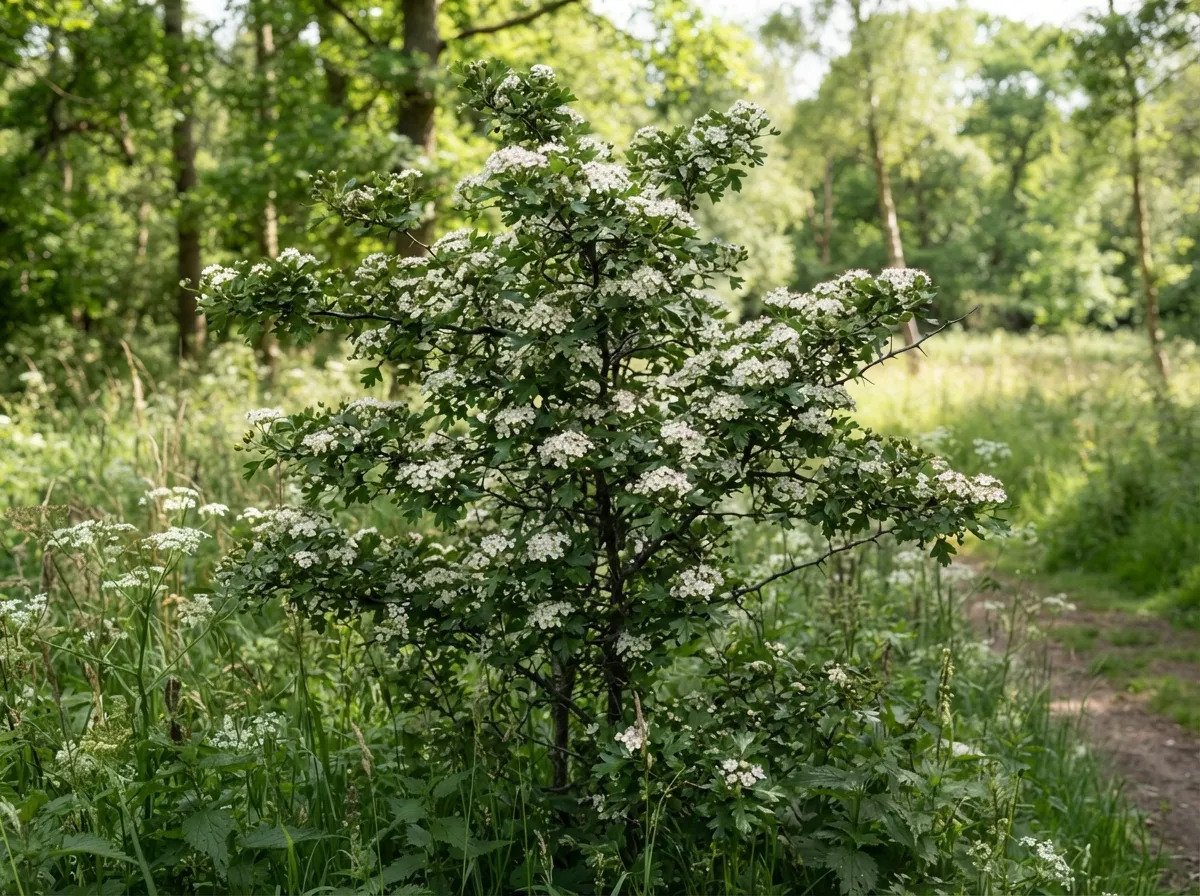
🔍 Identify it without mistakes
Shrub or small thorny tree with straight, sturdy thorns (up to 1-2 cm), small deeply lobed leaves (3-7 lobes). White flowers with 5 petals, grouped in corymbs, featuring a peculiar scent sometimes considered a bit strong (trimethylamine, the exact same molecule found in tainted fish, at very low doses). Red, ovoid fruit (haw), containing only a single stone in C. monogyna (hence "monogyna").
- sturdy straight thorns
- deeply lobed leaves (3-7 lobes)
- white flowers in corymbs with a distinct smell
- red haw with a single stone (2-3 stones in the midland hawthorn, C. laevigata, which is also edible)
- bushy growth habit in hedges or as a standalone small tree
⚠️ Not to be confused with
To tell them apart: the lobed leaves and straight thorns are characteristic; during winter identification without leaves, do not confuse with blackthorn, which has equally sturdy thorns but produces blue-black fruits instead of red ones
🍽️ Eating it
Preparation : raw haws (mealy, mild flavor) or cooked into jelly/fruit leather once the seeds are removed; raw young leaves and buds eaten in salads, an old rural English tradition
💊 Healing with it
flowering tops and leaves traditionally used to relieve symptoms of mild cardiac nervous disorders (benign stress-related palpitations), after a doctor has ruled out any serious cardiac conditions
Level of evidence : etudes-solides (several positive clinical trials on mild heart failure NYHA II as an adjunct treatment, recognized by Commission E in 1994 and confirmed by the EMA in 2016) — EMA/HMPC, European Union herbal monograph on Crataegus spp., folium cum flore; Commission E (1994)
⚠️ never self-medicate to replace a prescribed cardiac treatment; potential interaction with digoxin and other heart treatments, medical advice required in case of confirmed heart conditions
🪓 Other bushcraft uses
- very hard wood used for tool handles and historically for defensive living hedges (English "quickset hedges")
- thorns used empirically as makeshift needles
Sources (3)
No entry replaces a certain identification in the field, or medical advice. When in doubt: don't eat it. If ingestion is suspected: poison control or 112/911.