🌵 Desert date (balanites)
Balanites aegyptiaca · Zygophyllaceae
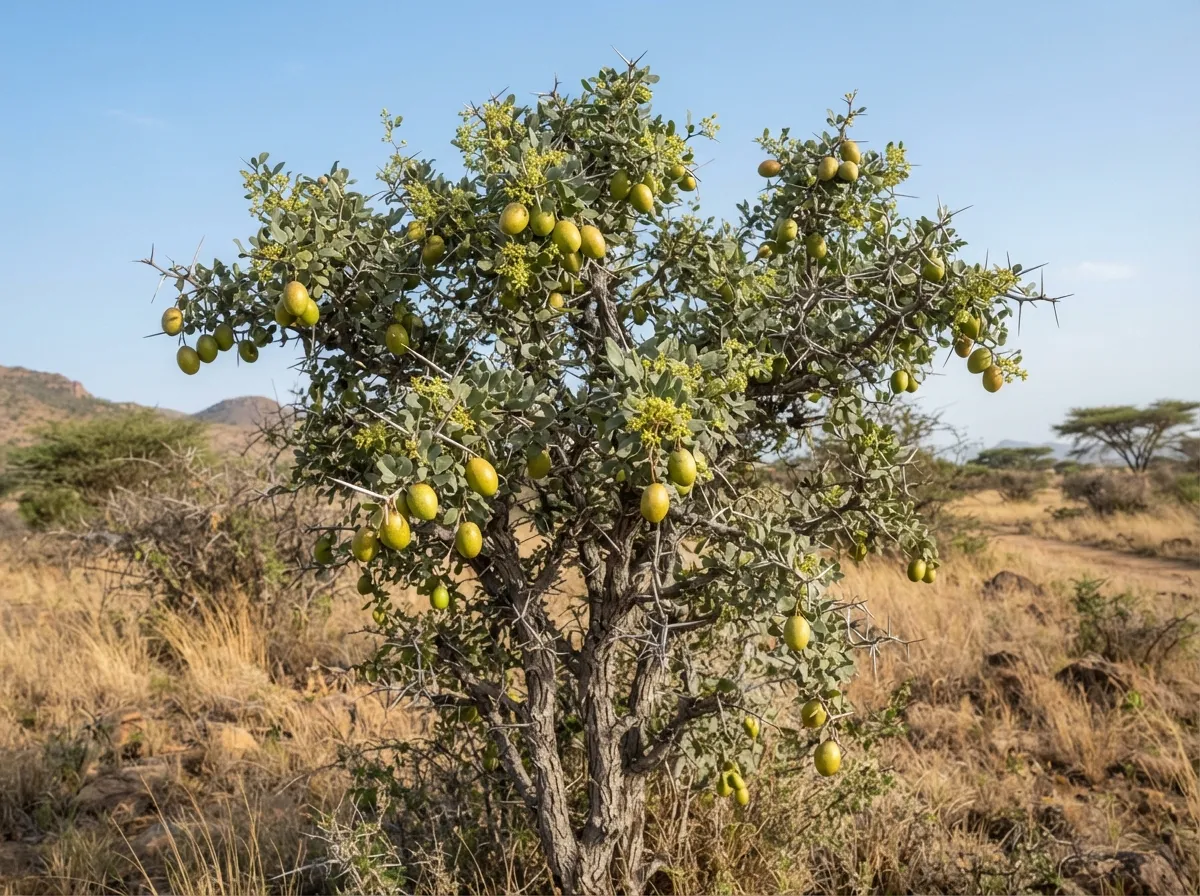
🔍 Identify it without mistakes
Small spiny tree with an often twisted, fluted trunk, long rigid green spines arranged spirally on the branches, compound leaves with two leaflets. Ovoid fruits turning from green to brown, with sticky pulp surrounding a very hard stone.
- long straight green spines arranged in a spiral
- fluted and often twisted trunk
- small ovoid brown fruits with sticky pulp and a very hard stone
⚠️ Not to be confused with
To tell them apart: the long straight green spiral spines and the fluted, twisted trunk distinguish the desert date from any other spiny shrub in the Sahel; despite its name, it has no relation to the true date palm
To tell them apart: the desert date bears long green spiral spines and a fluted, twisted trunk, whereas the toothbrush tree has round, fleshy leaves without spines and cracked whitish bark; both share similar desert habitats and equally edible fruits
🍽️ Eating it
Preparation : the pulp of the ripe fruit is bitter and eaten raw in small quantities or fermented into a drink; the seeds, rich in oil but bitter and containing saponins, are boiled then mixed with other grains (sorghum) to lessen the bitterness; young leaves cooked as a vegetable
💊 Healing with it
widely used in traditional African medicine: fruit porridge for nursing mothers, oil for headaches and to stimulate lactation, bark and fruit against intestinal parasites and liver disorders
Level of evidence : traditional use — Wikipedia - Balanites aegyptiaca
⚠️ raw unprocessed seeds contain irritating saponins; always boil before consuming in quantity
🪓 Other bushcraft uses
- hard wood used for tools and small objects, low-smoke fuel
- spines used to build effective defensive fences against livestock and predators
- nitrogen-fixing tree, improves surrounding soil
Sources (1)
No entry replaces a certain identification in the field, or medical advice. When in doubt: don't eat it. If ingestion is suspected: poison control or 112/911.