🌳 African Baobab
Adansonia digitata · Malvaceae (Bombacoideae)
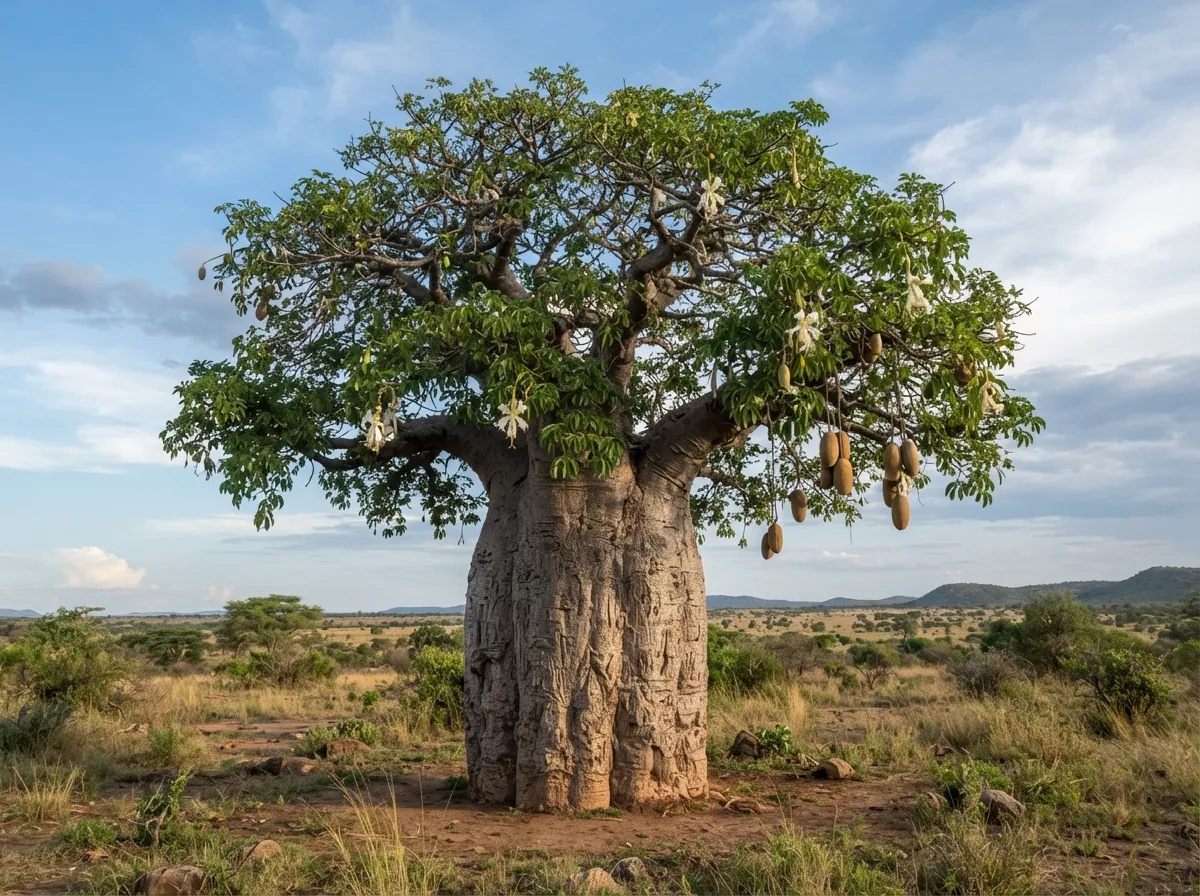
🔍 Identify it without mistakes
Massive tree with an extremely wide, fluted trunk, often swollen like a bottle, which can exceed 10 m in diameter. It contrasts with a short, sparse canopy that gives it, when leafless, the look of roots pointing toward the sky. It loses its leaves for about 8 months a year. The fruit, ovoid and velvety, hangs from a long peduncle and contains a tangy, mealy white pulp.
- massive fluted trunk, sometimes bottle-swollen, up to 10-14 m in diameter
- characteristic 'roots in the air' silhouette, leafless 8 months a year
- velvety ovoid fruit hanging from a long peduncle, hard shell, mealy white pulp
⚠️ Not to be confused with
To tell them apart: the massive fluted trunk, often bottle-swollen, combined with the 'roots in the air' leafless silhouette eight months a year, is unique among African savanna trees
🍽️ Eating it
Preparation : dried pulp dissolved in water for a tangy drink (tabaldi/bouye juice) or eaten as is; young leaves cooked in sauces (lalo in Mali, miyan kuka in Nigeria) or dried and powdered; seeds pressed for cooking oil
💊 Healing with it
pulp juice is traditionally used against diarrhea and fever; leaves are used as a traditional febrifuge and anti-inflammatory
Level of evidence : traditional use — Wikipedia - Adansonia digitata (African ethnobotanical synthesis)
⚠️ no known toxicity at usual food doses
🪓 Other bushcraft uses
- fibrous bark woven into rope, baskets, and sometimes coarse cloth
- hollow trunk sometimes used as a water reservoir or shelter
- fruit shell used as a container once emptied
Sources (1)
No entry replaces a certain identification in the field, or medical advice. When in doubt: don't eat it. If ingestion is suspected: poison control or 112/911.