🌿 Common hogweed
Heracleum sphondylium · Apiaceae
🔍 Identify it without mistakes
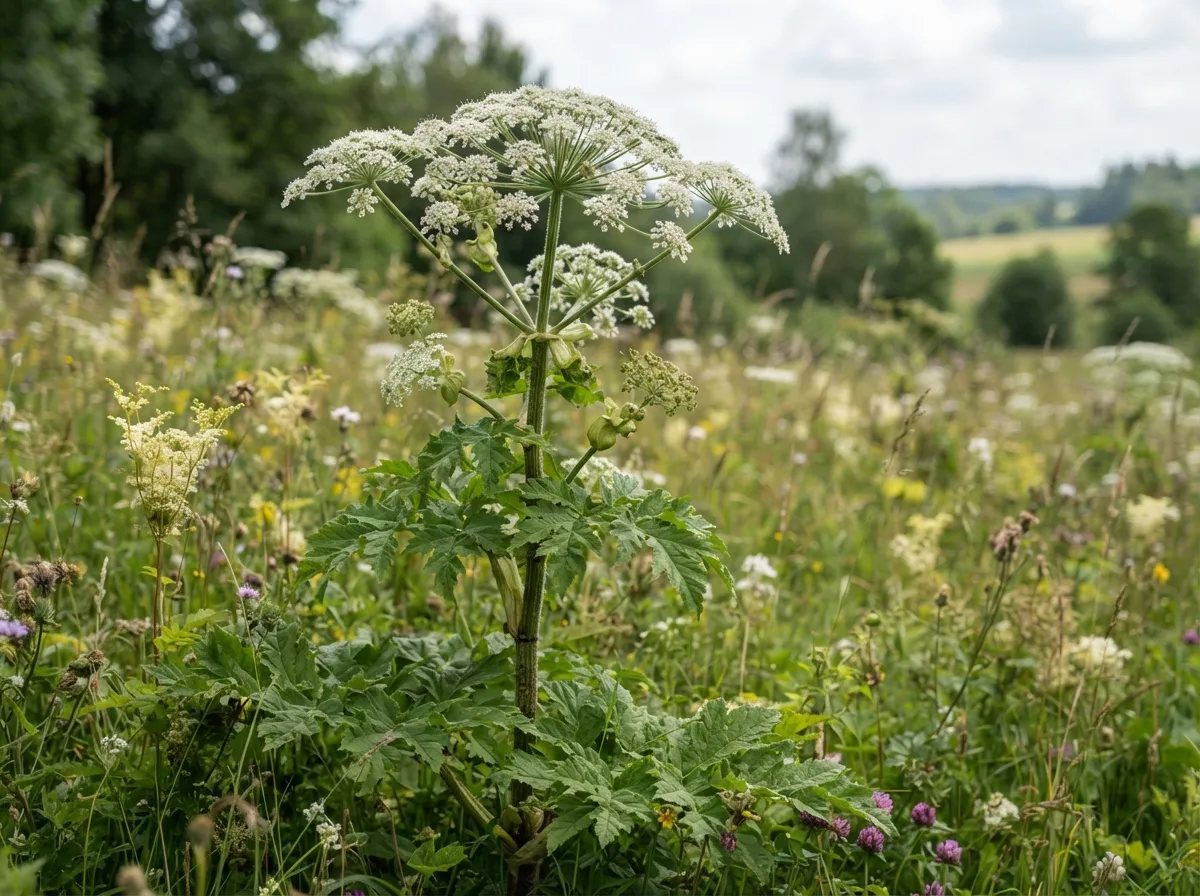
Large, robust plant usually not exceeding 2 m, with a hollow ridged stem covered in soft whitish hairs over its entire surface, including the leaves. Very large leaves, divided into broad, angular, and toothed leaflets. Broad, flat, white to greenish-white umbels, with peripheral flowers often larger than the central ones.
- moderate height, rarely exceeding 2 m
- soft whitish hairs present everywhere, including on the leaves
- green stem barely spotted, without large purple splotches
- broad, angular, toothed leaflets (5-7 per leaf)
- flat white umbel typical of Apiaceae
⚠️ Not to be confused with
To tell them apart: giant hogweed is significantly larger (4-5 m compared to 2 m maximum for common hogweed), its hairs are located only on the stem/petiole/rachis and not on the leaf blade, and its stem bears large, clearly visible red-purple splotches with coarse white hairs — if in doubt about size or spots, never touch or cut the plant with bare hands
To tell them apart: hemlock has a smooth, hairless stem spotted with purple, completely lacks hairs, and gives off an unpleasant odor reminiscent of mouse urine, whereas hogweed is hairy all over and lacks this smell
🍽️ Eating it
Preparation : young stems must absolutely be peeled to remove their irritating outer skin (which also contains photosensitizing furanocoumarins, though less concentrated than in giant hogweed) then boiled in water like asparagus or leeks; always wear gloves and long sleeves when harvesting, and avoid exposing skin areas that touched the sap to sunlight for 24 to 48 hours
💊 Healing with it
rarely used in modern European herbal medicine, occasional folk uses for digestive disorders
Level of evidence : traditional use — ethnobotanical compilations (Couplan) and ANSES prevention sheets on photosensitizing Apiaceae
⚠️ the entire plant, like all Apiaceae containing furanocoumarins, can cause photodermatitis (burns) if skin comes into contact with the sap followed by sun exposure; systematically wear gloves for harvesting and preparation
🪓 Other bushcraft uses
- dried hollow stems were historically used as straws or small tubes by children in rural Europe (not recommended today due to the risk of confusion and photosensitization)
Sources (3)
No entry replaces a certain identification in the field, or medical advice. When in doubt: don't eat it. If ingestion is suspected: poison control or 112/911.