🔥 Giant Hogweed
Heracleum mantegazzianum · Apiaceae
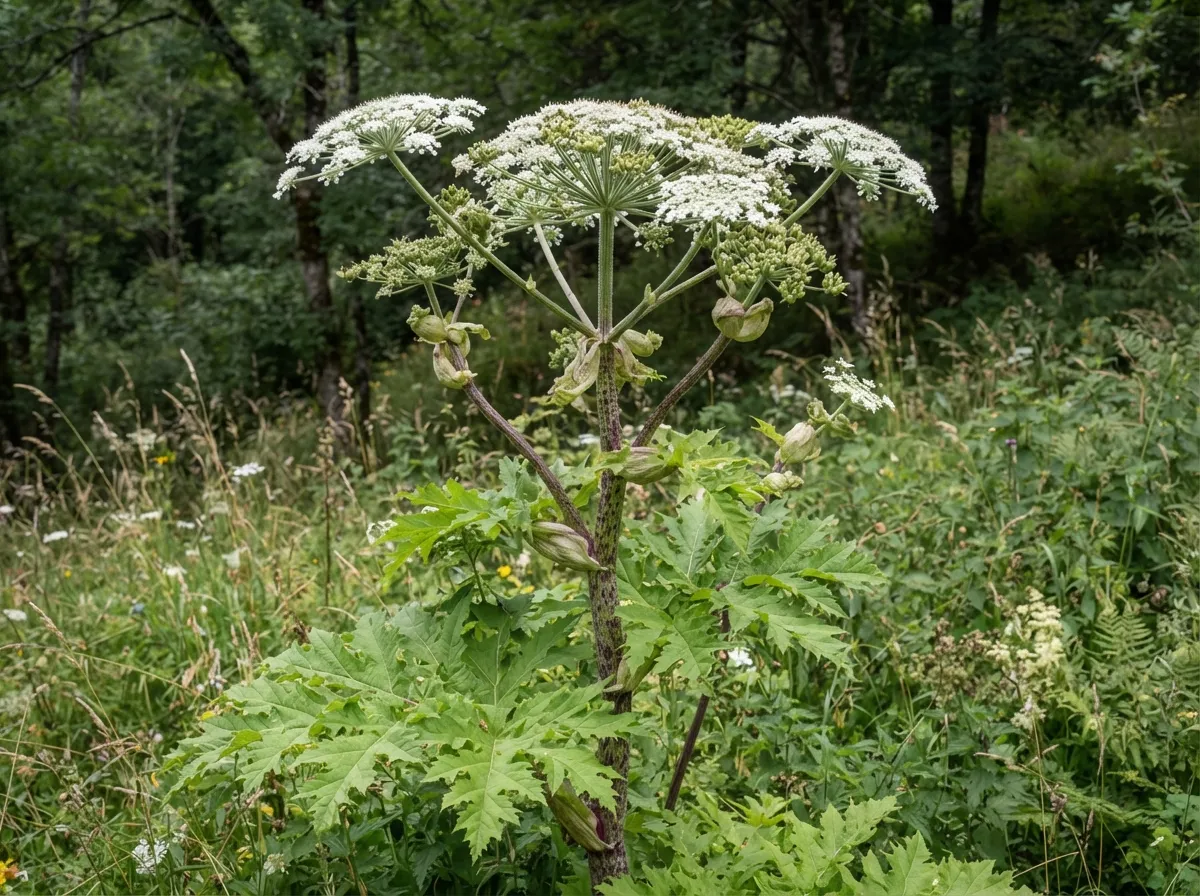
🔍 Identify it without mistakes
Invasive giant umbellifer native to the Caucasus, reaching over 3 meters tall. Its sap contains phototoxic substances that cause severe burns and blisters when skin contacts it and is subsequently exposed to sunlight, potentially leaving scars for years. The main danger is not ingestion, but simple skin contact followed by sun exposure.
- impressive height, 2 to 5 m, thick stem (5-10 cm in diameter) spotted with purple and covered in stiff hairs
- enormous, deeply divided leaves that can exceed 1 m in width
- huge terminal white umbel reaching up to 50-80 cm in diameter
- clear sap that becomes phototoxic upon contact with UV light
⚠️ Not to be confused with
To tell them apart: giant hogweed is significantly taller (2 to 5 m compared to 1 to 2 m), with a thicker stem spotted with dark purple and much more deeply divided, sharp leaves
To tell them apart: none of these plants reach the size of giant hogweed; if in doubt about a giant umbellifer, avoid prolonged skin contact without protection
To tell them apart: giant hogweed is significantly taller (up to 5 m), its leaves are broader and less finely divided, and its stem features purple spots and stiff hairs
☠️ What kills
First steps : Wash the contact area thoroughly with soap and water, protect it completely from the sun for several days (covering clothing, total sunblock), and consult a doctor or poison control center if blisters are extensive or if eyes are affected. Never cut the plant without gloves, long sleeves, and eye protection.
Sources (3)
No entry replaces a certain identification in the field, or medical advice. When in doubt: don't eat it. If ingestion is suspected: poison control or 112/911.