🥬 Sea beet (Wild chard)
Beta vulgaris subsp. maritima · Amaranthaceae (Chenopodiaceae)
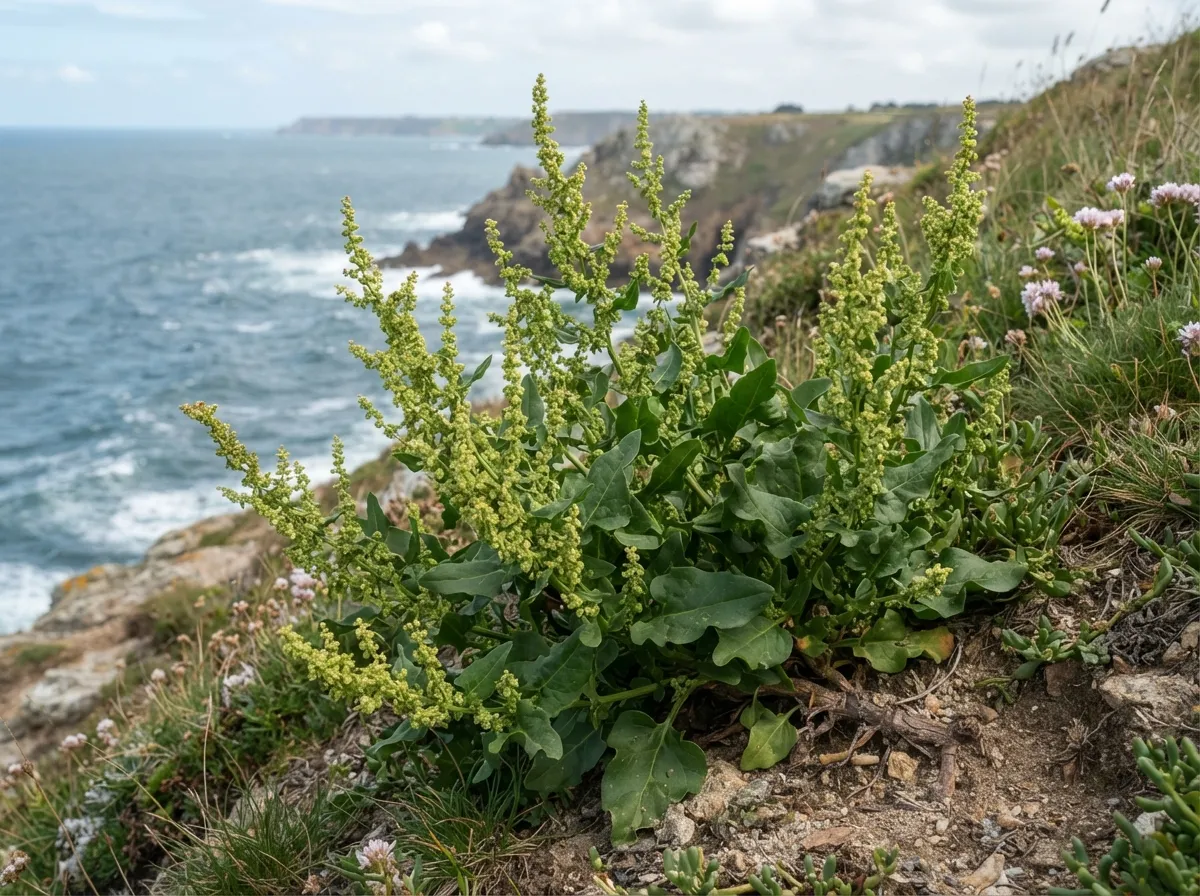
🔍 Identify it without mistakes
Low-growing perennial plant with thick, glossy, dark green, entire leaves forming a basal rosette (lower leaves wavy and triangular, upper leaves narrower). Upright flowering stems bearing tiny, inconspicuous green flowers in summer.
- thick, glossy, dark green leaves, entire (uncut margins)
- low rosette growth habit, upright flowering stems at maturity
- grows directly by the sea, pebble beaches, salt marshes, low coastal cliffs
⚠️ Not to be confused with
To tell them apart: the thick, glossy, entire (uncut) leaves in a low rosette on beaches and low cliffs distinguish sea beet from any toxic coastal plant, none of which share this smooth, fleshy foliage
🍽️ Eating it
Preparation : remove the stems/midribs if tough, then eat the leaves raw in small quantities or cooked (sauteed, in soups, in gratins) exactly like spinach or Swiss chard
💊 Healing with it
no major documented medicinal use beyond its nutritional value as a leafy vegetable
Level of evidence : traditional use — Wikipedia - Beta vulgaris subsp. maritima
⚠️ none known
Sources (1)
No entry replaces a certain identification in the field, or medical advice. When in doubt: don't eat it. If ingestion is suspected: poison control or 112/911.