🫐 Wild lowbush blueberry / wild blueberry
Vaccinium angustifolium · Éricacées
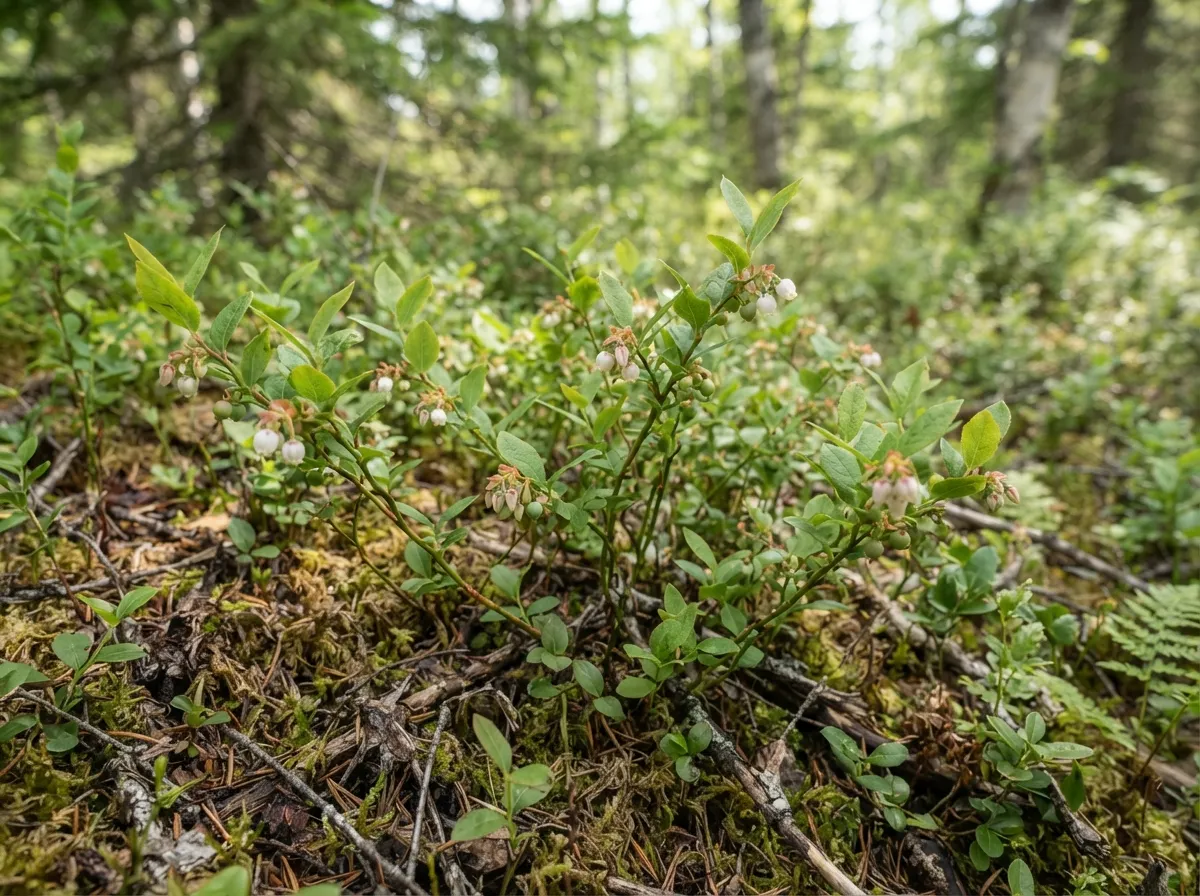
🔍 Identify it without mistakes
Small, low-growing shrub forming dense carpets via spreading rhizomes, with slender, finely toothed leaves turning bright red in autumn. Small bell-shaped pinkish-white flowers in spring, followed by bluish-purple berries covered in a fine waxy bloom, borne in small clusters — significantly smaller than the cultivated highbush blueberry.
- low shrub (rarely taller than 40 cm), forming dense colonies via rhizomes
- slender, finely toothed leaves turning vivid red in autumn
- bluish-purple berries with waxy bloom, growing in small clusters
- bell-shaped pinkish-white flowers in spring
⚠️ Not to be confused with
To tell them apart: the blueberry berry has a small five-pointed starry crown at its tip (remnant of the calyx), which buckthorn lacks; wild blueberry is a low subshrub (rarely over 40 cm) with finely toothed leaves turning red in autumn, whereas buckthorn is a taller shrub with entire or finely serrated leaves, never forming low carpets
🍽️ Eating it
Preparation : eat raw, fresh, dried, or frozen for winter; works in all classic blueberry recipes (pies, jams, syrups)
USDA FoodData Central, raw blueberries, per 100 g (generic Vaccinium values, without distinguishing cultivated from wild in the reference table)
💊 Healing with it
leaves infused as tea are traditionally used for mild digestive issues; anthocyanins in the fruit are studied for their antioxidant properties and potential benefits for cardiovascular health and vision
Level of evidence : limited studies — North American nutritional literature on Vaccinium anthocyanins
⚠️ no notable toxicity; consuming leaves in large quantities over long periods is discouraged as a precaution (tannins)
🪓 Other bushcraft uses
- major commercial harvest in Quebec (Lac-Saint-Jean) and the Maritimes, where wild blueberry fields are still managed by periodic controlled burning to stimulate production—an agroforestry practice inherited from Indigenous land management techniques
Sources (3)
No entry replaces a certain identification in the field, or medical advice. When in doubt: don't eat it. If ingestion is suspected: poison control or 112/911.