🍄 Bay bolete
Imleria badia · Boletacées
🔍 Identify it without mistakes
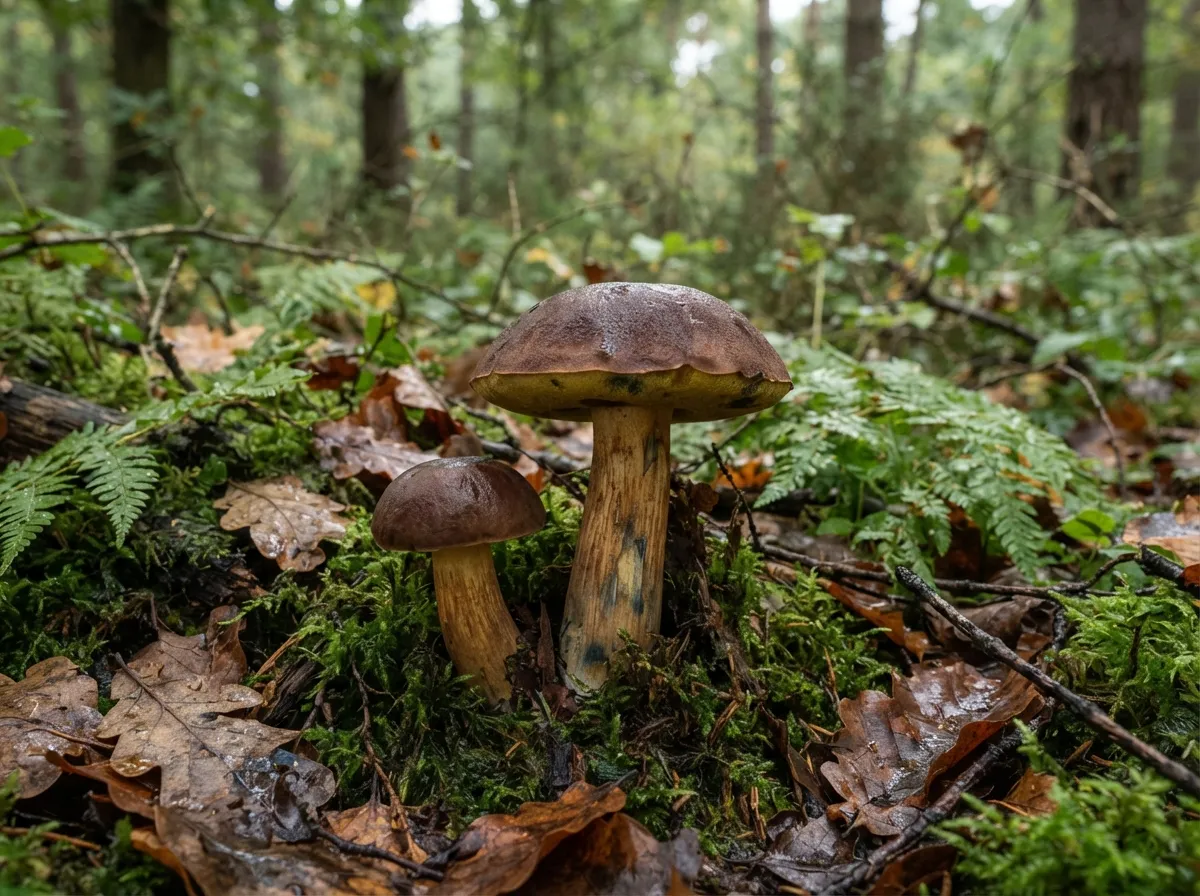
An excellent edible mushroom often compared to the Penny Bun (King Bolete). You can identify it with a simple reflex: its tubes turn blue when bruised, a process that reverses upon cooking. Velvety to smooth bay-brown cap, smooth brownish stem without a net pattern (reticulation), and yellowish-green tubes and pores that stain distinctly blue when pressed before returning to normal during cooking.
- bay-brown to chestnut-brown cap, velvety then smooth, often slimy in wet weather
- yellowish-green tubes and pores that turn distinctly BLUE when pressed with a finger or cut
- smooth, brownish stem without a visible reticulation/netting (unlike the Penny Bun)
- whitish flesh, barely turning blue when cut (much less than the pores)
- olive-brown spore print
- often grows under conifers, sometimes under hardwoods
⚠️ Not to be confused with
To tell them apart: Satan's bolete has a grayish-whitish cap (never bay-brown), a bright red stem with an orange reticulation, and an unpleasant smell as it ages; its bluing reaction is instant and much more intense
To tell them apart: the bitter bolete DOES NOT stain blue (unlike the bay bolete) and has a clearly visible dark reticulation on the stem; its flesh tastes intensely bitter
🍽️ Eating it
Preparation : always cooked; the bluing of the pores disappears during cooking, with no effect on taste; pan-fried, dried
No entry replaces a certain identification in the field, or medical advice. When in doubt: don't eat it. If ingestion is suspected: poison control or 112/911.