🍄 Orange birch bolete
Leccinum aurantiacum · Boletaceae
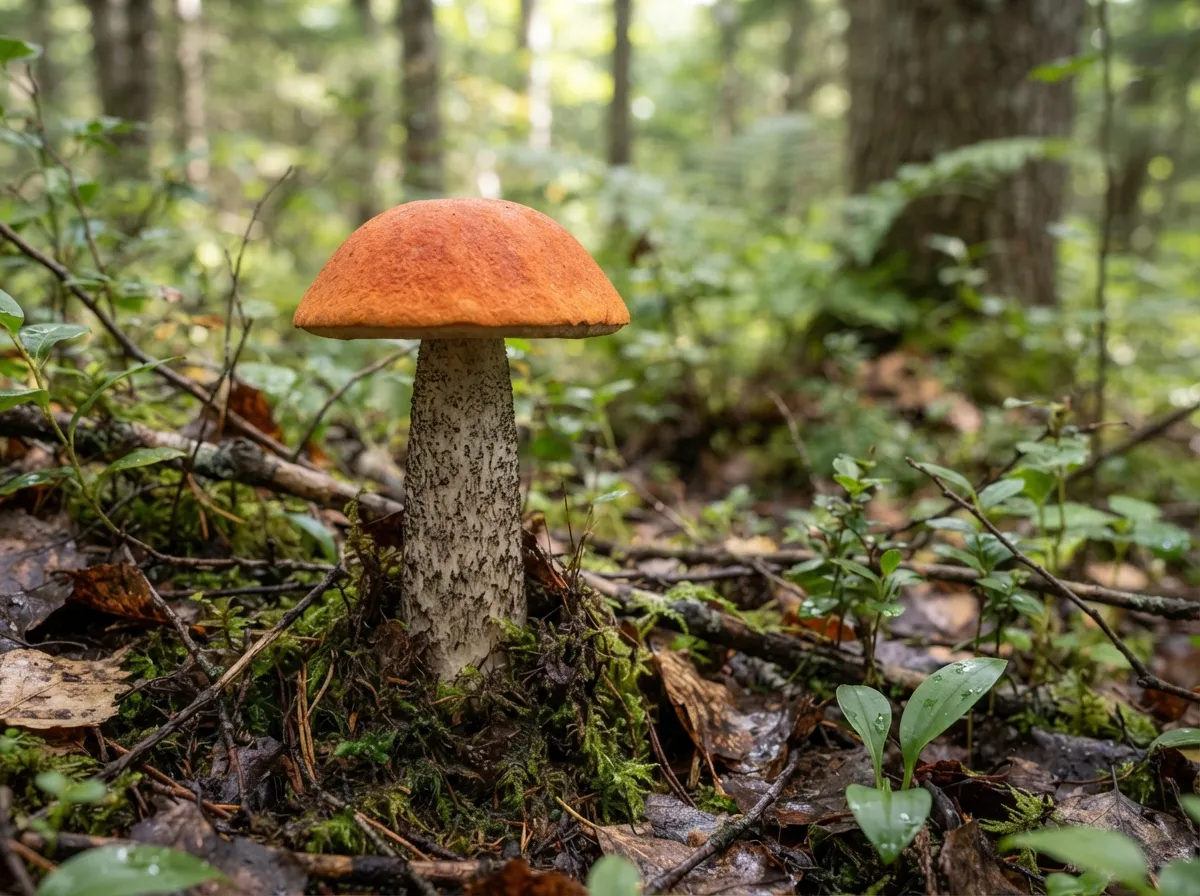
🔍 Identify it without mistakes
Large bolete associated with broadleaf trees (especially aspens and poplars), with flesh that turns dramatically black when cut and cooked — normal behavior, not a sign of toxicity, but it requires thorough and prolonged cooking to be digestible.
- brick-red to orange-brown cap, hemispherical, margin slightly overhanging the tubes
- whitish to gray tubes and pores, not bruising blue when touched
- stout white stem, covered with small dark, almost black squamules (flakes), giving a characteristic rough appearance
- white flesh that turns blue then BLACKENS when cut, and even more so when cooked
- olive-brown spore print
- grows under broadleaf trees, especially aspens, poplars, and oaks
⚠️ Not to be confused with
To tell them apart: these closely related species are mainly distinguished by their host tree (oak for L. quercinum, poplar/aspen for L. aurantiacum and L. albostipitatum) and subtle stem color nuances; all require the same thorough cooking
🍽️ Eating it
Preparation : ALWAYS well-cooked for at least 15 minutes, never raw or undercooked — like all Leccinum species, it is indigestible and can cause severe digestive upset if undercooked
No entry replaces a certain identification in the field, or medical advice. When in doubt: don't eat it. If ingestion is suspected: poison control or 112/911.