🤍 Paper birch (bouleau à papier)
Betula papyrifera · Bétulacées
🔍 Identify it without mistakes
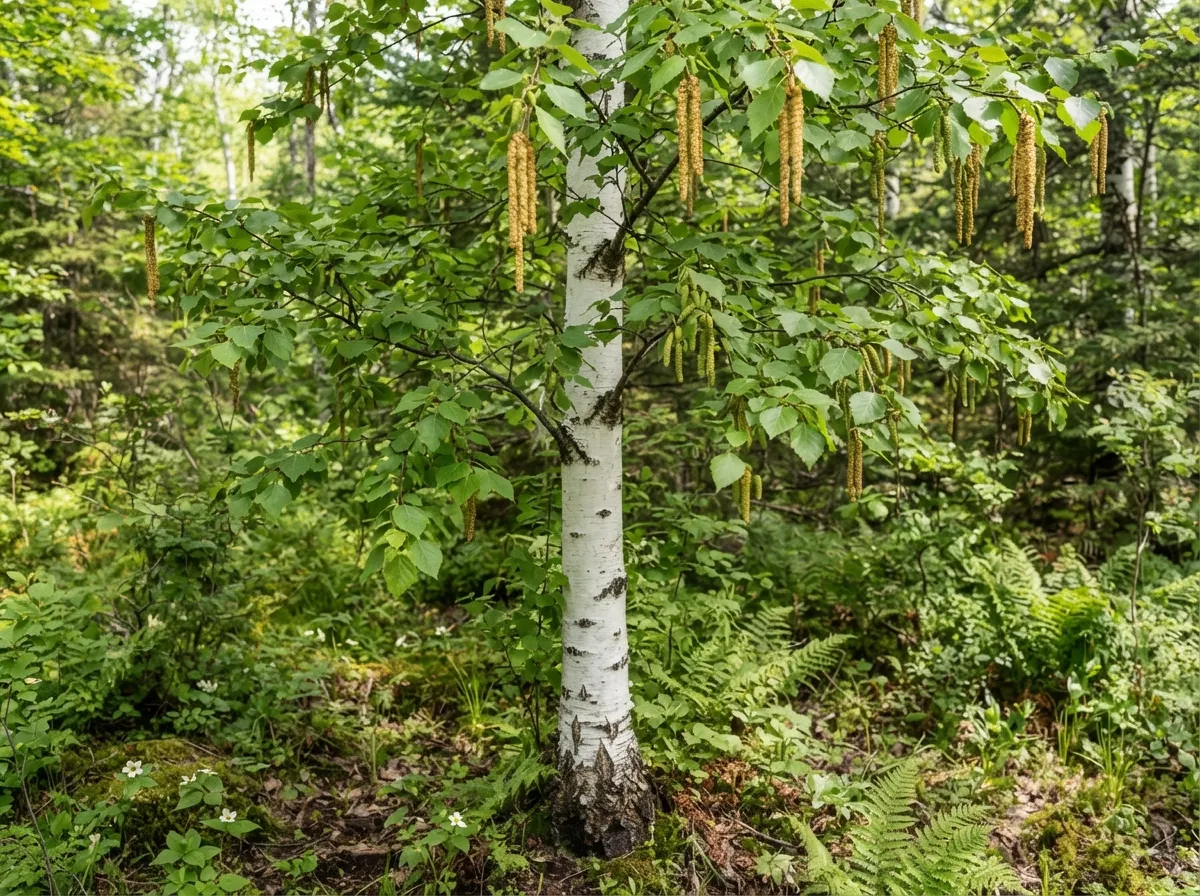
Iconic tree of the North American North, featuring pure white bark peeling in large horizontal paper-like sheets, revealing an orange layer underneath. Double-toothed oval leaves, drooping catkins in spring. The bark remains waterproof and combustible even when soaked, a property exploited for millennia.
- pure white bark peeling in large horizontal sheets
- clearly visible horizontal black lenticels on the bark
- orange inner layer revealed when the bark peels away
- double-toothed oval leaves, drooping catkins
⚠️ Not to be confused with
To tell them apart: pure white bark in large sheets on paper birch, versus golden-copper bark in thin strips and a wintergreen scent on yellow birch
🍽️ Eating it
Preparation : drink the sap fresh or boil it down into syrup (lower yield and lower sugar content than maple, around 1% sugar); scrape the white, fibrous cambium to eat raw in emergencies, or dry and grind it into a backup flour—a practice well-documented among several boreal peoples during times of scarcity
💊 Healing with it
inner bark and buds used traditionally in decoction against pain, fever, and externally on wounds (antiseptic properties of betulin, a compound abundant in the bark)
Level of evidence : traditional use — Native American Ethnobotany Database (Moerman, University of Michigan)
⚠️ no notable toxicity documented for reasonable traditional use
🪓 Other bushcraft uses
- waterproof, oil-rich bark used as tinder even when wet (burns thanks to its natural oils, requiring no dry wood)
- historical skin for birchbark canoes (Algonquin birchbark canoe), roofing, watertight containers, and improvised writing parchment
- sap fermented into a traditional beverage
Sources (3)
No entry replaces a certain identification in the field, or medical advice. When in doubt: don't eat it. If ingestion is suspected: poison control or 112/911.