🌳 Yellow Birch
Betula alleghaniensis · Betulaceae
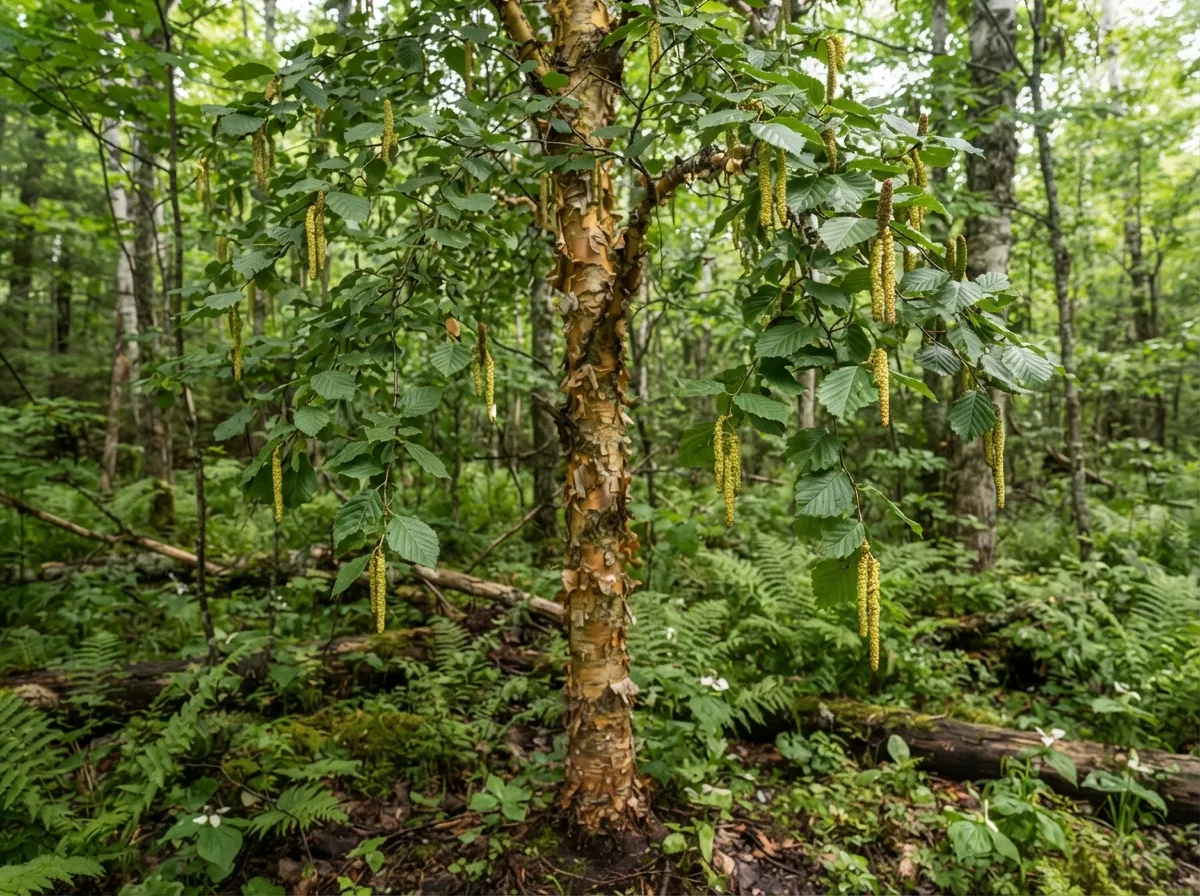
🔍 Identify it without mistakes
Large hardwood tree with characteristic golden-silver bark that peels in thin curls (less papery and less white than paper birch). The bark and twigs emit a distinct wintergreen smell when scraped or broken—the most reliable identification feature, shared with sweet birch (Betula lenta), found further south.
- golden to copper bark peeling in thin curls (not white)
- distinct wintergreen/menthol scent when scraping bark or snapping a young twig
- doubly serrated oval leaves
- catkins upright at maturity
⚠️ Not to be confused with
To tell them apart: pure white bark peeling in large sheets on paper birch, versus golden-copper bark in thin curls and a wintergreen scent on yellow birch
🍽️ Eating it
Preparation : the sap, less sweet than maple sap, is drunk fresh or boiled down into syrup; the cambium is scraped off and eaten raw or dried as a supplementary flour; broken young twigs make a pleasant wintergreen tea infusion
💊 Healing with it
bark and twig infusions were traditionally used as a tonic for muscle and joint pain (effects similar to wintergreen, a natural source of methyl salicylate)
Level of evidence : traditional use — USDA Forest Service — Betula alleghaniensis species profile
⚠️ methyl salicylate, present in the bark just like in wintergreen, is toxic in high doses (similar in effect to aspirin)—occasional tea consumption is safe, but massive intake is discouraged, especially for children and pregnant women
🪓 Other bushcraft uses
- hardwood highly valued in cabinetmaking and flooring
- oily bark used as emergency tinder, though less effective than paper birch bark
Sources (2)
No entry replaces a certain identification in the field, or medical advice. When in doubt: don't eat it. If ingestion is suspected: poison control or 112/911.