🌳 Silver Birch
Betula pendula · Betulaceae
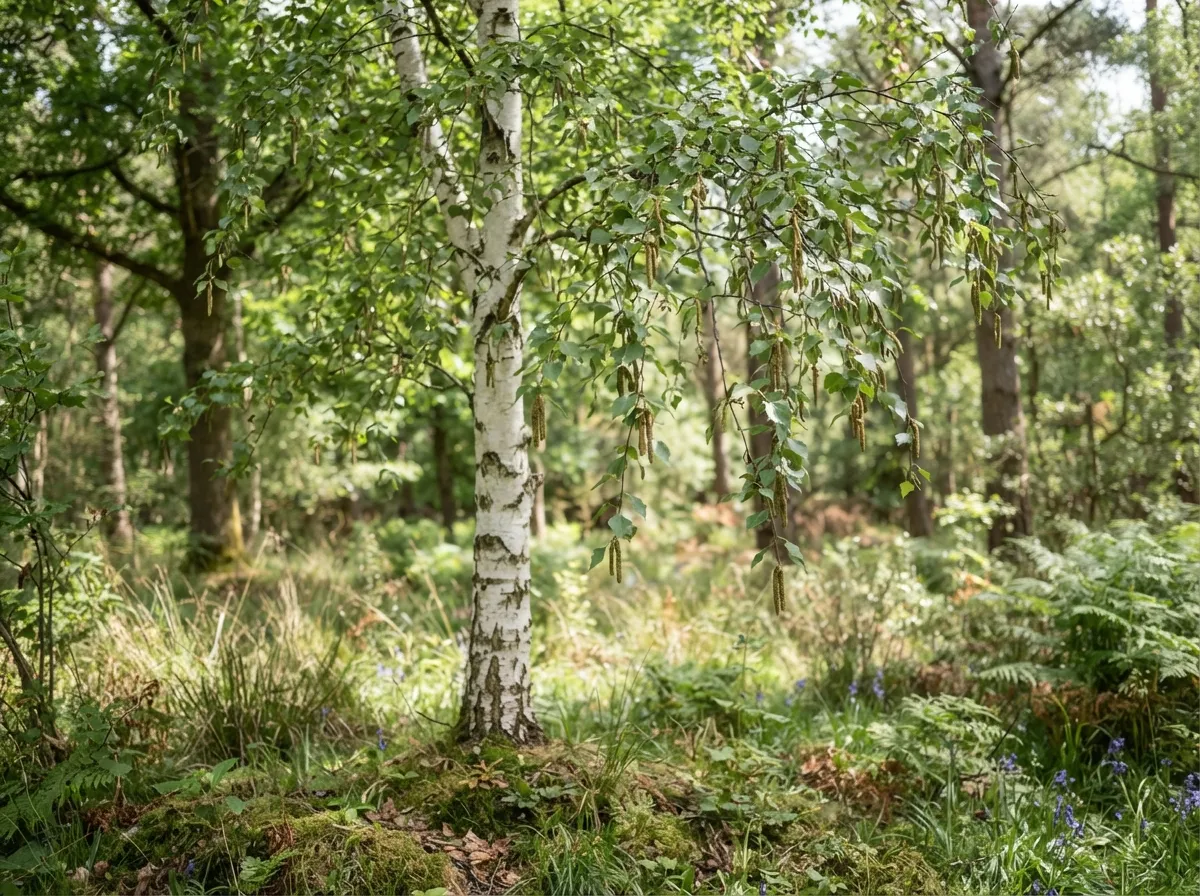
🔍 Identify it without mistakes
Pioneer tree easily recognized by its white bark peeling off in thin, papery horizontal strips, turning black and cracked at the base of old specimens. Small, double-toothed, diamond-shaped leaves, carried by thin and flexible, often drooping twigs ("pendula"). Male catkins drooping from autumn, female catkins erect then drooping at maturity.
- white bark peeling off in thin horizontal strips
- fine, flexible, often drooping twigs
- diamond-shaped, doubly serrated, pointed leaves
- drooping male catkins visible from winter
- slender silhouette, pioneer growth habit in open groups
⚠️ Not to be confused with
To tell them apart: the white papery bark is unique among European trees (aspen has a grayer bark that doesn't peel off in strips)
🍽️ Eating it
Preparation : sap harvested by controlled tapping (1 hole of 1 cm, sealed afterwards), drunk fresh or reduced into syrup (takes about 100 L of sap for 1 L of syrup); young leaves infused
approx, fresh sap, North European/Scandinavian compilations
💊 Healing with it
leaves traditionally diuretic, used in spring detox cures to flush the urinary tract
Level of evidence : tradition (recognized by EMA/HMPC for traditional diuretic use) — EMA/HMPC, community monograph Betulae folium
⚠️ avoid in case of edema related to heart or kidney failure requiring fluid restriction; birch pollen allergy is common (cross-reactive food allergies possible, pollen-food syndrome)
🪓 Other bushcraft uses
- waterproof bark used to make containers, roofing, and even canoes (Native American tradition with paper birch, its North American cousin)
- bark rich in resinous oils, excellent tinder even when wet
- chaga (parasitic mushroom on birch) used in traditional herbal tea
Sources (3)
No entry replaces a certain identification in the field, or medical advice. When in doubt: don't eat it. If ingestion is suspected: poison control or 112/911.