🌳 Common Box
Buxus sempervirens · Buxacées
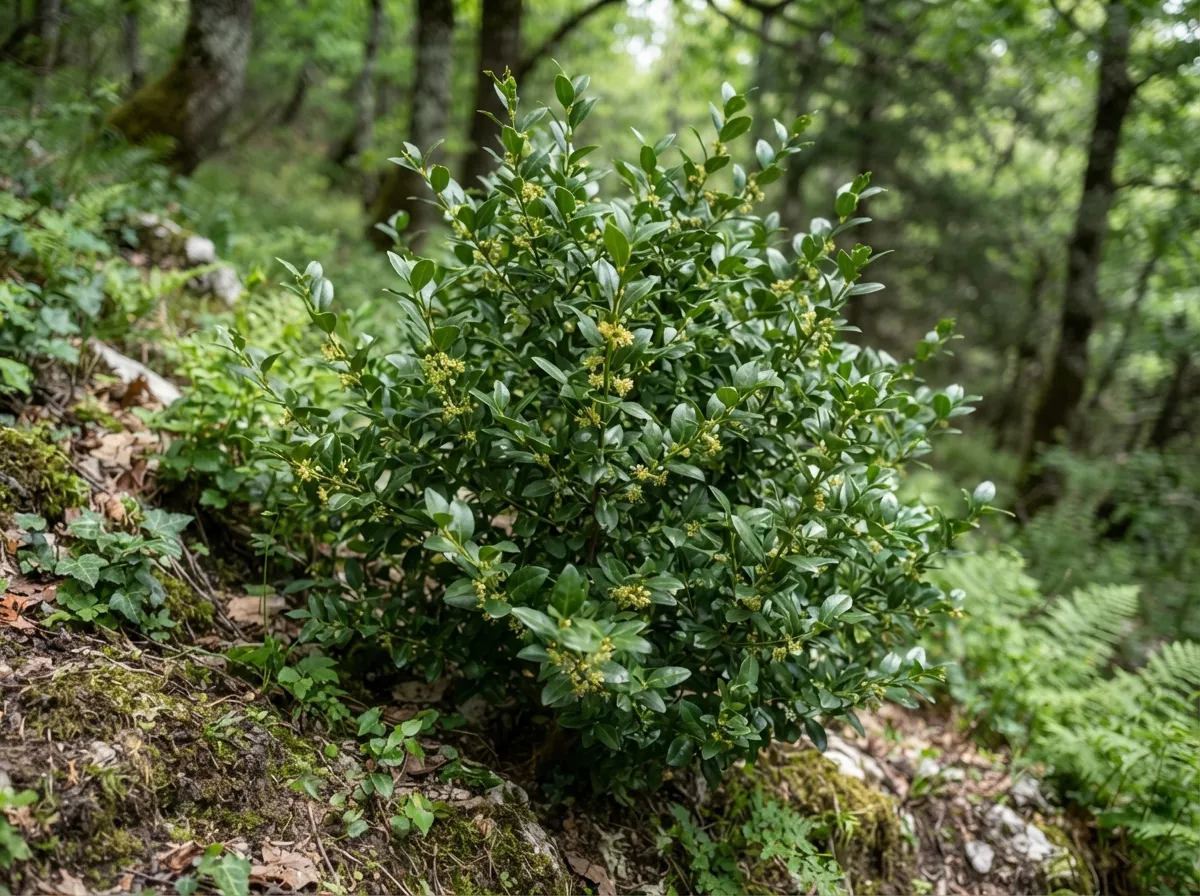
🔍 Identify it without mistakes
Dense evergreen shrub with small, opposite, oval, leathery, and shiny leaves that give off a characteristic strong smell when crushed. Extremely slow growth, very dense wood. Forms pure stands (boxwoods) on limestone soils in the Mediterranean region, often alongside holm oak.
- opposite, small, oval, leathery, and shiny leaves, evergreen year-round
- characteristic strong smell when crushed foliage
- extremely slow growth, very dense wood
- forms pure stands (boxwoods) on limestone soils in the Mediterranean region
⚠️ Not to be confused with
To tell them apart: privet leaves are longer and lanceolate, less shiny, different foliage smell
💊 Healing with it
écorce et feuilles autrefois utilisées comme fébrifuge (substitut de quinine) et sudorifique ; jeunes pousses utilisées aujourd'hui en gemmothérapie pour le drainage hépatique
Level of evidence : traditional use — Althéa Provence — Le buis, utilisations possibles et toxicité
⚠️ Systemic toxicity in case of overdose (steroidal alkaloids: buxine and related compounds), internal use is dangerous and largely abandoned outside of highly diluted preparations; toxicity persists even in dry wood.
🪓 Other bushcraft uses
- Fine tools: highest density wood in Europe (0.9-1.06), right behind tropical ebony — benchmark for fine tool handles, wooden gear teeth, mallets
- Carving and engraving: extremely fine and homogeneous grain, historical reference for woodcuts, chess pieces, dice, and walking sticks
- Flutes and whistles: hollowed out, boxwood produces a crisp sound thanks to its density — woodwind instrument wood since antiquity
- Spindles and weaving shuttles: hardness and smooth polish make it a top choice for small objects subjected to repeated friction
- Knot-free wood: very slow growth allows carving fine, sturdy parts (knife handles, grips)
- Natural firebreak: dense, evergreen boxwood groves with low fine fuel on the ground slow down forest fire spread compared to dry garrigue
- Calcareous soil indicator: its presence signals well-draining limestone soil, useful for predicting terrain nature and related water resources (karst springs)
Sources (2)
No entry replaces a certain identification in the field, or medical advice. When in doubt: don't eat it. If ingestion is suspected: poison control or 112/911.