🌲 Bunya pine
Araucaria bidwillii · Araucariaceae
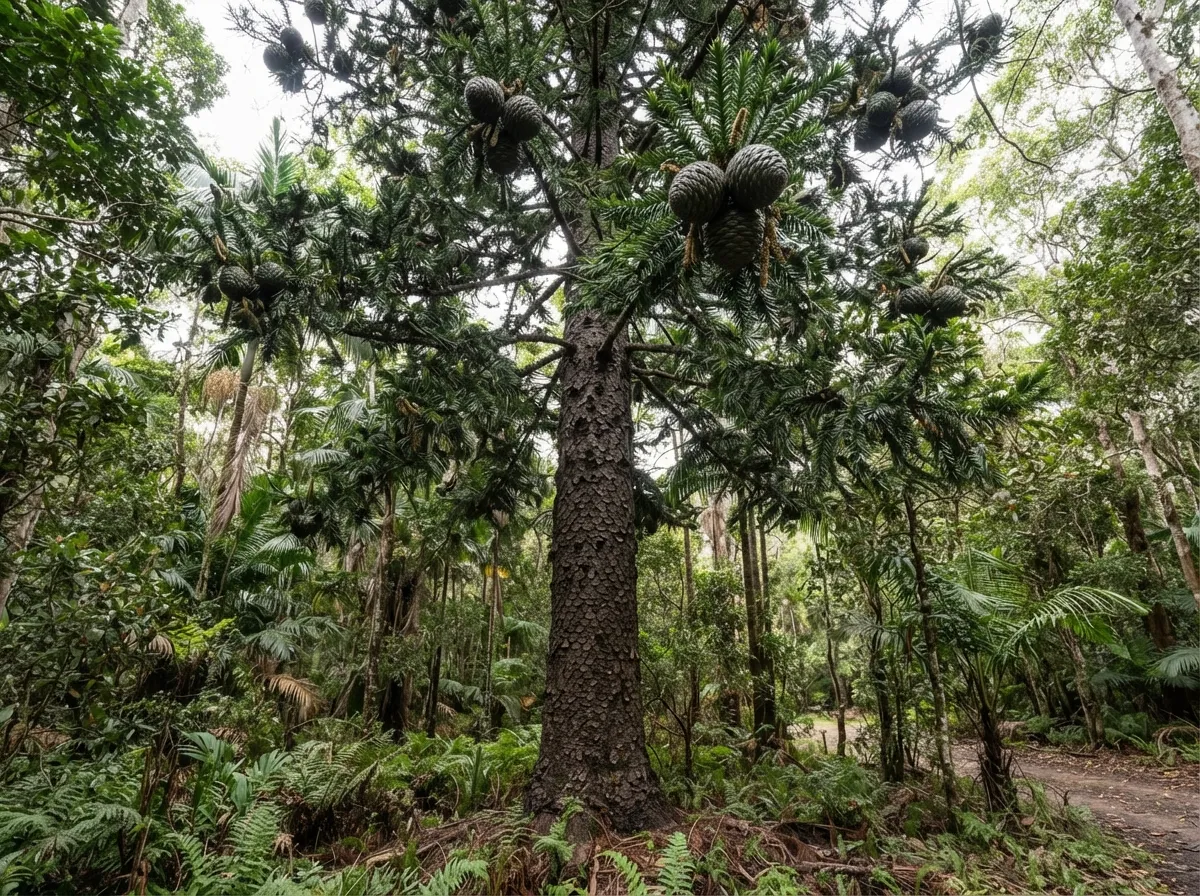
🔍 Identify it without mistakes
Huge conifer with a characteristic dome-shaped silhouette, dark scaly bark, short and rigid leaves with a sharp point arranged in a tight spiral on the branchlets. Produces enormous female cones weighing up to 10 kg, containing large edible seeds (bunya nuts).
- highly recognizable dome silhouette standing out above the canopy
- short, rigid, sharp leaves arranged in a dense spiral
- enormous cones (up to 30 cm, 10 kg) falling to the ground when ripe - DANGER of falling cones
⚠️ Not to be confused with
To tell them apart: the dome silhouette and enormous cones (up to 10 kg) containing the seeds are unique to the bunya pine; no other Australian conifer produces a cone of this size
🍽️ Eating it
Preparation : gather the seeds from inside the cones that have fallen to the ground (NEVER stand under the tree during falling season - risk of severe injury from a cone weighing several kilos); seeds can be eaten raw, cooked in embers, or boiled, and can be pounded into paste then baked into bread (manu)
💊 Healing with it
no major traditional medicinal uses documented
Level of evidence : traditional use — Wikipedia - Araucaria bidwillii
⚠️ major physical hazard: never camp or linger under a bunya pine heavy with cones - a 7 kg cone falling from several dozen meters caused severe traumatic brain injury and a multi-million dollar lawsuit in 2015
🪓 Other bushcraft uses
- pale wood highly sought after by luthiers for guitar soundboards
- great traditional Aboriginal gatherings centered around bunya harvests (festivals every 2-7 years) also served as venues for trade and resolving conflicts between groups traveling from far away
Sources (1)
No entry replaces a certain identification in the field, or medical advice. When in doubt: don't eat it. If ingestion is suspected: poison control or 112/911.