🍫 Wild cacao tree
Theobroma cacao · Malvaceae
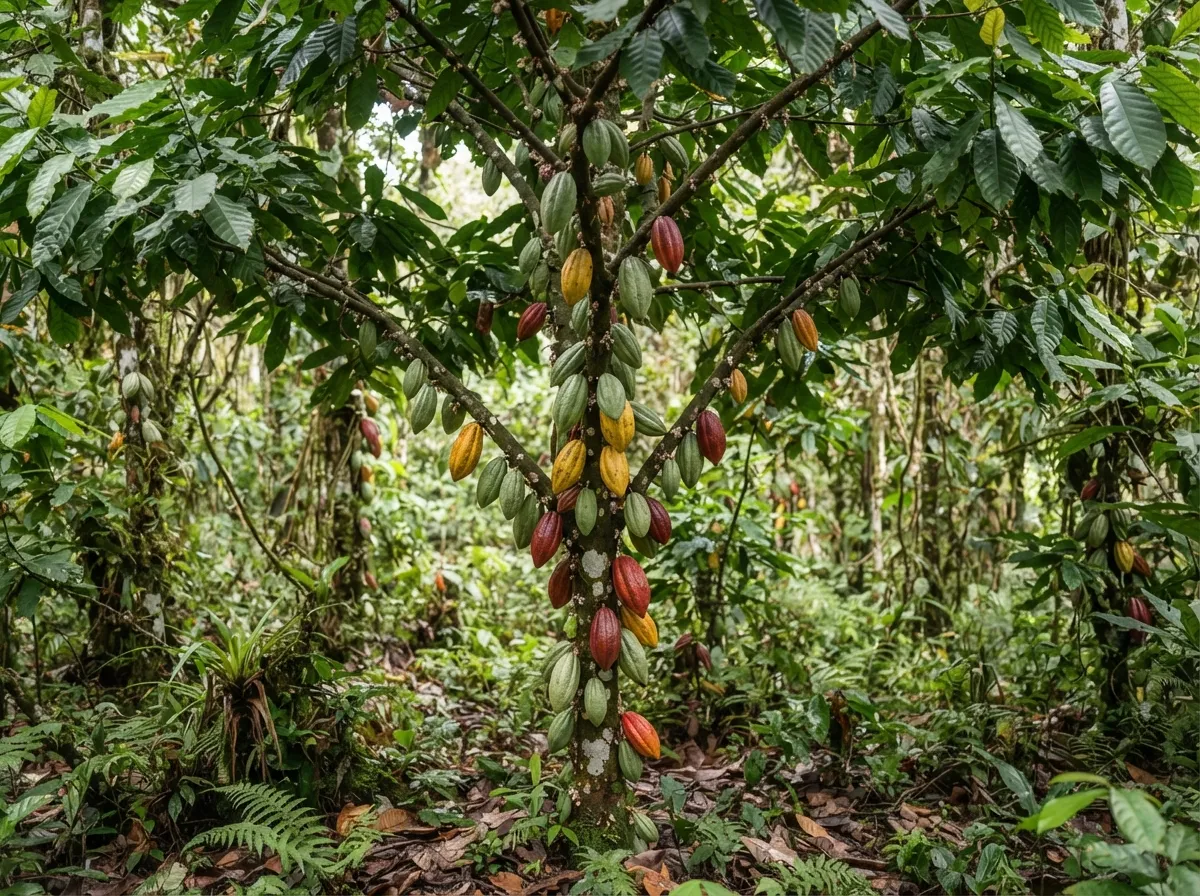
🔍 Identify it without mistakes
A small understory tree of the Amazon and Central America, growing beneath the canopy, with flowers and fruit growing directly on the trunk and main branches (cauliflory). The fruit, an elongated pod with ribbed skin turning yellow-orange to red when ripe, contains 30 to 40 seeds (future cacao beans) embedded in a sweet-tart white pulp — it's this pulp, not the bitter raw seeds, that you eat directly in the wild.
- small understory tree with a spreading crown, seeking partial shade under the canopy
- tiny flowers and pods growing directly on the trunk and main branches (cauliflory)
- elongated ribbed pod, yellow-orange to red at maturity depending on the variety
- 30 to 40 flat seeds embedded in a mucilaginous white pulp inside the pod
⚠️ Not to be confused with
To tell them apart: cauliflory (flowers and fruits directly on the trunk) combined with the elongated ribbed pod is unique to the genus Theobroma among Amazonian understory trees
🍽️ Eating it
Preparation : split the ripe pod open with a machete and suck the white pulp directly off the seeds; the seeds themselves are bitter and stimulating when raw, requiring several days of fermentation followed by roasting to become commercial cacao—a long process that isn't realistic in an immediate survival scenario
💊 Healing with it
les fèves fermentées et torréfiées sont riches en flavonoïdes étudiés pour leurs effets cardiovasculaires protecteurs
Level of evidence : limited studies — Wikipedia EN — Theobroma cacao
⚠️ raw seeds contain theobromine, a stimulant similar to caffeine that can cause palpitations in large amounts and is toxic to many domestic animals (dogs, cats) — never feed them to pets
🪓 Other bushcraft uses
- husk and fermented pulp are sometimes distilled into local alcoholic beverages
No entry replaces a certain identification in the field, or medical advice. When in doubt: don't eat it. If ingestion is suspected: poison control or 112/911.