💜 Heather (ling)
Calluna vulgaris · Ericaceae
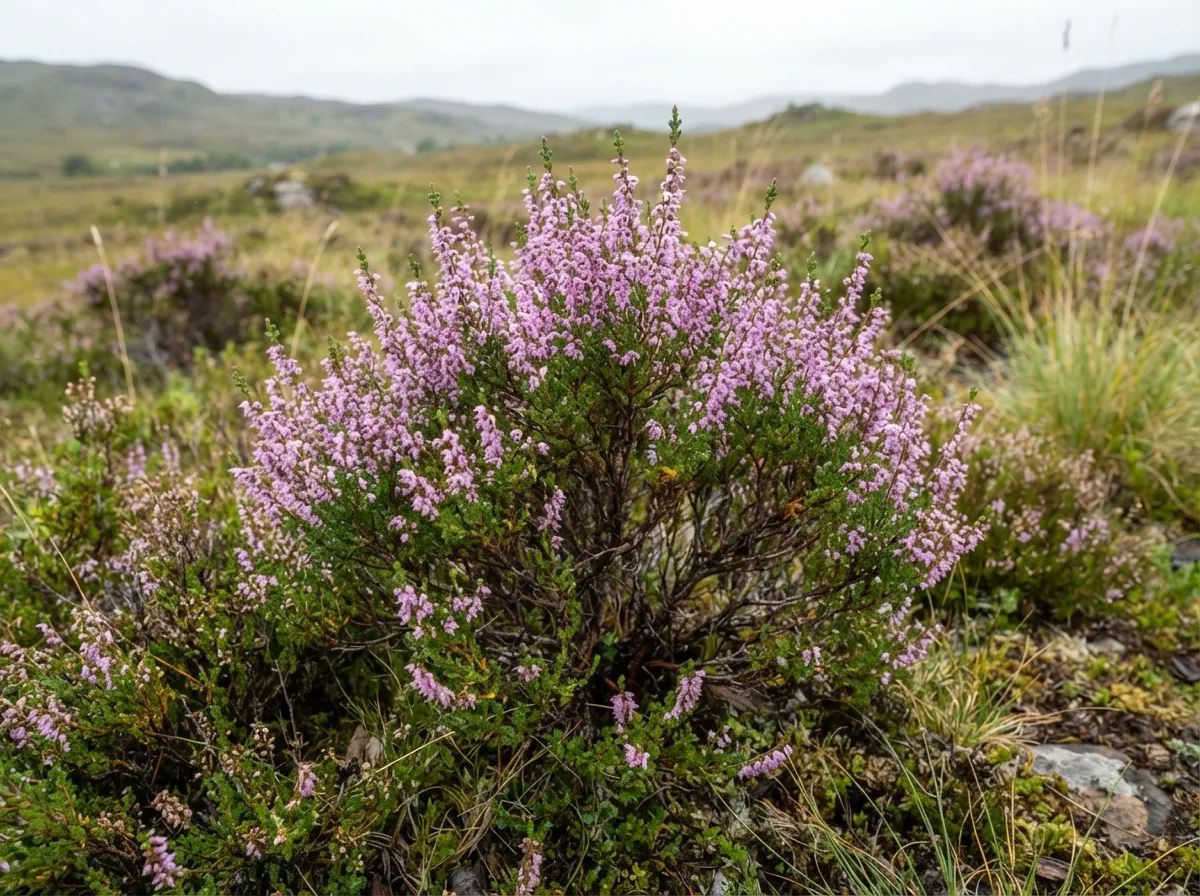
🔍 Identify it without mistakes
A small subshrub that carpets heathlands with evergreen, tightly overlapping scale-like foliage. In autumn, it turns vast expanses purple when its countless small bell-shaped flowers bloom all together. Often confused in everyday language with true heaths of the Erica genus, you can distinguish it by subtle details, though their practical uses remain identical.
- tiny, scale-like leaves closely overlapping in 4 rows, evergreen, dark green to grayish
- small pinkish-purple bell-shaped flowers, extremely numerous, in dense terminal spikes
- sepals (calyx) as large and colorful as the petals, a distinct feature separating the Calluna genus from true Erica heaths
- low, mat-forming subshrub with woody stems, creeping then erect
- forms vast purple expanses in September-October on heathlands and bogs
⚠️ Not to be confused with
To tell them apart: heather (calluna) has colorful sepals as visible as its petals and scale-like leaves arranged in 4 rows; Erica species have finer needle-like leaves arranged in whorls and elongated urn-shaped flowers
💊 Healing with it
traditionnellement utilisée en infusion pour les cystites et les troubles urinaires légers, propriétés diurétiques et légèrement antiseptiques
Level of evidence : traditional use — compilations ethnobotaniques (Wikiphyto)
⚠️ no major known contraindications at normal doses
🪓 Other bushcraft uses
- historical ingredient of gruit, a bitter herb mixture used to flavor beer in the Middle Ages before hops became widespread
- twigs traditionally bound together to make rustic brooms, and a major nectar source for heathland beekeepers (heather honey, thick and amber)
- decoction with alum used in dyeing to produce a yellow color
No entry replaces a certain identification in the field, or medical advice. When in doubt: don't eat it. If ingestion is suspected: poison control or 112/911.