🎋 Wild Sugarcane
Saccharum spontaneum · Poaceae
🔍 Identify it without mistakes
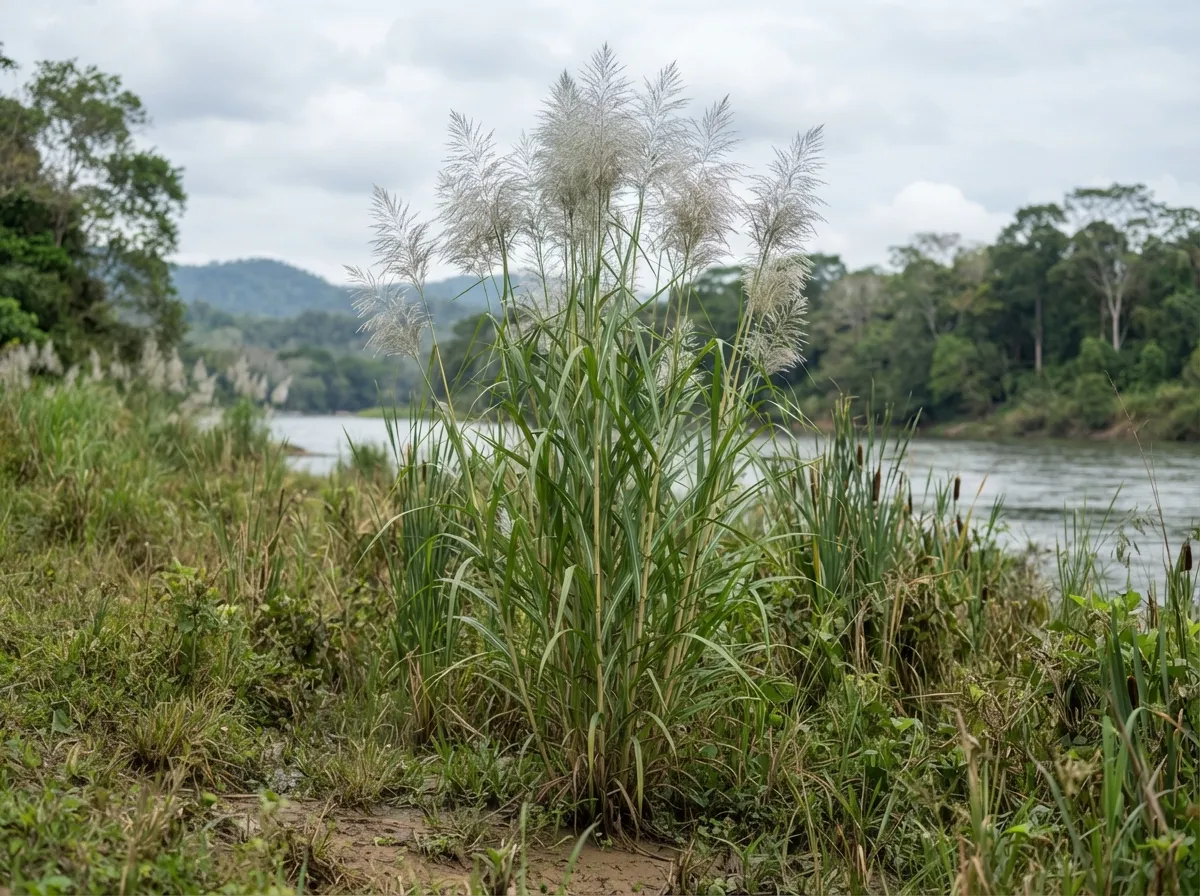
Large pioneer grass widespread in South and Southeast Asia, forming huge, dense reed beds on sandbanks and riverbanks reshaped by floods. Unlike cultivated sugarcane, its stems are thinner, more fibrous, and much less sweet, but it remains a useful resource for fiber and construction material.
- large grass growing in dense tufts, thin and rigid stems 2 to 4 m tall
- long silvery feathery inflorescences during flowering, highly visible from afar on sandbanks
- stems distinctly thinner and more fibrous than those of cultivated sugarcane
- mass-colonizes riverbanks and sandbanks freshly deposited after a flood
⚠️ Not to be confused with
To tell them apart: cultivated sugarcane has thick, fleshy, stout stems packed with very sweet juice, whereas wild sugarcane has thin, hard, and much more fibrous stems with significantly less sweet juice — a good indicator so you don't waste time trying to extract large amounts of sugar from it
🍽️ Eating it
Preparation : cut the stem into sections, peel off the hard outer bark with a machete, and chew the fibrous pith to extract what little sweet juice it contains, then spit out the fibers; cook young, tender shoots like a vegetable
💊 Healing with it
racines et tiges utilisées en médecine traditionnelle sud-asiatique comme diurétique léger
Level of evidence : traditional use — ScienceDirect Topics — Saccharum spontaneum
⚠️ no known toxicity
🪓 Other bushcraft uses
- stems and leaves used for roof thatching and weaving mats and fences
- pioneer species used to stabilize banks and fight erosion on alluvial soils
No entry replaces a certain identification in the field, or medical advice. When in doubt: don't eat it. If ingestion is suspected: poison control or 112/911.