🌿 Kair (leafless caper bush)
Capparis decidua · Capparaceae
🔍 Identify it without mistakes
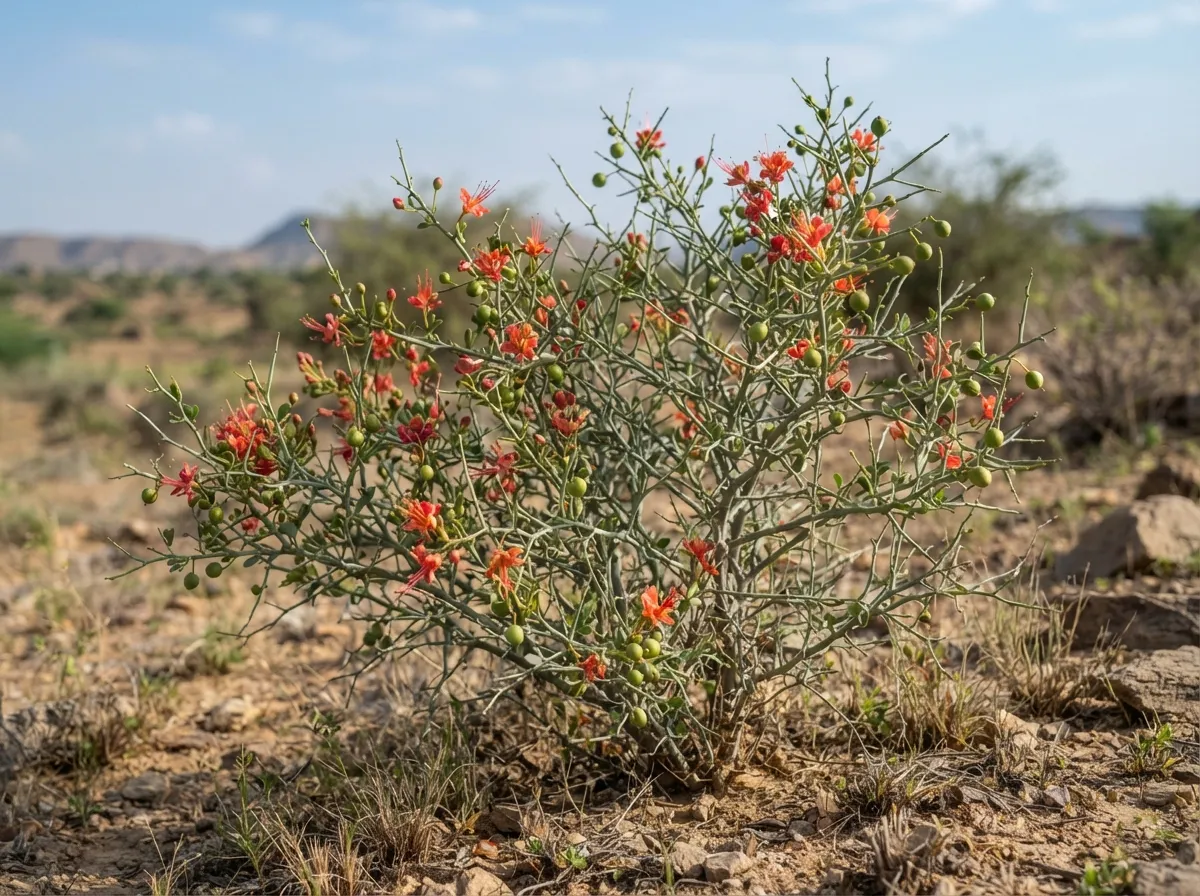
Small shrub rarely exceeding 5 m, with slender, grey-green branches that are virtually leafless at maturity (leaves only appear on young shoots) — an extreme adaptation to aridity that limits water loss through transpiration. Red flowers appear in spring and late summer, followed by small fleshy pink berries.
- slender grey-green branches, virtually leafless when mature
- leaves present only on young shoots
- red flowers in spring and late summer
- small fleshy pink berries
⚠️ Not to be confused with
To tell them apart: kair grows as an upright, virtually leafless shrub at maturity, typical of Thar and Sahara desert soils, whereas the Mediterranean caper bush is a trailing plant with well-developed round leaves and large white flowers with purple stamens, growing from crevices in old walls or rocks
🍽️ Eating it
Preparation : the firm unripened berries and young buds can be eaten raw or cooked as a vegetable dish (curry); the spicy fruits are also preserved as fine pickles, a highly popular traditional preparation in the Thar Desert
💊 Healing with it
traditionally used in regional folk medicine (documented in a general sense, without detailed specific indications in consulted sources)
Level of evidence : traditional use — Wikipedia — Capparis decidua
⚠️ no specific precautions known for properly prepared fruits and buds
🪓 Other bushcraft uses
- soil restoration planting and erosion control in desert areas
- used for afforestation of arid zones
Sources (1)
No entry replaces a certain identification in the field, or medical advice. When in doubt: don't eat it. If ingestion is suspected: poison control or 112/911.