🌸 Caper bush
Capparis spinosa · Capparacées
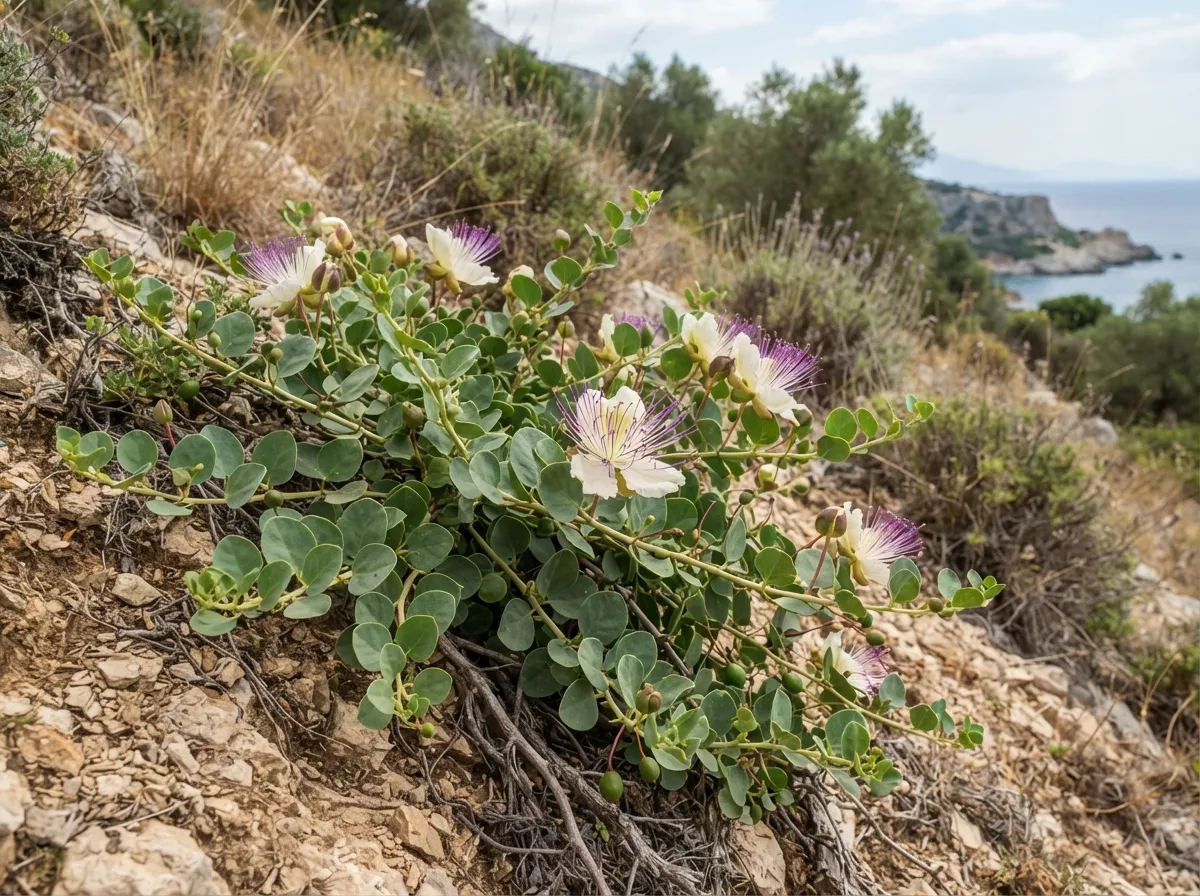
🔍 Identify it without mistakes
Trailing shrub with creeping or hanging stems, typically growing in the crevices of walls and rocks. Alternate, rounded, thick leaves, often with two hooked spines at the base of the petiole. Large white flowers with very showy purple stamens, lasting only a single day, preceding small flower buds which become commercial capers once pickled.
- creeping or trailing habit from a rock crevice or wall
- fleshy rounded leaves with spiny stipules
- large white flower with long purple stamens
- ovoid flower buds before opening = capers
⚠️ Not to be confused with
To tell them apart: the trailing habit from a wall or rock crevice, hooked spines at the base of the rounded leaves, and the large white flower with purple stamens are not found in any other plant of old Mediterranean walls
To tell them apart: the Mediterranean caper is a trailing plant with well-developed round leaves growing from crevices in old walls or rocks, whereas kair grows as an erect shrub virtually leafless as an adult, typical of Thar and Sahara desert soils
🍽️ Eating it
Preparation : fresh buds are acrid and inedible raw: you need to macerate them for several days in salt and then store them in vinegar to get commercial capers
USDA FoodData Central, canned capers, per 100 g
🪓 Other bushcraft uses
- root traditionally used in a mild diuretic decoction (minor usage, poorly documented scientifically)
No entry replaces a certain identification in the field, or medical advice. When in doubt: don't eat it. If ingestion is suspected: poison control or 112/911.