🌸 Cuckooflower (lady's smock)
Cardamine pratensis · Brassicaceae
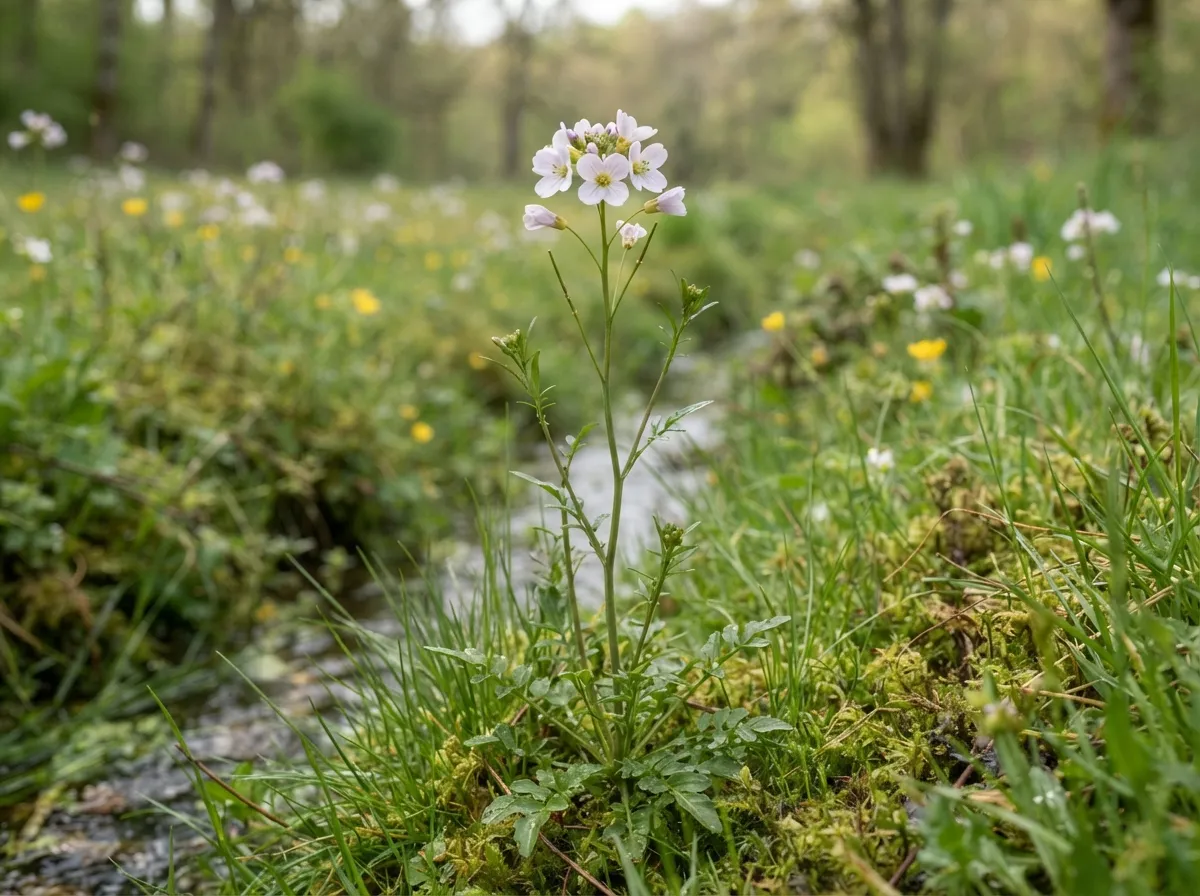
🔍 Identify it without mistakes
One of the first spring flowers in wet meadows, recognizable by its large pale mauve flowers with four cross-shaped petals (Brassicaceae) carried in loose clusters. Also called cuckooflower, it has the pungent mustard taste of true cresses, but grows out of the water, right in the grass.
- pale mauve (sometimes white) flowers with 4 cross-shaped petals, in a loose terminal cluster
- pinnately compound leaves, rounded leaflets at the base of the stem, narrower higher up
- hollow, hairless, erect stem
- grows in dense clumps in wet meadows and ditches, never in fast-flowing water
- pungent-peppery taste when a leaf is crushed, like a mild mustard
⚠️ Not to be confused with
To tell them apart: cuckooflower has clearly visible mauve flowers and grows in wet grass, never submerged; watercress has creeping stems floating directly in the current
🍽️ Eating it
Preparation : raw leaves and flowers in salads, mild cress flavour; do not cook for long as it softens quickly
💊 Healing with it
traditionnellement citée comme antiscorbutique (riche en vitamine C comme les autres Brassicacées) et dépurative de printemps
Level of evidence : traditional use — compilations ethnobotaniques (PFAF)
⚠️ no major known contraindications at culinary doses
🪓 Other bushcraft uses
- preferred host plant for the caterpillar of the orange-tip butterfly (Anthocharis cardamines), whose larvae feed almost exclusively on this plant and garlic mustard
No entry replaces a certain identification in the field, or medical advice. When in doubt: don't eat it. If ingestion is suspected: poison control or 112/911.