🥕 Wild Carrot
Daucus carota · Apiaceae
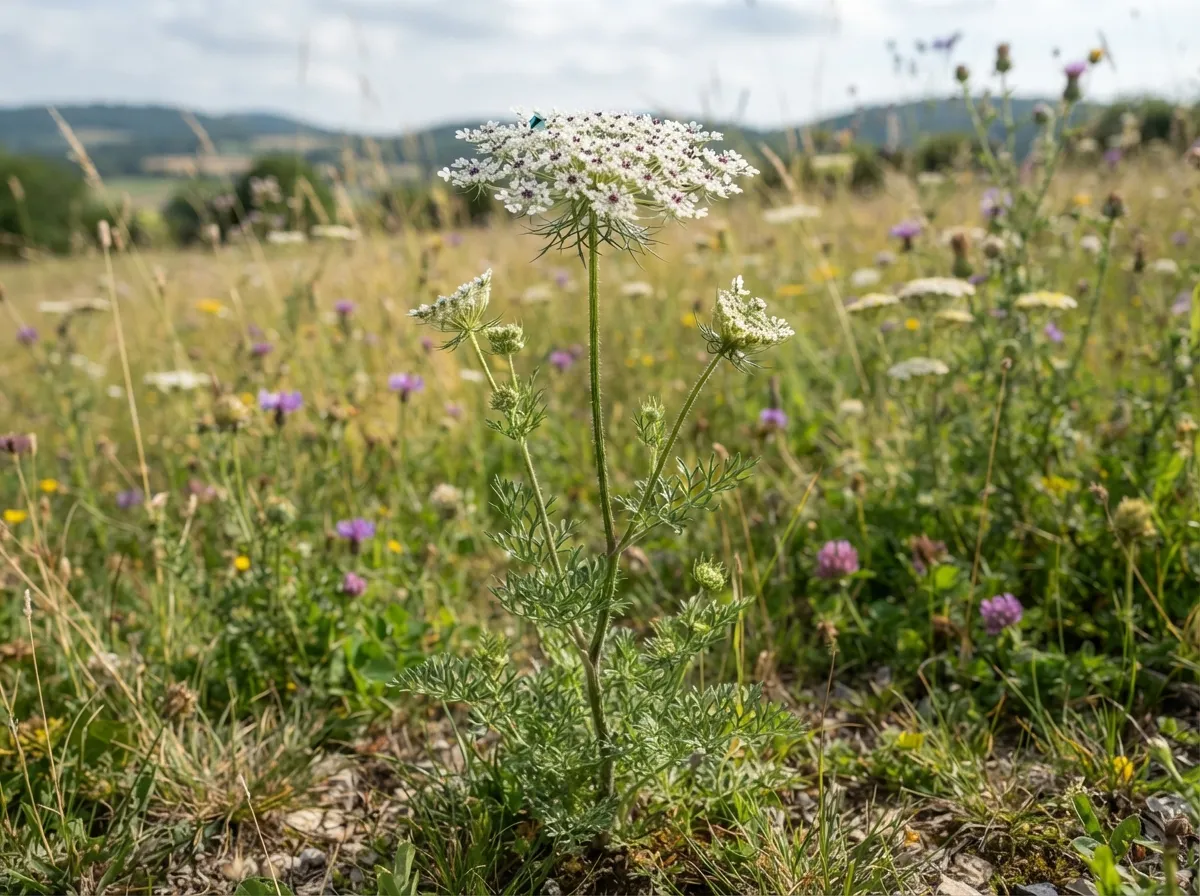
🔍 Identify it without mistakes
The wild ancestor of the cultivated carrot, sharing its root (slimmer, white to cream, and fragrant) and the famous carrot smell when you crush the leaves — your number one safety check. The plant is completely hairy (stem and leaves covered in rough hairs), featuring a large white umbel that folds up into a bird's nest shape after flowering, often bearing a single, tiny, purple-black flower right in the center.
- distinct carrot smell when crushing leaves and root — mandatory test before any harvest
- stem and leaves covered with rough hairs over their entire surface
- often a single purple-black central flower in the middle of the white umbel
- umbel curls up into a bird's nest shape after flowering
- slender, white-to-cream root, not orange like the cultivated carrot
⚠️ Not to be confused with
To tell them apart: poison hemlock is completely hairless (no hairs on the stem or leaves), its stem is smooth and marked with distinctive purple spots, and it gives off an unpleasant odor reminiscent of mouse urine — never a carrot smell. Absence of hairs = red flag
To tell them apart: also a hairless plant, finer and glossier leaves, umbel bracts all turned downwards to one side (asymmetric), no carrot smell
To tell them apart: grows in damp/marshy areas (wild carrot prefers dry meadows), root is a cluster of fleshy tubers rather than a single taproot, smells of celery/parsley, not carrot
🍽️ Eating it
Preparation : first-year root eaten raw or cooked like a small, fibrous, flavorful carrot; seeds used dried as a spice (directly related to caraway); always confirm the carrot smell at every step of harvesting, including on the dug-up root
💊 Healing with it
seeds traditionally used as a carminative (for bloating) and mild diuretic
Level of evidence : traditional use — ethnobotanical compilations (Couplan, Fournier) and guidebooks on preventing Apiaceae misidentification
⚠️ fatal risk of confusion with poison hemlock and hemlock water-dropwort: NEVER harvest a plant from this family without verifying BOTH the carrot smell AND rough hairs all over the stem; seeds reportedly have a slight traditional emmenagogue effect and are not recommended during pregnancy
🪓 Other bushcraft uses
- dried umbel used in rustic floral arrangements
- root is the direct ancestor of modern cultivated carrots through centuries of selective breeding in Europe and the Middle East
Sources (3)
No entry replaces a certain identification in the field, or medical advice. When in doubt: don't eat it. If ingestion is suspected: poison control or 112/911.