🌳 Carob Tree
Ceratonia siliqua · Fabaceae
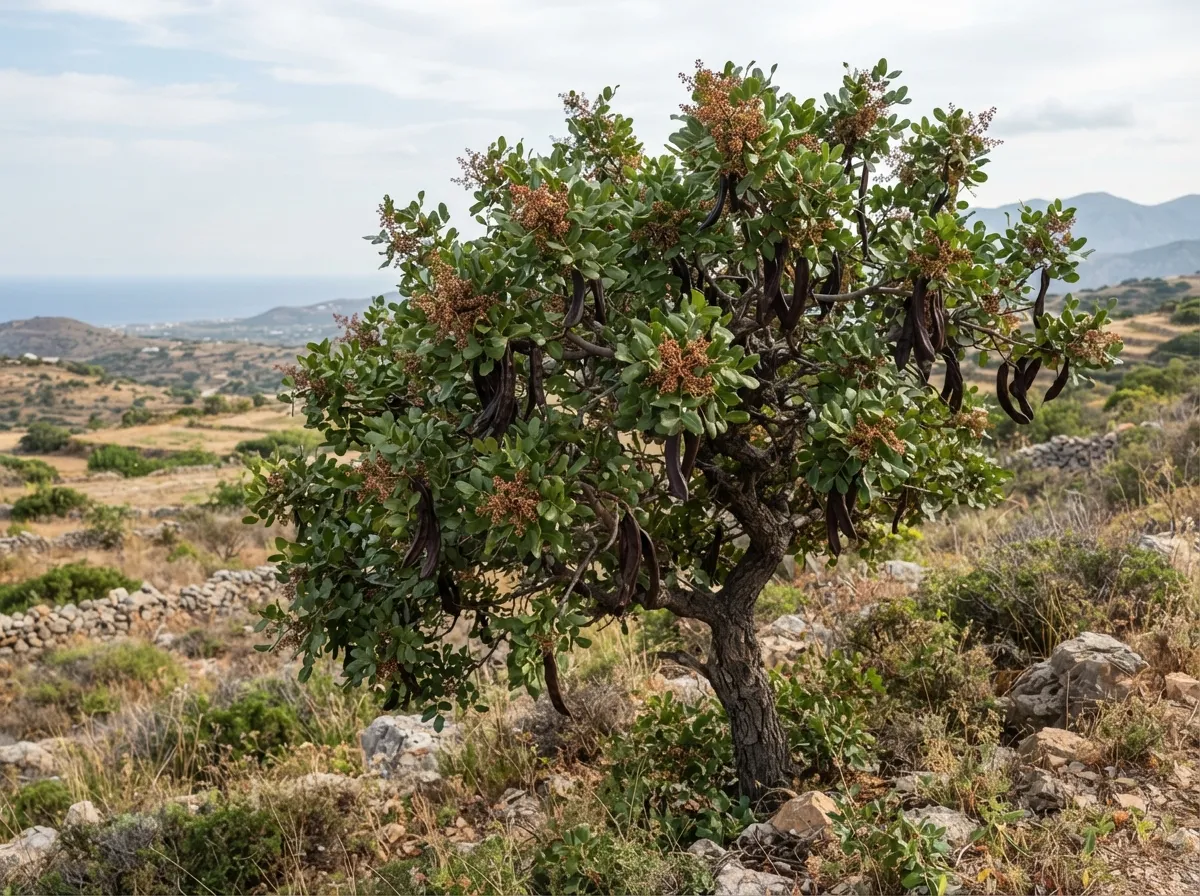
🔍 Identify it without mistakes
Stocky evergreen tree, 5 to 10 m, with a broad canopy, compound pinnate leaves with 4 to 10 shiny, dark green oval leaflets. Inconspicuous reddish flowers without petals blooming directly on old wood. The flat, leathery, dark brown pods, 10 to 25 cm long, hang in large numbers in autumn and take nearly a year to ripen.
- compound pinnate leaves with shiny, rounded leaflets
- highly characteristic flat, leathery, dark brown pods
- rough, grayish bark
- flowers growing directly on the wood (cauliflory)
⚠️ Not to be confused with
To tell them apart: the long, flat, leathery, dark brown pods, combined with flowers growing directly on old wood (cauliflory) and compound leaves with shiny, rounded leaflets, are unique to the carob tree among garrigue trees
🍽️ Eating it
Preparation : ripe pod dried and ground into flour ("carob"), or pulp chewed directly once dried on the tree — never eat the hard seed, it is too tough
USDA / agronomic literature, carob flour, per 100 g; pulp approx. 50-55% natural sugars
🪓 Other bushcraft uses
- caffeine-free and theobromine-free chocolate substitute
- the seeds, remarkably consistent in weight, gave rise to the jeweler's mass unit "carat"
- fodder for livestock
Sources (3)
No entry replaces a certain identification in the field, or medical advice. When in doubt: don't eat it. If ingestion is suspected: poison control or 112/911.