🌿 Cecropia (pumpwood, embauba)
Cecropia peltata · Urticacées
🔍 Identify it without mistakes
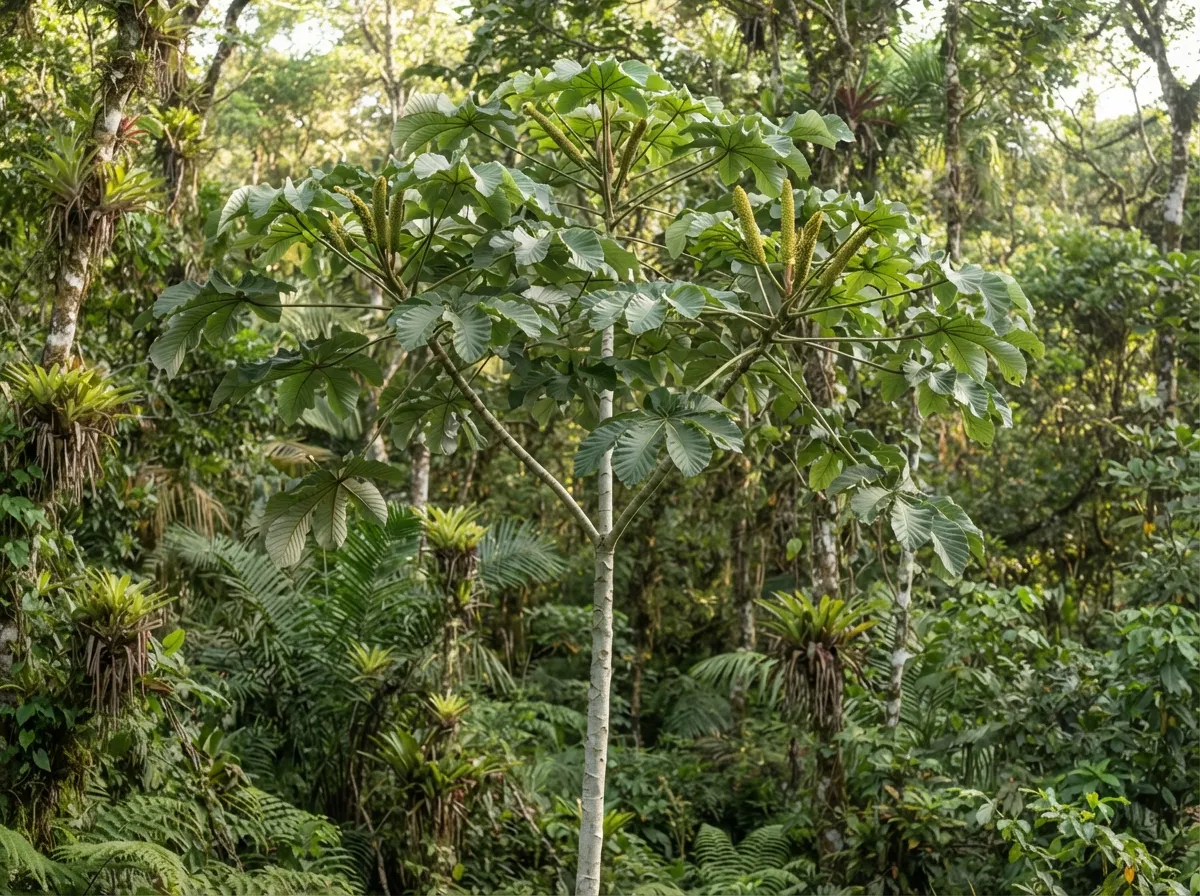
Very common pioneer tree in clearings and rainforest edges of Central America and the Caribbean, recognizable by its large star-shaped leaves (peltate, attached at the center like an umbrella) and its hollow trunk often colonized by ants that protect the tree in exchange for shelter and sugary secretions.
- large star-shaped leaves with 7-11 deep lobes, attached at the center of the blade (peltate leaf) like a parasol
- hollow trunk, segmented into nodes like bamboo, often inhabited by symbiotic ants
- whitish and downy underside of the leaves, contrasting with the green upper side
- rapid growth typical of pioneer species colonizing clearings
⚠️ Not to be confused with
To tell them apart: the large peltate star-shaped leaves (attached at the center) and the segmented hollow trunk are unique to the Cecropia genus among clearing pioneer trees; beware, however, of the often aggressive ants living inside the hollow trunk
💊 Healing with it
feuilles et écorce interne séchées utilisées en tisane traditionnelle contre l'hypertension, l'asthme, les troubles rénaux et comme anti-inflammatoire dans toute l'Amazonie et les Caraïbes
Level of evidence : traditional use — Rain-Tree Tropical Plant Database — Embauba (Cecropia)
⚠️ may lower blood pressure; avoid self-medication in people already taking hypotensive or anticoagulant treatments due to lack of data on interactions
🪓 Other bushcraft uses
- lightweight wood used for crafts and formerly for starting fire by friction
- the ants living in the hollow trunk are sometimes used as a navigational landmark by forest guides, as their nest marks a very recognizable tree
Sources (2)
No entry replaces a certain identification in the field, or medical advice. When in doubt: don't eat it. If ingestion is suspected: poison control or 112/911.