🍄 Porcini Mushroom
Boletus edulis · Boletaceae
🔍 Identify it without mistakes
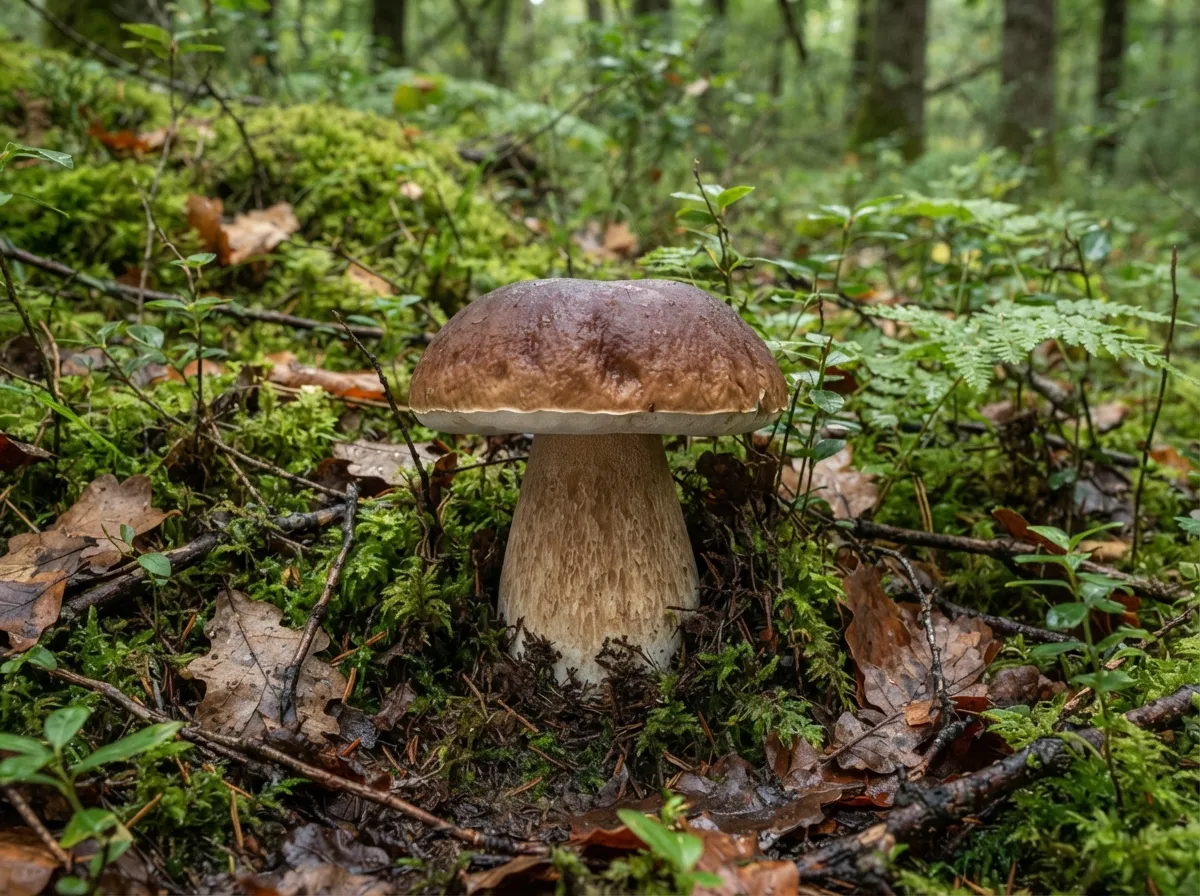
The "king of mushrooms", the most sought-after of the noble boletes. Hazelnut-brown to light brown cap, smooth and often slimy in wet weather, with a margin that's sometimes paler. Underside made of fine tubes (never gills), white then yellow-greenish with age, turning blue never when touched. Sturdy stem, swollen like a club, white to brownish, decorated with a fine raised white reticulation along its entire length. Pleasant forest-floor smell, mild taste (never bitter).
- hazelnut-brown to light brown cap, whitish margin, smooth to slightly slimy surface
- tubes (no gills) white turning yellow-greenish with age, never pinkish or reddening
- sturdy club-shaped stem, white to light brown, fine and clear white reticulation all along the stem
- firm white flesh that NEVER turns blue when cut, nor reddens
- olive-brown spore print
- pleasant forest-floor smell, mild taste, never bitter
⚠️ Not to be confused with
To tell them apart: Satan's bolete has a greyish-white cap, a bright red stem marked with an orange reticulation, red pores and tubes, and above all, flesh that turns blue instantly and violently when cut — the Porcini never turns blue; Satan's bolete also gives off an unpleasant smell as it ages
To tell them apart: the bitter bolete has pores that turn pinkish with age (white when young, which makes it deceptive) and a dark, almost black reticulation very marked on the stem; tasting a small piece of raw flesh is enough to decide (immediate and persistent bitterness), to spit out of course
🍽️ Eating it
Preparation : always cooked; remove tubes that have become greenish and spongy in older specimens (they are hard to digest); pan-fried, dried (rehydrates very well and concentrates the aroma), or cooked with garlic and parsley
Sources (4)
No entry replaces a certain identification in the field, or medical advice. When in doubt: don't eat it. If ingestion is suspected: poison control or 112/911.